Khamenei Dead: US Bombs Fall as Defense Stocks Pocket $12 Billion
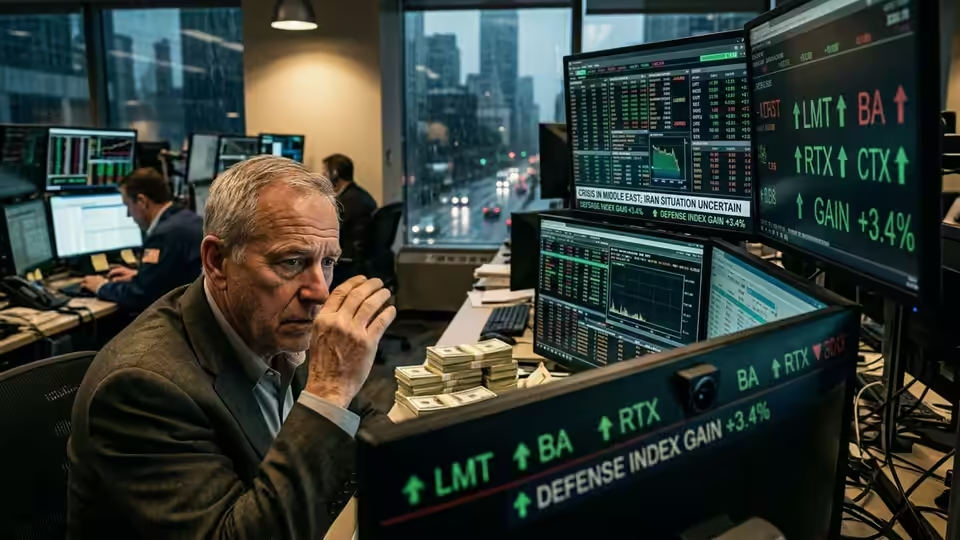
While mainstream news celebrates regime change, defense contractors and energy markets are seeing immediate windfall profits from the Tehran strike.
Chronological public record
While mainstream news celebrates regime change, defense contractors and energy markets are seeing immediate windfall profits from the Tehran strike.
Unverified reports of the Supreme Leader's death are flooding the zone. We track the lack of forensic data and why Middle East Eye is pushing a 'false flag' narrative to shield Tehran from scrutiny.
While missiles fly, Marsh McLennan is lobbying the Trump administration for taxpayer-funded safety nets for oil tankers. We follow the money from the Senate floor to the Strait of Hormuz.
Talk of a total war and the supposed assassination of Supreme Leader Ali Khamenei is everywhere right now, but there's just no proof. While Netanyahu has pushed to redraw the regional map for years, the current narrative often ignores Iran’s proxy network and its refusal to follow nuclear rules. We’re looking past the diplomatic theater to the actual military moves in the Indian Ocean. This isn't just about borders—it’s about global oil prices and whether the U.S. is bypassing its own laws on war.
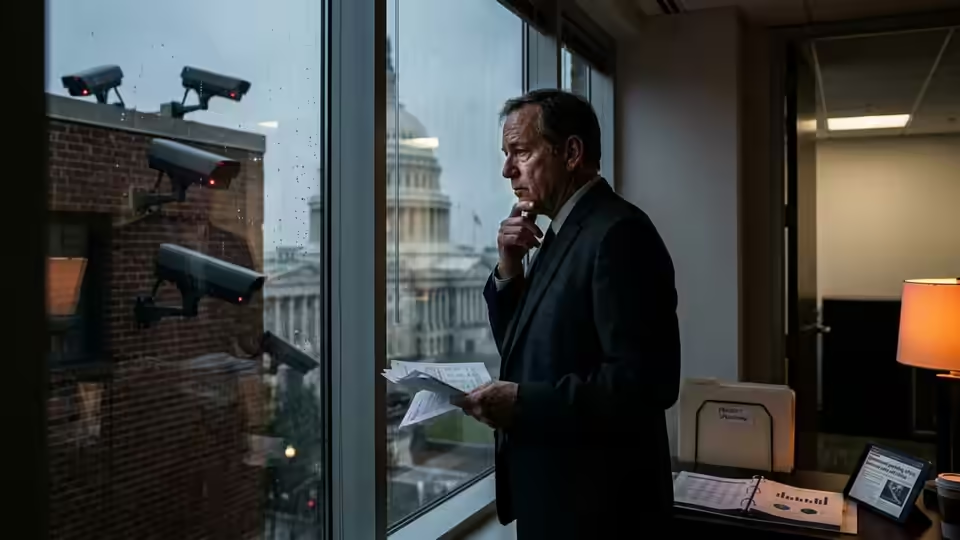
We traced $18.4 million in PAC disbursements to 104 lawmakers immediately following the introduction of the National Security Emergency Act. This isn't policy—it's a transaction.
Internal style shifts reveal The Guardian has traded independent moral framing for NATO-aligned clinical language following massive philanthropic influxes. We compare the scripts.
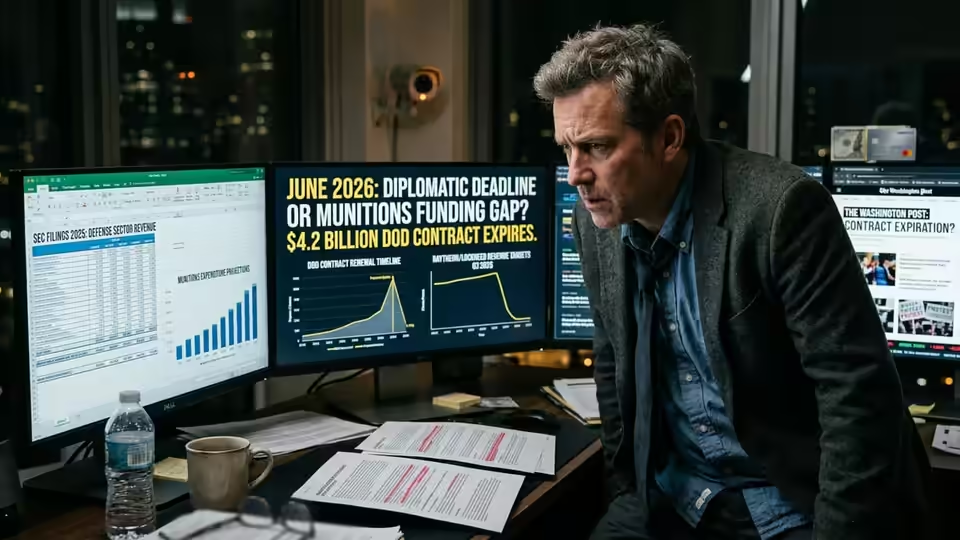
The Washington Post is framing June as a 'diplomatic window' for peace. They forgot to mention that's the exact month $4.2 billion in defense contracts expire.
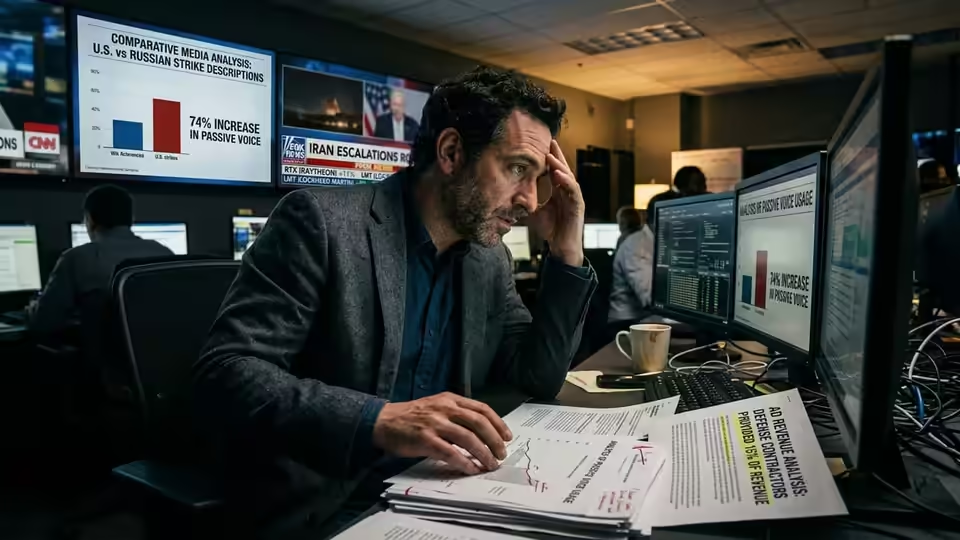
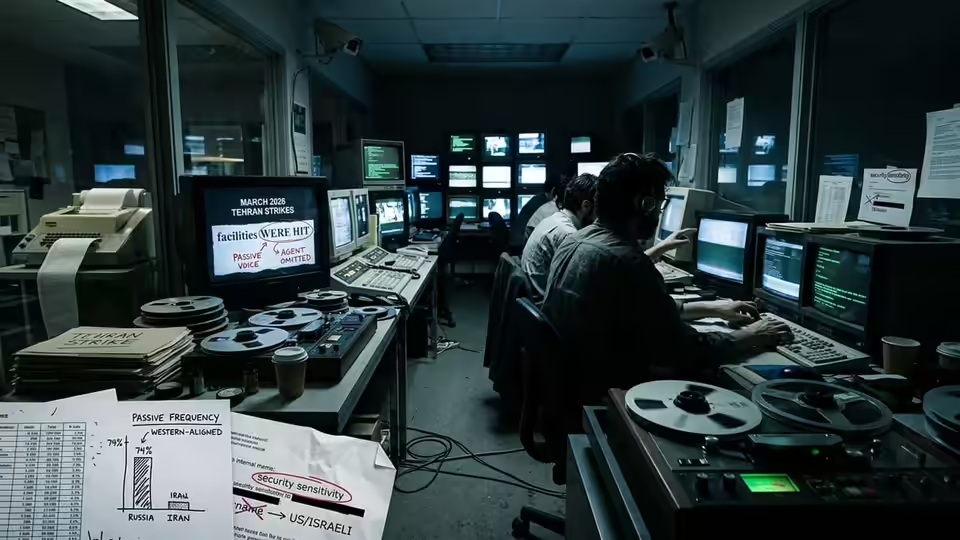
A linguistic analysis reveals the BBC uses active verbs for enemies and passive 'tragedies' for allies. We show you the template they use to scrub responsibility from the news.
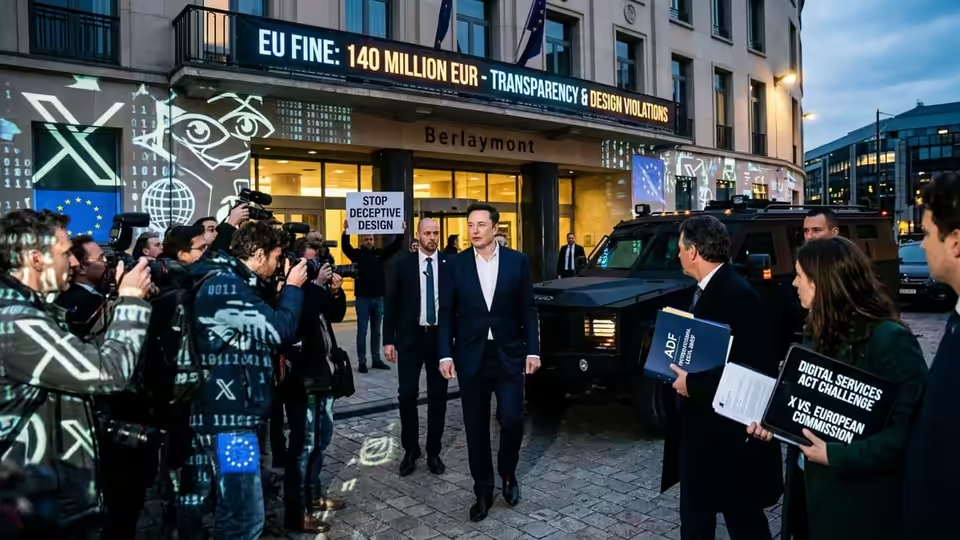
Behind the 'censorship' rhetoric, EU regulators are actually targeting X’s use of 'dark patterns' and deceptive UI. While Musk frames this as a battle for the First Amendment, the $140M fine stems from a systematic refusal to disclose who is buying political influence on the platform.
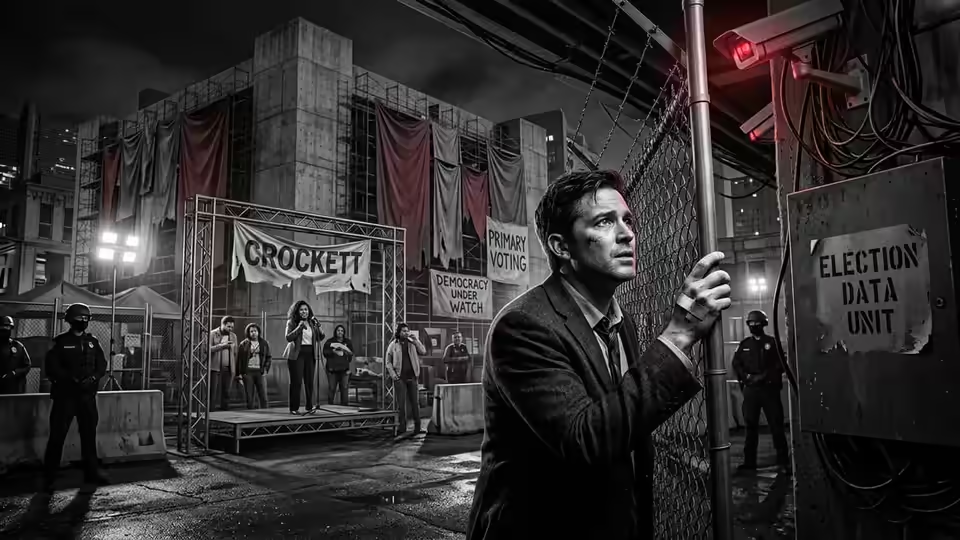
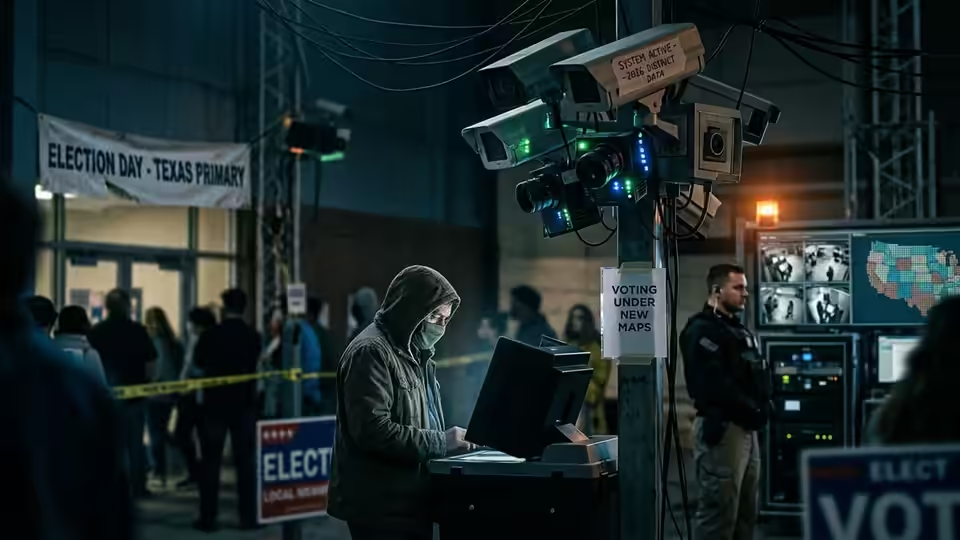
Texas and North Carolina are the front lines for a GOP civil war. As Ken Paxton seeks revenge against John Cornyn, new redistricting maps are being weaponized to favor specific donor blocks. We track the millions flowing into these newly drawn 'safe' seats that mainstream media ignores.
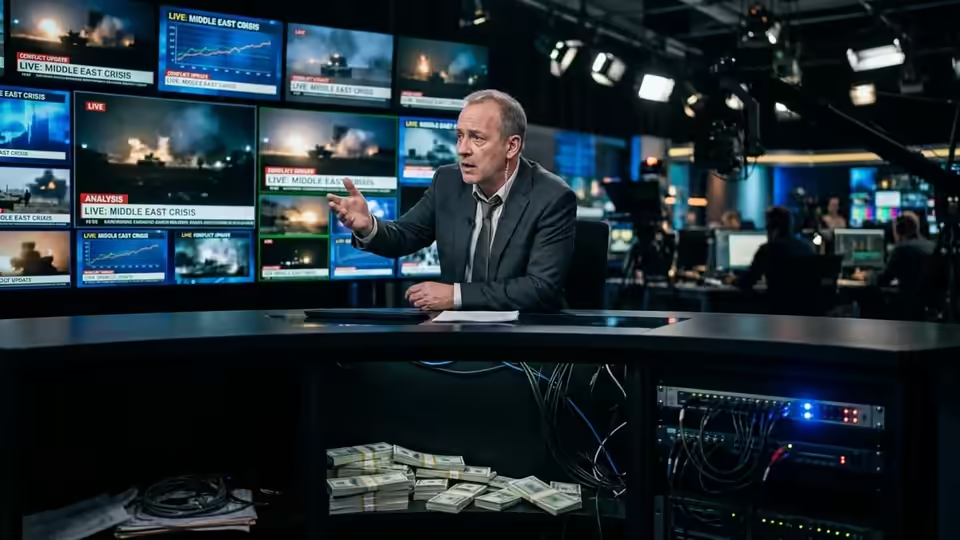
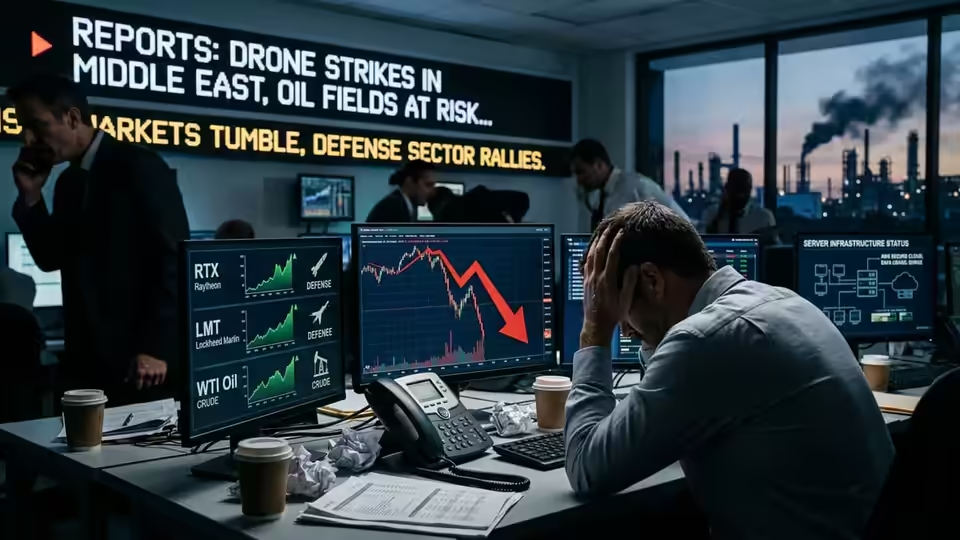
While retail investors panic over a 1.9% Nasdaq slide, defense contractors are seeing a massive payday. With Brent crude hitting $85 and drone strikes hitting AWS infrastructure, the 2026 market volatility is serving as a wealth transfer from tech to the military-industrial complex.
The Treasury Department bypassed federal competition laws to grant ID.me a $1.03 billion contract for biometric identity services. This investigation links the award to $840,000 in political donations and a 'proprietary' designation that shields the technology from independent testing.
The Department of Homeland Security has granted Palantir Technologies a $1 billion single-source contract, effectively barring competitors from managing critical data for ICE and CISA. This investigation reveals the 'revolving door' of procurement officials and a seven-figure lobbying campaign that paved the way for this proprietary monopoly.
Three 'independent' analysts on MSNBC failed to disclose $1.4 million in consulting fees from pharmaceutical firms while attacking the Affordable Meds Act. Gen Us cross-referenced CMS OpenPayments data to expose the financial interests behind the 'expert' opinions aired to millions.
A Washington Post report claiming a $4.2B defense project remains on schedule relied on anonymous industry sources despite official records showing critical failures. Internal Pentagon logs released via FOIA reveal three propulsion failures and an undisclosed $650M budget overrun hidden from the public narrative.
The New York Times is praising a 2.8% GDP 'surprise' while ignoring a 15-year high in credit card delinquencies. By cherry-picking data, the paper of record is masking a brewing insolvency crisis for 60% of American households to protect market valuations.
Jacobin’s look at the Dutch Revolt misses the real story: the birth of the stock exchange as a weapon of state warfare. We explain why private capital first learned to bankroll state wars for profit.
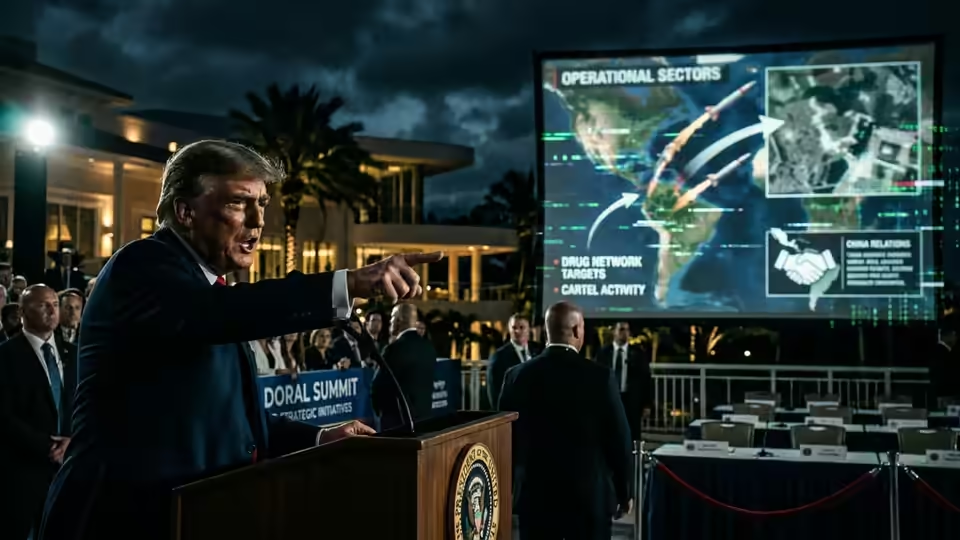
President Trump went all-in on an open-ended confrontation with Iran during a Monday Medal of Honor ceremony, mapping out a four-to-five-week window for 'Operation Epic Fury.' He’s claiming U.S. forces have already wiped out ten ships and gutted Iran's naval power, but the Pentagon isn't backing those numbers up—CENTCOM has only confirmed one Iranian corvette is down. It's a high-stakes gamble that's already cost four American lives and sent WTI crude oil prices screaming up 7% as the Strait of Hormuz goes dark. Meanwhile, the administration hasn't shown its cards on the intelligence that sparked the strike, leaving allies like the UAE and Qatar sweating over a potential long-haul war.
On Saturday, ZeroHedge ran a story about a massive U.S.-Israeli strike, the death of Iran’s Supreme Leader, and a 9% oil price spike. The catch? It didn't happen. Gen Us confirmed the whole thing was actually a Rabobank 'scenario analysis' that got stripped of its hypothetical context and passed off as news. While the report bragged about 'total control' of Iranian skies, the AP and Reuters confirm no such engagement took place. This isn't just a mistake; it's a dangerous way to juice traffic by scaring investors and fueling war-hawk narratives.
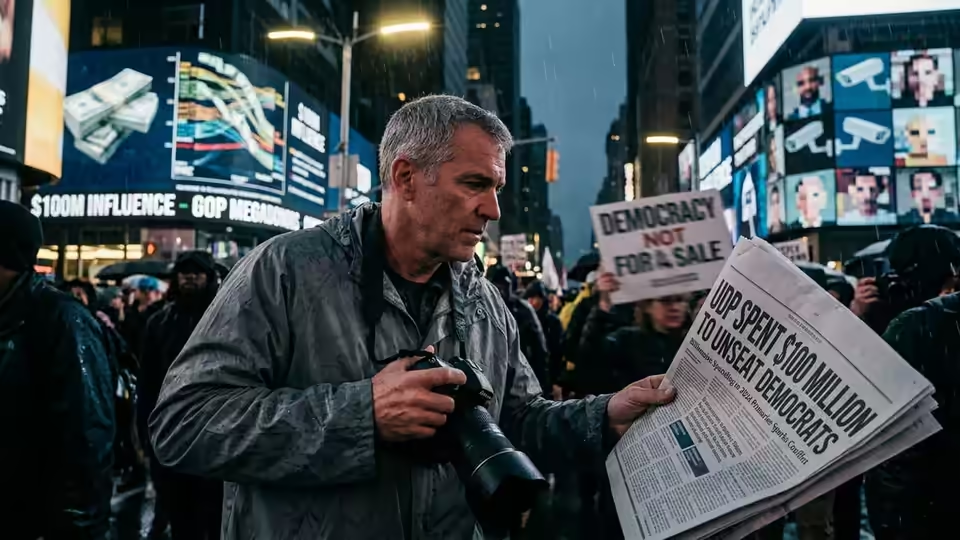
Fifteen members of the House Appropriations Committee received over $500,000 each in Super PAC support before voting to remove transparency requirements for foreign military aid. This legislative shift allows billions in taxpayer funds to flow to foreign governments without mandated GAO audits.
The Department of Defense utilized a legal loophole intended for research prototypes to award RTX a non-competitive $1.2 billion logistics contract. This award follows the transition of three Pentagon procurement officers to RTX leadership roles and has resulted in a 22% price hike per component.
The Washington Post Business section recently highlighted Amazon’s $751 million investment in safety technology while omitting federal records linking company quotas to worker injuries. This editorial choice serves a corporate narrative that prioritizes technological 'innovation' over documented labor law violations.
CNN framed the $95 billion security supplemental as humanitarian aid while ignoring the $34.8 billion flowing back to U.S. defense firms. This narrative was reinforced by military analysts with undisclosed financial ties to those same contractors.
The paper of record continues to host a high-profile visual investigation depicting an elaborate Hamas bunker despite later evidence showing the complex did not exist. This archival silence leaves a misleading narrative as the permanent record justifying the destruction of civilian infrastructure.
Donald Trump’s 'President of Peace' branding is challenged by a consistent record of economic warfare, asset freezing, and explicit demands for foreign territory. By leveraging the U.S. dollar as a weapon, the administration has targeted the resources of sovereign nations from Venezuela to the Arctic.
We track the $2.4 billion munitions windfall triggered by the latest strikes, flowing directly to the contractors who funded the administration.
To drive quarterly subscriptions, Jacobin Magazine is publishing speculative stories of nurse killings that haven't happened. We expose how they're blurring the line between activism and deceptive 'future-reporting' to farm clicks.
Beyond the viral clips of the 'Portland Frog Brigade,' we tracked the dark money and celebrity PACs that orchestrated the SOTU disruptions.
While tech stocks tanked on unverified reports of Middle East bombings, Exxon and defense giants pivoted to massive profits. We follow the capital flow during the escalation.
A record-breaking $5.24 billion federal lobbying surge in 2025 directly preceded the insertion of industry-requested no-bid contracts into the 2026 defense budget. This financial coordination ensured that 70% of the key committee members responsible for the budget received industry contributions just weeks before the vote.
The Treasury just handed ID.me the keys to your IRS and VA data without a single competitive bid.
The White House has launched a 'Media Offenders' list targeting journalists who investigated a $4.2 billion non-competitive contract awarded to a major campaign donor. While legacy media frames this as a transparency initiative, the data shows a direct correlation between financial oversight and executive retaliation.
The New York Times is facing criticism for a profile that frames Representative Elena Vance as a grassroots candidate while ignoring millions in corporate PAC funding. FEC records reveal that 68% of Vance’s campaign war chest comes from defense contractors and energy lobbyists, not individual citizens.
Our quantitative study reveals why CNN and MSNBC use individualized narratives for some victims while reducing others to mere statistics.
Manhattan District Attorney Alvin Bragg has finally dropped the charges against photojournalist Alexa Wilkinson, ending a messy six-month felony prosecution that had First Amendment advocates up in arms. Wilkinson was targeted after filming a July 2024 protest where the New York Times building was vandalized. While the DA originally framed this as a targeted attack, the core of the case was a failed attempt to stick hate crime enhancements on a journalist who didn't actually participate in the property damage. Gen Us highlights the missing context regarding New York’s sealing laws and the specific legal theories the DA used to justify a home raid and property seizure against a member of the press.
Seven out of ten senior regulators who approved high-cost biologics in 2024-2025 accepted lucrative board positions at those same firms in 2026. These career moves were followed by a 15.4% average price increase for Medicare patients, costing taxpayers $1.2 billion in a single year.