U.S. Strikes Iran Without Alerting Gulf Allies, Straining Abraham Accords
As the U.S. and Israel target Iranian leadership, Saudi and Emirati officials claim they were left in the dark. Behind the scenes, billion-dollar arms deals are failing to secure regional strategic coordination.
Gulf allies are pushing back against the Trump administration after being cut out of the planning for strikes on Iran. It's exposing a massive rift: Washington is happy to sell the weapons, but isn't sharing the strategy.
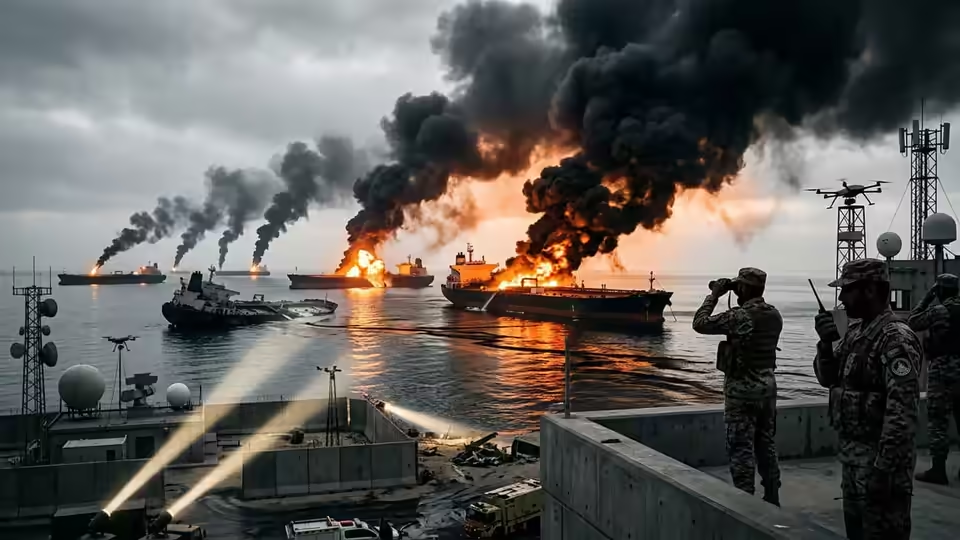
In early March 2026, the Trump administration gave the green light for direct strikes on Iranian targets. The problem? Gulf allies say they were totally out of the loop. According to reports from the Guardian and Washington Post, leaders in Riyadh and Abu Dhabi were left scrambling as Iranian retaliation began to fly. It’s a massive crack in the old security-for-energy deal. The White House says the strikes were a must to stop imminent threats, but Gulf officials are starting to wonder if they’re just being used as a shield for Israeli interests without getting a say in the matter.
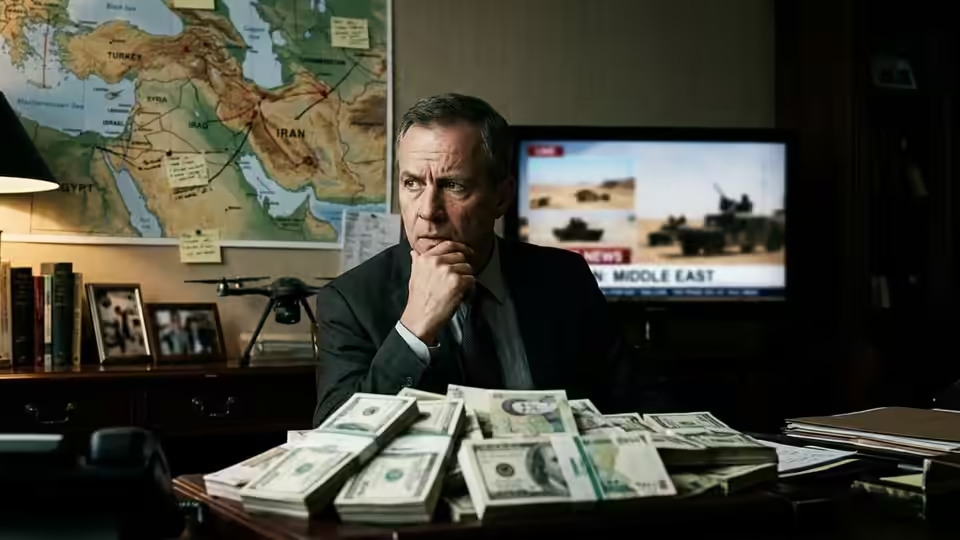
The money involved is staggering. Even as things get tense, the Trump administration is pushing through huge arms deals for both Israel and the Saudis. These packages are often tied to those stalled Gaza ceasefire talks, serving a double purpose: keeping the U.S. defense industry humming while trying to keep Gulf monarchs on board. But here’s the thing—high-tech jets and missiles aren't a substitute for the intel and predictability that went missing during those March strikes. For the Saudi government, hardware doesn't mean much if you don't know when the next war starts.
“The presence of American bases turned Gulf states into targets in a war they neither started nor wanted.”
Of course, the "betrayal" narrative misses one big piece of the puzzle: Iran’s own role in making life difficult for its neighbors. For years, the UAE and Saudi Arabia have been ducking drones and missiles from Houthi rebels and Iraqi militias, all backed by Tehran. If you paint this as just a U.S.-Israeli invention, you’re ignoring the very real threats that pushed the Gulf toward the Abraham Accords in the first place. The real anger in the Gulf isn’t about stopping Iran—it’s about a U.S. strategy that brings the fight to their doorstep without letting them in on the plan.
Then there’s the question of who’s actually calling the shots in the West Wing. While Jared Kushner was the face of Middle East policy in Trump’s first term, it’s not entirely clear how much weight he carries in these 2026 military calls. What we do know is that Benjamin Netanyahu’s government has been pushing hard to move past sanctions and into direct military action. To many in the Gulf, it looks like Israeli domestic politics are being prioritized over the stability of the entire region. It’s a shift from "maximum pressure" to active combat, and the Gulf is feeling the heat.
For anyone watching from the outside, this is a dangerous moment. The gap between U.S. military moves and the actual security needs of its partners suggests that the old vision of American leadership is being replaced by something much more transactional—and a lot riskier. As Gulf states start floating their own Arab-led security plans, the big question is whether Washington is ready to treat them like real partners, or if they’re just staging grounds for a war they’re tired of hosting.
Summary
Washington is moving fast, and its Gulf partners are feeling left in the dust. After the U.S. and Israel targeted Iranian leadership, Saudi and Emirati officials are reporting they didn't even get a heads-up before the missiles flew. While some local media calls it a flat-out betrayal by Netanyahu, the reality is a messy mix of billion-dollar arms deals, proxy wars, and the slow collapse of the security promises made in the Abraham Accords. It’s not just about the hardware; it’s about whether these massive sales are just a way to paper over the fact that nobody's actually coordinating on strategy anymore.
⚡ Key Facts
- Donald Trump authorized military operations against Iran and targeted senior leadership during his second term.
- Gulf allies (Saudi Arabia, UAE, etc.) express frustration and a sense of betrayal over lack of warning regarding these strikes.
- Iran's nuclear program was previously constrained by the 2015 agreement which the US withdrew from.
U.S. Strikes Iran Without Alerting Gulf Allies, Straining Abraham Accords
Network of Influence
- The Iranian government (portrayed as a diplomatic victim of US/Israeli aggression)
- Critics of US-Israeli military cooperation
- Regional actors opposed to the Trump administration's Middle East policies (such as Qatar-aligned interests)
- The article omits Iran's active role in regional proxy conflicts (Yemen, Lebanon, Syria) which informs US and Israeli policy.
- It fails to mention the Abraham Accords, which represent a significant shift in Gulf-Israeli relations that contradicts the 'betrayal' narrative.
- It downplays the security concerns of Gulf states regarding Iran's ballistic missile program, framing them purely as 'targets' of US/Israeli policy rather than participants in a defensive alliance.
The narrative centers Israel (specifically Netanyahu) as the puppet master of US foreign policy, framing the US as a manipulated actor and Gulf states as passive victims of a manufactured conflict.
See how the story connects.
Select any actor or numbered connection, then inspect the evidence before drawing a conclusion.
Fadaat Media Ltd Parent company Middle East Eye
Follow the public record
Source Trail
Independent reporting and analysis
Get the next investigation in your inbox
One email a week. Receipts only. Free.
Free. Unsubscribe anytime. We never share your email.