$120 Oil and the Secret War the White House Won't Admit
The US and Israel are fighting a unified war against Iran without Congressional approval. As gas prices soar, the Treasury is quietly easing Russian sanctions to prevent an economic meltdown.
The U.S. and Israel are deep into a joint war against Iran, but the strategy is a mess. As oil prices soar and secret talks continue in Geneva, the White House is bypassing Congress to run a campaign that looks more like a long-term occupation than a surgical strike.
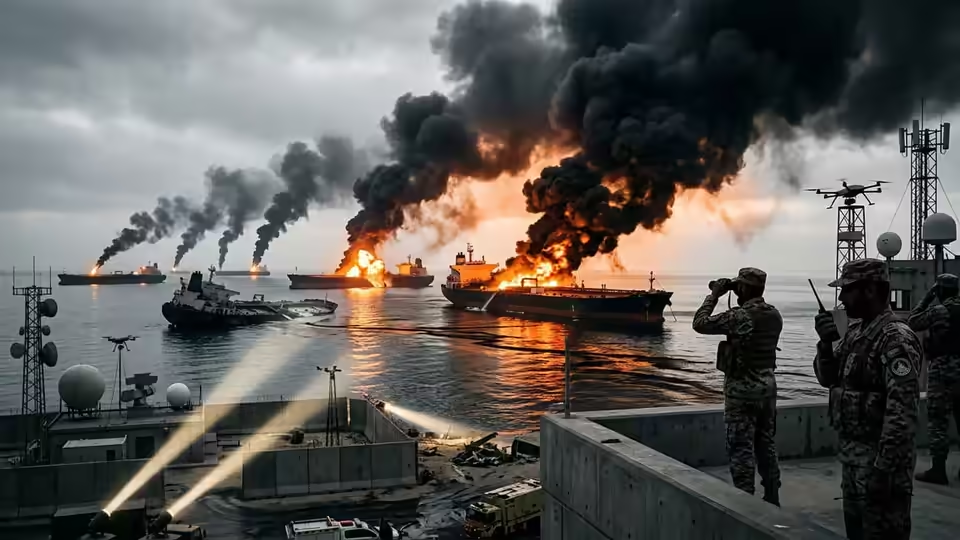
We're three weeks into a conflict that's fundamentally rewriting the rules in the Middle East. This isn't just another round of limited strikes. The 'February 28 Campaign' has the Pentagon and the IDF working so closely they're basically one military. But don't let the tactical precision fool you; there’s a massive strategic void at the top. Defense Secretary Pete Hegseth says we’re looking at a three-to-eight-week window. Meanwhile, President Trump claimed the war was 'very complete' back on March 9, only to backpedal when oil prices spiked. The hardware is synced up, but the leadership? Not so much.
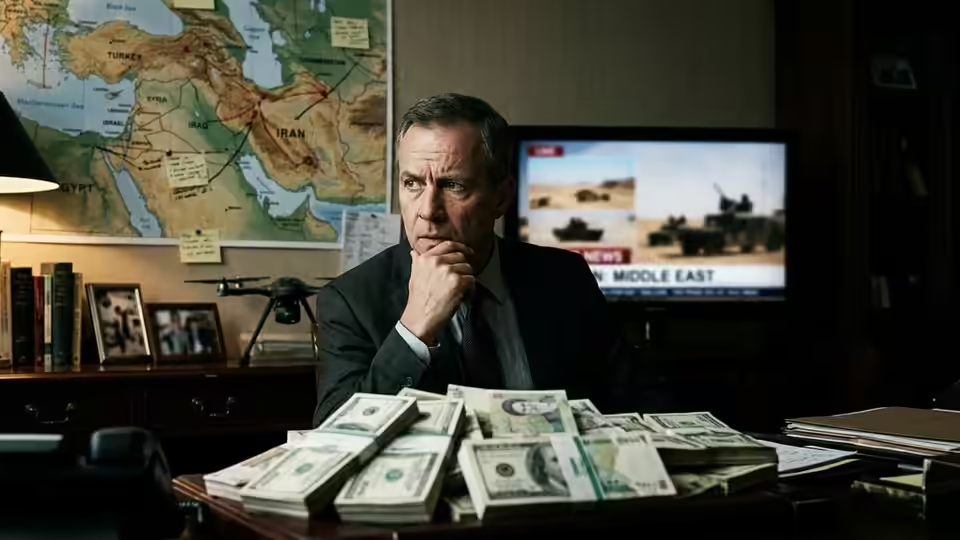
The money tells the real story. With oil sitting at $120 a barrel, the U.S. Treasury quietly pushed through sanctions waivers for Russian oil sales until April 4. Think about the irony there. To pay for a war against one enemy, the administration is giving a free pass to another just to keep the American economy from cratering. Now that the fighting has spilled into Lebanon and Mojtaba Khamenei’s forces are hitting back, we've entered a messy feedback loop. It’s a goldmine for defense contractors and energy speculators, but the U.S. taxpayer is the one left holding the tab.
“To fund a war against one adversary, the administration is effectively easing pressure on another to keep domestic gas prices from tanking.”
Then there's the legal side of things—or lack thereof. There’s been no formal declaration of war. No new Authorization for Use of Military Force (AUMF) from Congress. Nothing. By calling this 'defensive coordination' with an ally, the White House has basically sidestepped the War Powers Act. Without any oversight from Capitol Hill, there are no benchmarks for success. It’s a recipe for another 'forever war' that feels all too similar to the decades-long slogs in Iraq and Afghanistan.
The weirdest part of the whole thing is happening far away from the front lines. While U.S. and Israeli jets are hitting targets, American officials are reportedly in Geneva talking 'guiding principles' for a new nuclear deal with the Iranians. It’s a bizarre double-track strategy. The U.S. is trying to bomb Iran into accepting a deal that the State Department is already busy negotiating. Whether the plan is to wipe out Iran's nuclear tech or just leverage a better 'Trump Deal' remains the central, unanswered question of the conflict.
For everyone else, this war mostly means pain at the pump and a ballooning national debt. There’s still no clear explanation for how these strikes actually make Americans safer at home. With Iran’s new leadership digging in for a fight, the whole region is a powderkeg. Now we're waiting to see if the GOP-led Congress will step in and retroactively greenlight the war. If they do, it’s a sign we’re staying for the long haul, not just a quick hit.
Summary
The U.S. and Israel have been fighting as a single, unified force against Iran since February 28, 2026. It's an unprecedented move, but there's a problem: the Trump administration can't seem to decide if this is about stopping nukes or toppling the regime. As oil hits $120 a barrel, the Treasury is actually easing up on Russia just to keep gas prices from spiraling. All this is happening without a word of approval from Congress, even as secret talks in Geneva suggest the White House is trying to negotiate with the same people it's currently bombing.
⚡ Key Facts
- The US and Israel launched a coordinated, joint military campaign against Iran starting February 28, 2026.
- Oil prices approached $120 a barrel following the start of the conflict.
- Donald Trump and Benjamin Netanyahu may have conflicting objectives regarding the war's endgame and duration.
- The war is entering its third week as of mid-March 2026.
$120 Oil and the Secret War the White House Won't Admit
Network of Influence
- Political opponents of the Trump administration and Netanyahu
- Anti-war advocacy groups
- Geopolitical adversaries of the US-Israel alliance who benefit from narratives of internal discord
- The article fails to mention specific Iranian military actions or provocations that might have led to the described escalation.
- It lacks detail on the role of the U.S. Congress or the War Powers Act in authorizing such a conflict.
- It ignores the perspective of other regional actors (e.g., GCC states) who would be impacted by such a war.
The article frames the conflict as a dysfunctional and uncoordinated 'joint war' where U.S. military power is effectively subservient to Israeli political interests.
See how the story connects.
Select any actor or numbered connection, then inspect the evidence before drawing a conclusion.
Guardian Media Group (GMG) Owns The Guardian US
Follow the public record
Source Trail
Independent reporting and analysis
Get the next investigation in your inbox
One email a week. Receipts only. Free.
Free. Unsubscribe anytime. We never share your email.