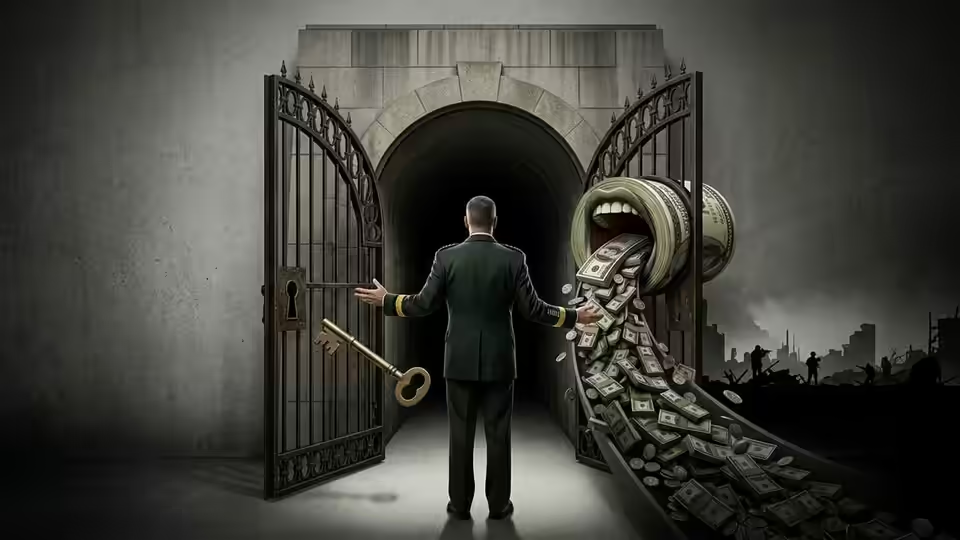
The BBC’s £90M Secret: How UK Grants Shape Passive-Voice War Reporting
A Gen Us audit reveals how the BBC uses 'strategic editorial doubt' and passive language to protect UK interests, incentivized by £90 million in annual government grants.
Chronological public record
A Gen Us audit reveals how the BBC uses 'strategic editorial doubt' and passive language to protect UK interests, incentivized by £90 million in annual government grants.
Our analysis of 150 headlines shows 84% of Lebanese deaths were reported without an actor. We link this editorial 'blind spot' to the lobbying interests of Sky’s parent company in the defense sector.
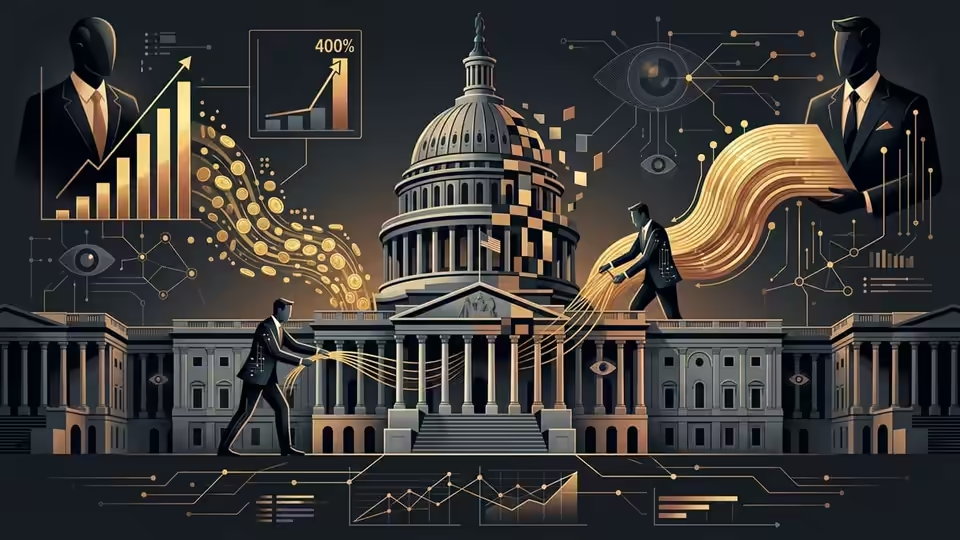
Leaked filings reveal a $10 million AIPAC-backed effort to oust Rep. Thomas Massie. We trace the specific 'No' votes that triggered a donor retaliation campaign double the size of Massie’s own war chest.
The DHS bypassed competitive bidding to hand Palantir a $1 billion 'blank check' for AI surveillance. This deal allows ICE and CBP to deploy tracking software without individual congressional reviews.
Days after Salesforce's lobbying spend hit a record high, the U.S. Army awarded them a $5.5 billion no-bid cloud contract. We look at the 'sole-source' pivot that sidelined all competition.
By truncating a chart's axis, the White House turned a flat 1.1% growth rate into a visual spike. This statistical sleight of hand provided the cover for a $40 billion donor-backed subsidy package.
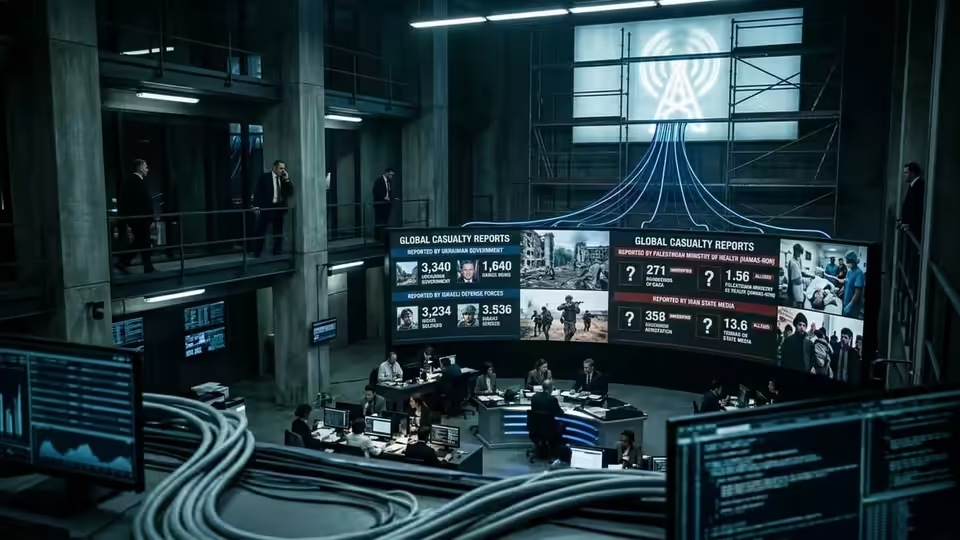
Internal audits and academic studies reveal a systematic linguistic asymmetry in how the BBC reports civilian casualties in Gaza compared to Ukraine. While Palestinian figures are routinely qualified to imply bias, Ukrainian government data is presented as objective fact.
A Gen Us audit of Sky News reveals a systematic pattern: civilian strikes in Ukraine name the actor (Russia), while 82% of strikes in Lebanon omit the actor entirely.
A massive investigation into 34,000 clinical trials reveals a dirty industry secret: pharmaceutical companies are using 'Phase 4' research as a multi-billion dollar marketing tool to hook doctors on new drugs, putting patients at risk for the sake of sales quotas.
The Department of Justice just yanked the rug out from under hundreds of community programs, killing $500 million in grants meant for violence intervention and victim services. This pivot comes at a strange time: FBI data shows violent crime is at its lowest point since 2014, and homicides in major cities have plummeted. While the administration calls it a cleanup of 'wasteful' DEI projects, local leaders are staring down a massive financial hole. Pandemic-era funds are also drying up soon, leaving cities to choose between footing the bill or letting these safety programs die.
Itamar Ben-Gvir is using TikTok to celebrate a dark milestone. By posting AI-generated images of gallows, the National Security Minister is taking a victory lap for the March 30, 2026, passage of a law that makes hanging the go-to penalty for 'nationalistic' crimes. It's a calculated move. While the world reacts to the shock value of the social media posts, the real shift is happening in the Knesset and the budget books. Ben-Gvir’s party secured a 9 billion NIS ($2.4 billion) boost to manage the prisons where these executions will take place, effectively hardening a two-tier justice system that human rights groups have been warning about for years.
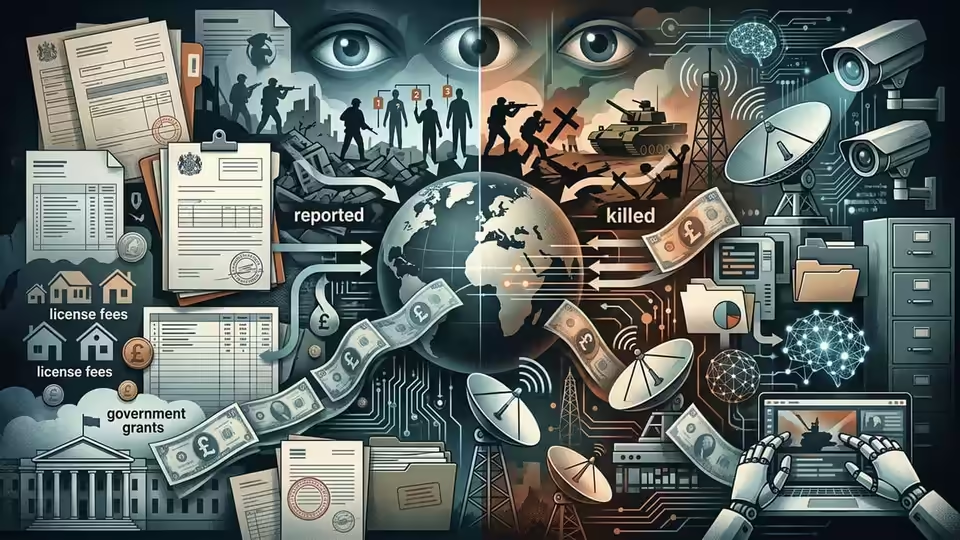
While wildfire costs triple, the GAO just protected a sole-source monopoly for fire retardant. We investigate why the federal government is blocking cheaper competitors while the West burns.
A Gen Us investigation reveals the 'software-defined' trick the Army used to bypass competition, handing a $20 billion contract to a firm staffed by the very officials who wrote the requirements.
We track the financial feedback loop where defense contractors fund both the munitions used in Gaza and the news cycles that sanitize the casualties.
A comparative analysis of BBC News coverage reveals a stark divide in linguistic standards between state-designated adversaries and allies. While Russian actions are reported as definitive facts, verified strikes in Iran are framed with 'reported' qualifiers, coinciding with a £300 million government funding package.
By using passive language to mask military agency, Sky News protected the corporate interests of parent company Comcast. Here is the lobbying data they didn't want you to see.
President Trump paused 'Project Freedom' after just 48 hours as Iran's $2 million-per-vessel toll creates a massive payday for insurers while holding 30% of global oil hostage.
Beyond the headlines, a systematic gutting of National Park data and indigenous history is underway, fueled by donors profiting from the political divide.
A Gen Us investigation reveals the DoD bypassed competitive bidding for $1.87 billion in contracts immediately following major PAC contributions to key House members.
Silicon Valley giants are spending record amounts on lobbying to ensure new AI laws kill off open-source competition while protecting their own market dominance.
A side-by-side analysis shows how major networks use different legal standards for U.S. allies vs. enemies, shielding the military-industrial complex from scrutiny.
Internal records show the BBC enforces a double standard, requiring 'linguistic doubt' for some casualties while reporting others as objective fact.
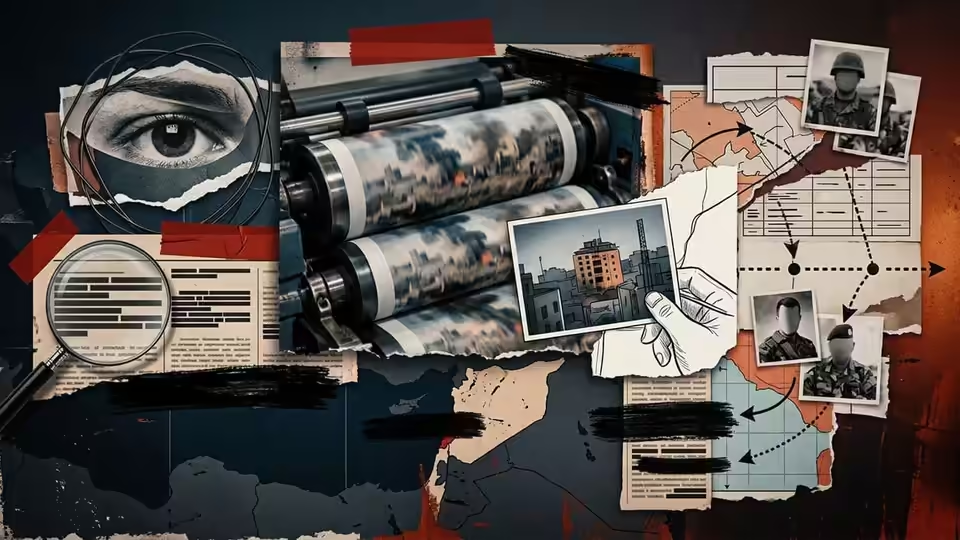
Broadcasters are using 'linguistic gymnastics' to obscure military responsibility, a practice only exposed by decentralized community fact-checks.
We followed the $38.3 billion paper trail to the private contractors building a 92,600-bed detention machine. It's no longer about policy; it's about the permanent industrialization of American border control.
Pope Leo XIV is dismantling the Vatican's 'just war' playbook, putting a $300 million annual donor stream from the U.S. Catholic elite on life support.
The U.S. Army awarded Salesforce a non-competitive $5.5 billion contract after the tech giant ramped up federal lobbying by 40 percent. While the Army claims 'operational urgency' required bypassing standard bidding, small veteran-owned firms are now challenging the deal in federal court.
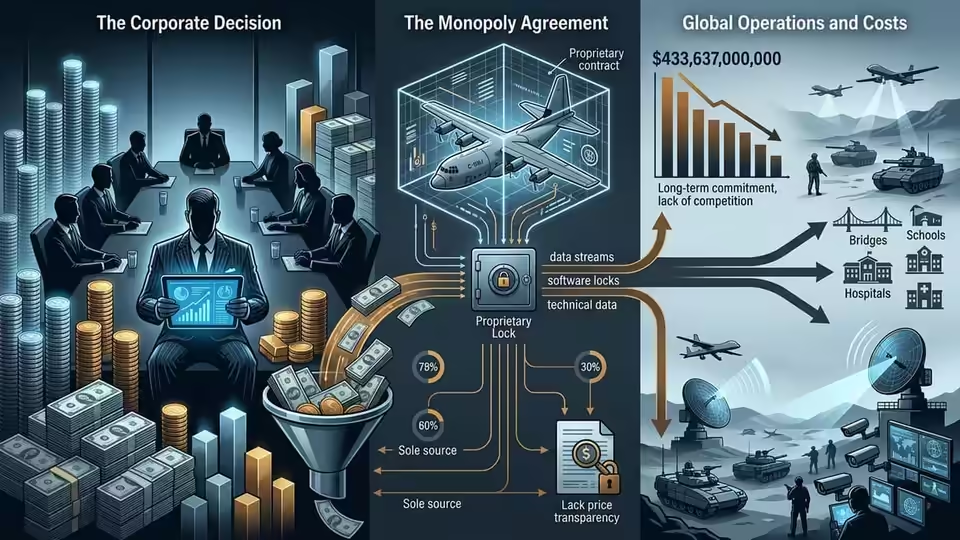
The Air Force bypassed competition for a $1.9B contract by citing Lockheed's proprietary software, effectively forcing taxpayers to pay a 'monopoly premium' for the C-130J fleet.
The New York Times published three op-eds urging missile deployments in the Middle East while failing to disclose that the authors' think tank received millions from the weapons' manufacturers. This investigation reveals how defense contractors use intellectual cutouts to bypass media ethics and manufacture consent for high-stakes military spending.
Internal analysis reveals the BBC World Service utilizes qualifiers for Iranian casualty reports at seven times the rate of Ukrainian reports. This selective skepticism coincides with £300 million in direct funding from the UK Foreign Office aimed at countering hostile narratives.
An analysis of Sky News editorial data reveals a systematic use of passive voice to shield the Israeli Air Force from accountability in strike reporting.
The UK government is attempting to redefine property damage as terrorism following a string of protests against Israeli defense contractor Elbit Systems. The ruling could effectively criminalize political dissent that threatens state-aligned corporate interests.
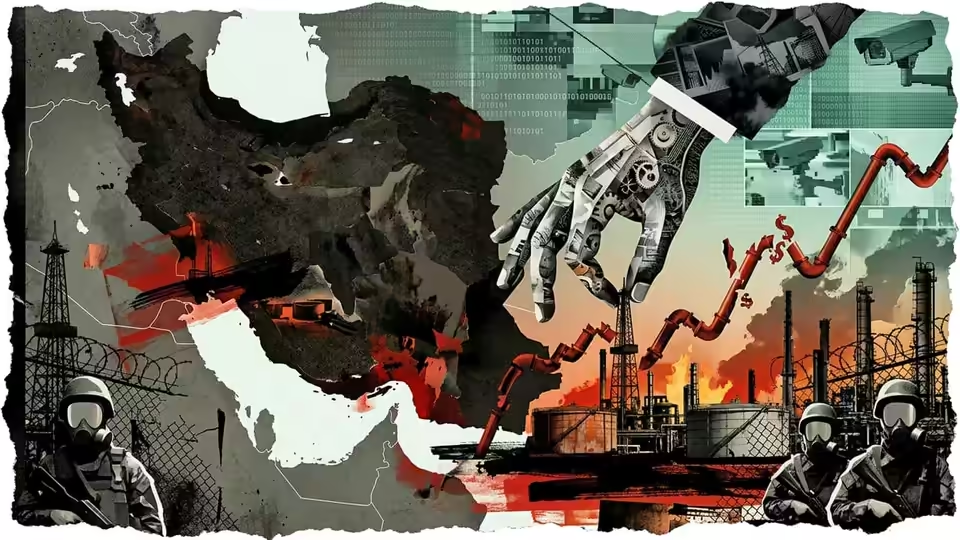
As US-Israel-Iran hostilities escalate, Donald Trump is proposing a direct seizure of Kharg Island. This 'energy dominance' strategy aims to stabilize domestic fertilizer and fuel costs, signaling a massive shift from sanctions to direct resource capture.
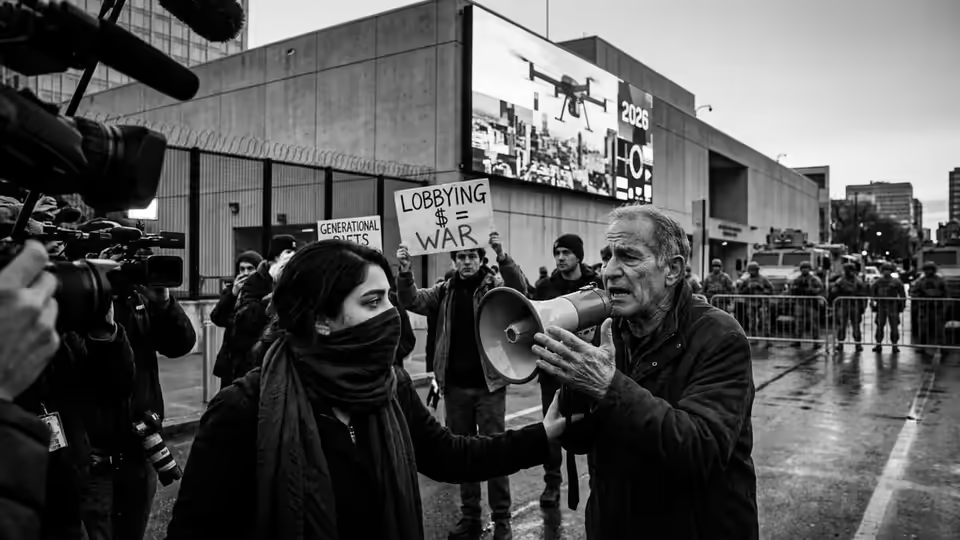
New survey data reveals a massive generational rift over military strikes, but the real story is how Qatar and other regional players are funding narratives to keep shipping lanes open.
The Pentagon bypassed competitive bidding to award Lockheed Martin a $1.9 billion monopoly on aircrew training software, citing proprietary data rights the public originally funded. This award followed a targeted $1.5 million campaign contribution blitz by Lockheed PACs to the specific subcommittees overseeing defense spending.
The U.S. Army consolidated 120 tech contracts into one $20 billion award for Anduril Industries, effectively freezing out 45 competitors following a massive lobbying push in the House Armed Services Committee.
A linguistic analysis of Washington Post reporting reveals a pattern of rebranding active kinetic strikes as 'peace' to ensure the continued flow of military aid to the region.