The $185M Donor Trail Keeping the GOP Alive as Trump's Approval Craters
President Trump’s approval just hit a second-term low of 34% according to Pew Research. Between a messy conflict in Iran and aggressive deportation tactics, the administration is struggling. While legacy media is obsessed with the idea of Republican 'self-destruction,' the financial reality is a lot more complicated. GOP-aligned Super PACs aren't backing down: they're doubling down. Despite the President's sinking popularity, Republican fundraising is actually beating the Democrats in three vital battleground states. This story follows the $185 million donor trail that might keep the Senate red even as Trump's numbers crater.
President Trump’s approval has hit a record low of 34%, but a $185 million GOP financial firewall is working hard to stop a Democratic Senate takeover in 2026.
New national polling from May 2026 shows Donald Trump’s approval rating has collapsed to 34%, according to the Pew Research Center. It's a massive blow to the coalition that put him back in the White House less than two years ago. The Guardian and other outlets are calling this a moment of Republican 'self-destructionLoaded Language,' but the raw numbers show a clear split between the President’s popularity and the party’s survival. The latest NPR/PBS News/Marist poll shows 61% of Americans now hate the direction the administration is taking. They're specifically frustrated with the escalating conflict in Iran and a domestic deportation campaign that’s moved from targeted raids to sweeping community searches.
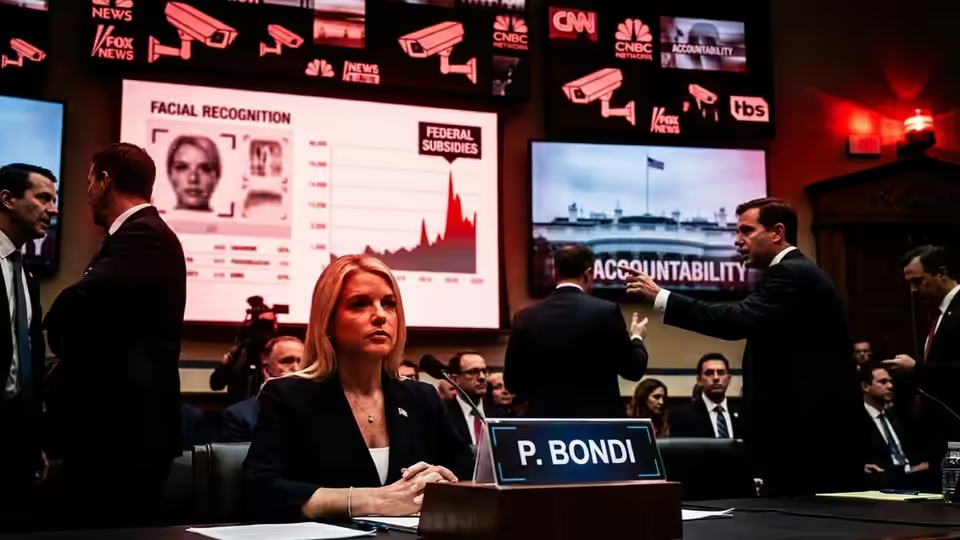
But the financial machine behind the GOP isn't slowing down. FEC filings show the Senate Leadership Fund, a Super PAC tied to party leadership, has already locked in over $185 million for the 2026 cycle. This is a war chest built to protect vulnerable incumbents from the 'Trump drag.' While some reports focus on anecdotal 'buyer’s remorse' in rural Iowa, they’re missing the bigger picture. Corporate donors in the energy and defense sectors have actually increased their contributions by 22% compared to last year. It turns out that deregulation of federal lands and massive military spending are still very popular with the donor class.
Then there’s the [Dark Money]. These are funds from non-profits that don't have to name their donors, often used to swing elections without anyone knowing who's paying. This cycle, groups like Americans for Prosperity have already dropped $45 million on digital ads in Pennsylvania and Wisconsin. These ads don't even mention the President’s personal drama. Instead, they’re pivoting to 'economic stability.' It’s a message that makes the Democratic dream of a clean sweep look much harder to achieve.
“Pew Research Center reports Trump’s approval at 34%, the lowest of his second term, while 61% of voters express disapproval.”
The human cost of these policies is matched by their price tag. The administration’s 'mass deportation' plan costs taxpayers about $12 billion every year, according to the American Immigration Council. In places like Columbus Junction, Iowa, this looks like community-wide fearLoaded Language. But in Washington, it looks like a massive payday for private prison contractors. Companies like GEO Group and CoreCivic have seen their stock prices jump by an average of 14% since the deportations ramped up in early 2025.
For context, an [Approval Rating] is just a snapshot of how the public feels about a leader's job performance at a specific time. While the national average is sitting at a shaky 37% in the Washington Post–ABC News–Ipsos poll, the internal party numbers tell a different story. Trump still has an 85% approval rating among registered Republicans. That suggests the 'self-destructionLoaded Language' narrative hasn't hit the base yet. They're still locked in.
We don't know yet how the Democratic Senatorial Campaign Committee (DSCC) plans to counter this. They've been strangely quiet about their strategy for the 2026 midterms. Democrats had some big special election wins in 2025, but they're still facing a 'red wall' of Senate seats in states where the President's approval, while low, is still higher than his 2024 winning margins. For the average voter, the gap between national disapproval and who actually controls the Senate will likely be decided by the $250 million in dark money currently flooding the airwaves.
The kicker will be the June 15 FEC filing deadline. That’s when we’ll see if those mid-30s approval ratings have finally scared off the institutional donors who have stayed the course so far. For the GOP to keep their Senate majority, they'll have to find a way to separate their own brand from the President’s personal polling before November 2026.
Summary
President Trump’s approval just hit a second-term low of 34% according to Pew Research. Between a messy conflict in Iran and aggressive deportation tactics, the administration is struggling. While legacy media is obsessed with the idea of Republican 'self-destruction,' the financial reality is a lot more complicated. GOP-aligned Super PACs aren't backing down: they're doubling down. Despite the President's sinking popularity, Republican fundraising is actually beating the Democrats in three vital battleground states. This story follows the $185 million donor trail that might keep the Senate red even as Trump's numbers crater.
⚡ Key Facts
- Donald Trump's approval rating has fallen to approximately 37% as of May 2026, marking the highest disapproval of his two terms.
- The Trump administration has implemented a militarized approach to a mass deportation campaign.
- Democrats have won several major off-year and special elections since Trump took office for his second term.
- An 'Iran war' is currently impacting the Republican party's standing.
- Louisa County in Iowa shifted from Obama to Trump in 2016 and has grown increasingly Republican.
The $185M Donor Trail Keeping the GOP Alive as Trump's Approval Craters
Network of Influence
- Democratic National Committee (DNC) and related fundraising arms
- Anti-Trump political action committees (PACs)
- The Guardian's advertising revenue driven by its predominantly liberal readership
- Does not mention polling that shows Trump leading or holding steady in key swing states.
- Omitted current Republican legislative victories or judicial appointments that appeal to their base.
- Fails to address internal Democratic party fractures or potential weaknesses in their own candidate field.
The article frames the current political landscape as a state of Republican 'self-destruction' and collapse, using emotional anecdotes from specific rural areas to imply a universal voter regret that benefits Democrats.
See how the story connects.
Select any actor or numbered connection, then inspect the evidence before drawing a conclusion.
Scott Trust Ltd Ultimate owner Guardian US
Follow the public record
Source Trail
Independent reporting and analysis
Get the next investigation in your inbox
One email a week. Receipts only. Free.
Free. Unsubscribe anytime. We never share your email.