The $6.7 Trillion Gatekeeper: Senate Ignores Wall Street Ties to Confirm Fed Chair
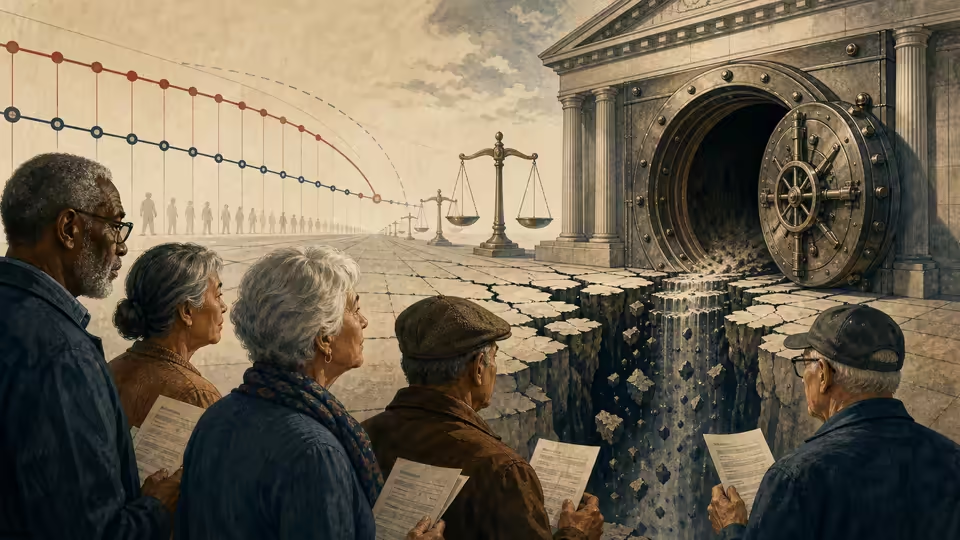
Kevin Warsh just cleared the final hurdle to lead the Federal Reserve, but his path to the chairmanship isn't without controversy. On May 12, 2026, the Senate confirmed him for a 14-year term as a Governor, set to be followed by a vote to make him Chair on May 13. While his Wall Street ties suggest he knows the markets, his sudden shift from an inflation hawk to a Trump-friendly dove has critics worried. Senator Elizabeth Warren is still demanding answers about undisclosed assets from his private sector days. At its core, this is about who manages a $6.7 trillion balance sheet that dictates the cost of living for every American.
Kevin Warsh is on track to lead the Fed starting May 13, 2026. He’s facing heavy heat for switching his economic views to match the White House and for keeping his ties to the $6.7 trillion financial industry under wraps.
The Senate confirmed Kevin Warsh as a Federal Reserve Governor on May 12, checking the last box in a process that’s moved at breakneck speed since his January nomination. If all goes as planned, he’ll be confirmed as Chair on May 13, just two days before Jerome Powell’s time is up. It's a tight schedule designed for a seamless handoff at the world's most powerful central bank. But that speed has also buried questions about Warsh’s finances. The Senate Banking Committee pushed him through on a party-line vote in late April, leaving one big question unanswered: who is he really working for?
Warsh is the definition of an insider. He spent years at Morgan Stanley and worked for billionaireLoaded Language Stanley Druckenmiller at Duquesne Capital. Now, he’s set to oversee the Fed's balance sheet: a $6.7 trillion pile of assets, mostly bonds and mortgage securities, used to steer interest rates. Back when he was a Fed governor from 2006 to 2011, Warsh was a loud critic of growing that balance sheet. He warned it would cause hyperinflation. But things change. Now he’s echoing President Trump’s calls for rate cuts, a move that looks a lot like a gift to the very equity markets his old bosses call home.
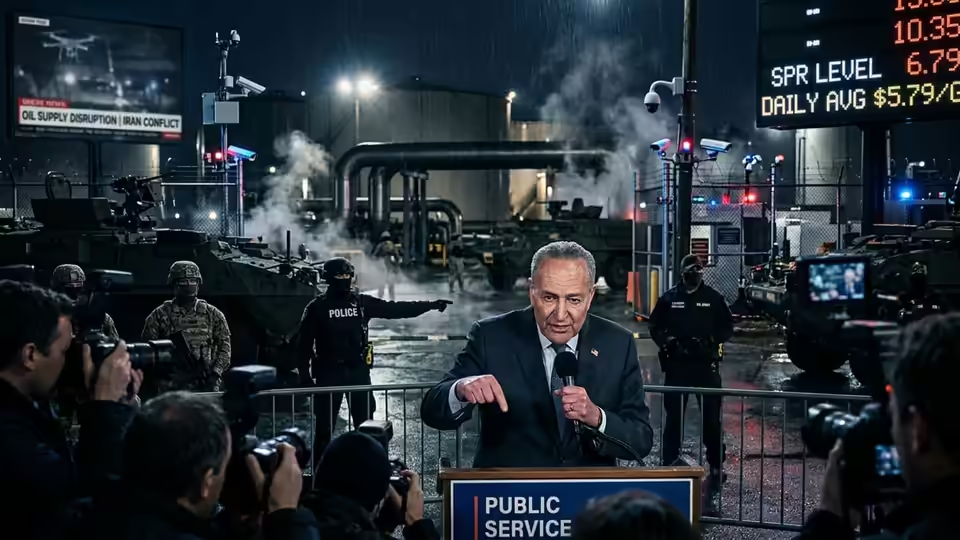
The real friction comes from what we don't see. Senator Elizabeth Warren hasn't stopped pushing for a look at Warsh’s private holdings, many of which stayed hidden while he was in the private sector. Sure, ethics rules say he has to divest once he's in, but we still don't know the exact nature of those assets or what revolving door perks might be waiting for him later. This matters because his policy has shifted so dramatically. Being hawkish usually means fighting inflation at all costs, but Warsh has suddenly turned dovish right as the White House started applying pressure. It's why Senator John Kennedy asked, point-blank, if Warsh would just be the president’s human sock puppetLoaded Language.
“The Fed oversees a $6.7 trillion balance sheet, mostly in government bonds, that determines the cost of everything from groceries to mortgages.”
Big banks are already cheering what people are calling the Warsh Pivot. OpenSecrets data shows the financial sector is the biggest donor to the very committees that oversee the Fed. It’s simple math: when the Fed cuts rates, banks win. Lending goes up and bank shares usually follow. Even a tiny 0.25% cut can add billions to the value of the big four U.S. banks in a single afternoon. Warsh hasn’t really explained if his old hawk views were a real conviction or just a convenient way to pressure a different administration years ago.
This isn't just one appointment. Warsh is actually the third big financial regulator in this administration to come straight from a major firm or hedge fund. They call it industry expertise, but critics see it as regulatory capture. Either way, it usually ends with higher costs for regular people. Interest rates are the Fed's main tool for controlling the money supply. When a Chair focuses on short-term market gains to keep political friends happy, the middle class ends up paying the price through sticky inflation that eats their savings.
We don't actually know the total value of what Warsh is selling off. The Office of Government Ethics hasn't released the full details of his private equity or hedge fund interests yet. And while he's likely to be confirmed on May 13, the rest of the Federal Open Market Committee might not play along. If Warsh tries to force rate cuts that the other governors don't want, we could see a massive internal fight that would shake the institution to its core.
For most people, the Warsh era will be felt in the everyday stuff, like gas prices and mortgage rates. If he bends to the White House and cuts rates too early, we might see a stock market pop that helps the wealthy while grocery bills start climbing again. But if he goes back to his Wall Street hawk roots once the job is secure, those 7% mortgage rates might be here to stay. This May 13 vote isn't just a formality. It’s a decision about who controls the price of money for the next ten years.
Summary
Kevin Warsh just cleared the final hurdle to lead the Federal Reserve, but his path to the chairmanship isn't without controversy. On May 12, 2026, the Senate confirmed him for a 14-year term as a Governor, set to be followed by a vote to make him Chair on May 13. While his Wall Street ties suggest he knows the markets, his sudden shift from an inflation hawk to a Trump-friendly dove has critics worried. Senator Elizabeth Warren is still demanding answers about undisclosed assets from his private sector days. At its core, this is about who manages a $6.7 trillion balance sheet that dictates the cost of living for every American.
⚡ Key Facts
- Kevin Warsh is likely to secure Senate approval on May 13, 2026, as the next Federal Reserve chair.
- Senator John Kennedy asked Warsh if he was going to be the 'president’s human sock puppet' during his April confirmation hearing.
- Warsh worked for Morgan Stanley and the hedge fund Duquesne Capital.
- In February 2022, Warsh warned that 'extraordinary excesses in monetary and fiscal policy caused the inflation dragon to resurface'.
- Senator Elizabeth Warren cited potential conflicts of interest regarding Warsh's undisclosed assets.
The $6.7 Trillion Gatekeeper: Senate Ignores Wall Street Ties to Confirm Fed Chair
Network of Influence
- Kevin Warsh (the narrative suggests his Wall Street background provides him with secret independence)
- The Federal Reserve (presents the institution as robust enough to survive political appointments)
- Financial Institutions (reinforces the idea that 'Wall Street' interests align with economic stability and independence)
- Specific details regarding the 'undisclosed assets' mentioned by Elizabeth Warren.
- The specific economic data from 2024 that might justify a shift from a 'hawkish' to 'dovish' stance beyond political pressure.
- The names of the specific 'government ethics watchdogs' overseeing his divestment.
The article frames Kevin Warsh's controversial ties to Wall Street and his shifting policy positions not as a liability, but as a potential source of 'counterintuitive' independence from Donald Trump.
See how the story connects.
Select any actor or numbered connection, then inspect the evidence before drawing a conclusion.
The Conversation US, Inc. Publishes The Conversation
Follow the public record
Source Trail
Independent reporting and analysis
Get the next investigation in your inbox
One email a week. Receipts only. Free.
Free. Unsubscribe anytime. We never share your email.