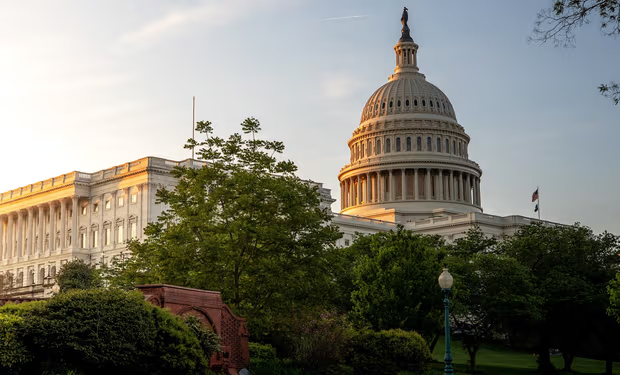
U.S. Capitol, 2023. U.S. House of Representatives / Wikimedia Commons.
Israel’s ambassador tied U.S. troops’ return to Iran’s defeat. The Senate had a different test.
Yechiel Leiter said American soldiers could go home when Iran is defeated. On the same day, senators voted on whether the president needed Congress’s permission to keep U.S. forces fighting.
Leiter said Trump decides deployments. The House asked whether Congress had authorized the fighting. On November 19, the Senate rejected the House measure, 48 to 51.
Asked how American troops could come home from the Middle East while Iran could still arm its proxies, Israel’s ambassador to Washington, Yechiel Leiter, gave Newsmax a condition on November 19. “You get American soldiers back here to the United States to their families when Iran is defeated,” he said. That same day, 51 U.S. senators rejected a House resolution that offered a different test for keeping Americans in the fight: had Congress authorized it?
Leiter credited President Donald Trump with deciding U.S. policy in the interview and in the post where he shared it. On November 20, he said explicitly that the American president decides where and when U.S. troops deploy. He stood by his assessment that the threat would persist as long as Iran’s current regime remained in power. He gave families a political outcome to watch for, with no date and no measure by which they could tell it had been reached.
The House measure drew a narrower line. It directed the president to remove U.S. forces from hostilities against Iran unless Congress declared war or specifically authorized force. It allowed forces needed to defend the United States, an ally or a partner from imminent attack to act, subject to the War Powers Resolution’s requirements. A unit could leave those hostilities and remain stationed in the region. Even a vote in favor would have promised no individual service member a trip home.
The House passed the resolution on September 15. On November 19 the Senate rejected it, 48 to 51, with one senator absent from the tally. Maine Republican Susan Collins voted for the measure. Pennsylvania Democrat John Fetterman voted against it. The roll call records a decision to reject a limit on the fighting. It contains no vote to make the defeat of Iran the condition for ending it.
Colorado Senator Michael Bennet proposed a way to put the question to Congress again. His November 19 amendment would bar spending on combat in Iran, over its territory or in its territorial waters until Congress authorized force, while allowing the United States to defend itself. It was a proposal. For families listening to Leiter, the distinction matters: a diplomat can say what he thinks victory requires. Senators can put their names to the fighting they are prepared to fund.
Summary
Yechiel Leiter said American soldiers could go home when Iran is defeated. On the same day, senators voted on whether the president needed Congress’s permission to keep U.S. forces fighting.
Key facts
On November 19, Israeli Ambassador Yechiel Leiter tied the return of U.S. troops to Iran’s defeat in a Newsmax interview.
The Senate rejected the House-passed Iran war powers resolution on November 19, with 48 in favor and 51 against.
The House text preserved the ability to defend the United States, an ally or a partner against imminent attack, subject to War Powers Resolution requirements.
Follow the public record
Source Trail
Primary records and direct statements
Independent reporting and analysis
Get the next investigation in your inbox
One email a week. Receipts only. Free.
Free. Unsubscribe anytime. We never share your email.