Palestine & Israel
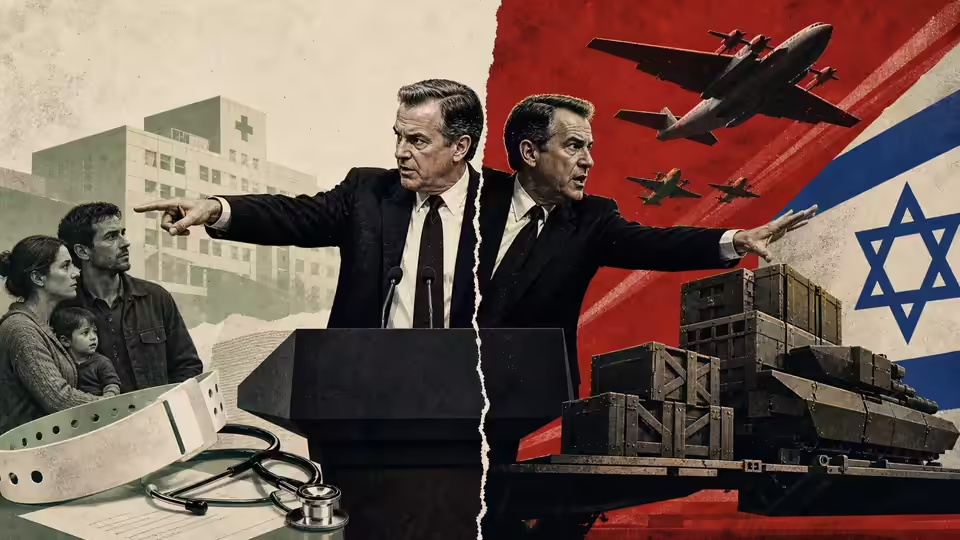
The Israeli-Palestinian conflict is one of the most consequential and misrepresented stories in modern media. Coverage is shaped by geopolitical alliances, lobby money, and editorial framing that consistently omits Palestinian perspectives, U.S. complicity, and the financial incentives driving policy.
Gen Us covers this topic because the gap between what Americans are told and what is verifiable on the ground is enormous. U.S. taxpayers fund billions in annual military aid to Israel, yet most coverage treats this as unremarkable background rather than a central editorial fact.
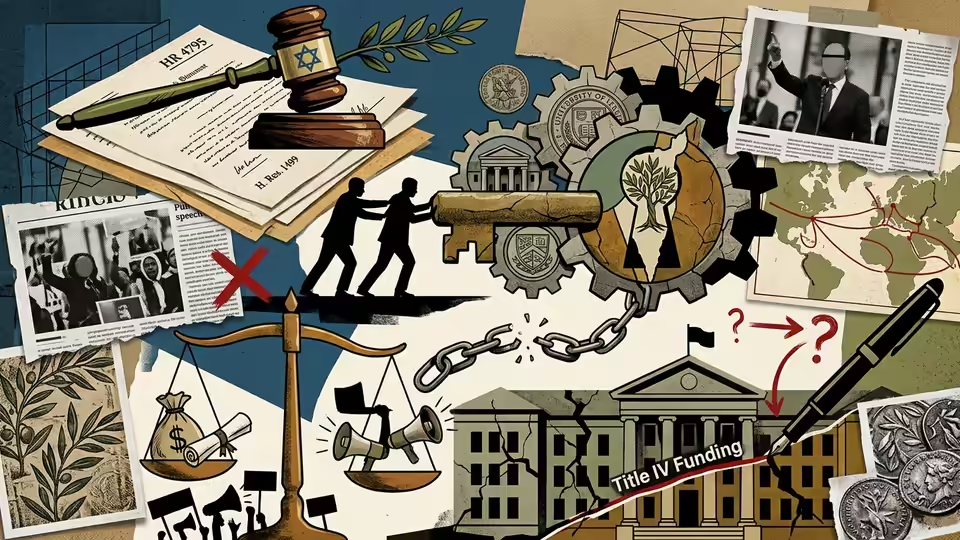
We trace AIPAC funding to individual members of Congress, document the revolving door between pro-Israel lobbying groups and U.S. government positions, and analyze how media framing techniques — loaded language, omission bias, false equivalence — shape public understanding of the conflict.

Key Questions We're Asking
- •How does AIPAC funding correlate with Congressional voting on Israel-related bills?
- •Which media outlets consistently omit Palestinian civilian casualty figures or U.S. weapons transfer details?
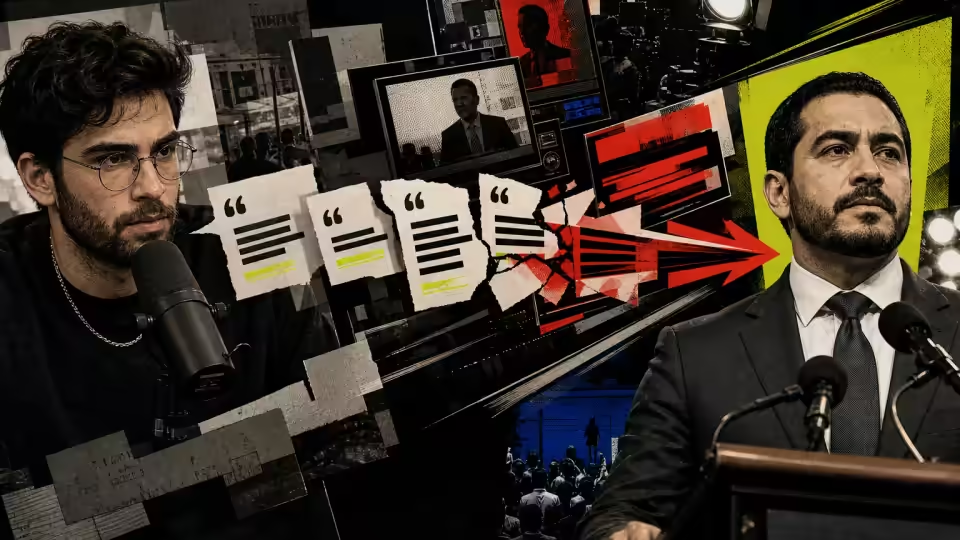
- •How do editorial framing choices — 'conflict' vs 'occupation,' 'clashes' vs 'military operations' — shape public perception?
- •What is the revolving door between pro-Israel lobby groups and senior U.S. government positions?
- •How does international law, including ICJ rulings, get covered (or ignored) by major U.S. outlets?
What Mainstream Media Misses
- •U.S. military aid figures are rarely contextualized against domestic spending priorities or international law obligations.
- •Palestinian voices are systematically underrepresented in U.S. media coverage compared to Israeli government sources.
- •AIPAC's influence on Congressional votes is treated as too sensitive to cover, despite being one of the most powerful lobbying operations in Washington.
- •The economic dimensions — arms manufacturer profits, settlement enterprise economics — are almost never part of the story.
Follow the Money
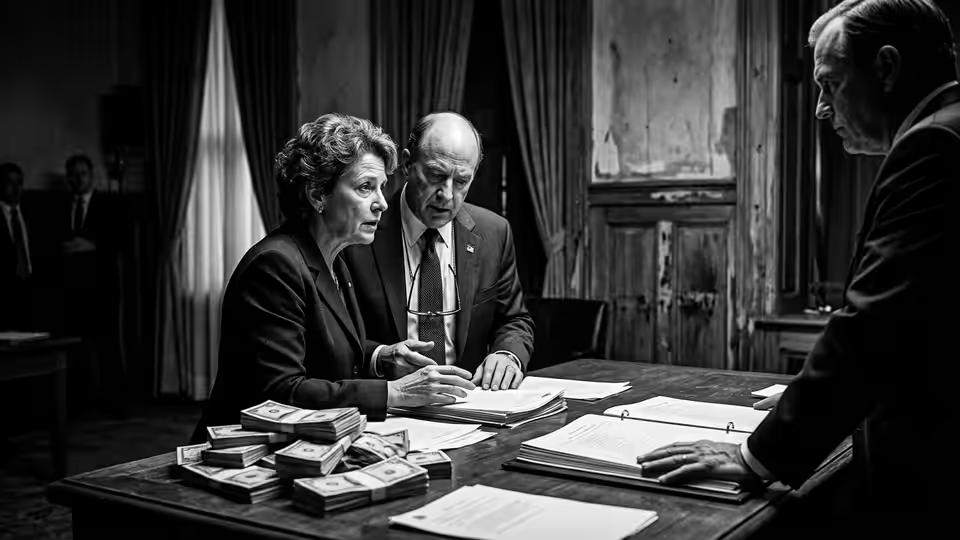
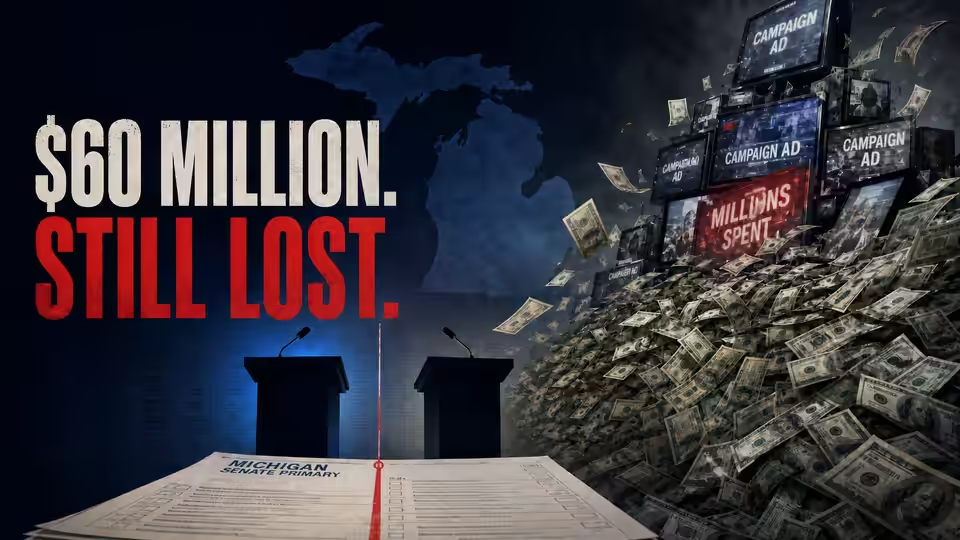
- •AIPAC spent over $100 million in the 2024 election cycle targeting candidates critical of Israeli policy.
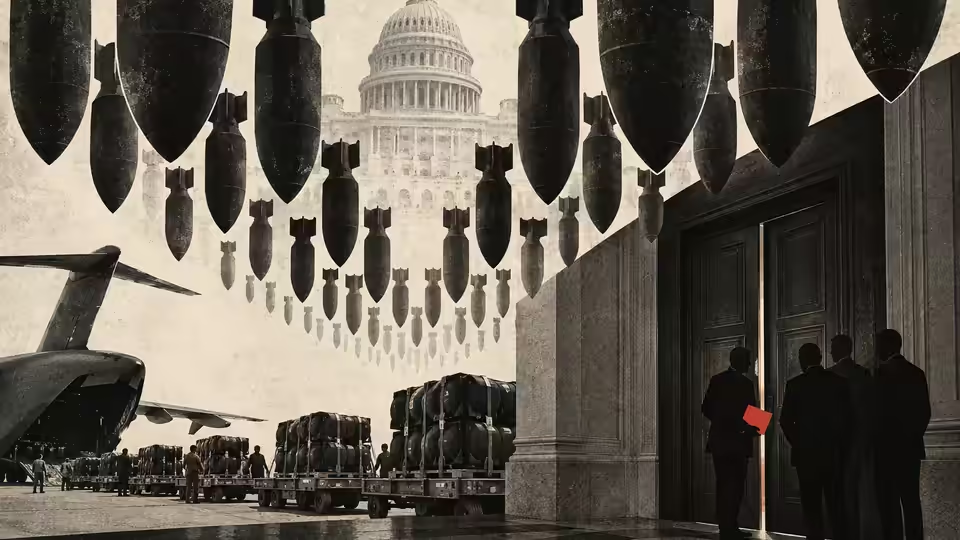
- •The U.S. provides approximately $3.8 billion annually in military aid to Israel under a 10-year memorandum of understanding.
- •Defense contractors like Lockheed Martin, Raytheon, and Boeing profit from weapons sales facilitated by U.S. aid packages.
- •Pro-Israel think tanks and advocacy groups receive funding from billionaire donors including Miriam Adelson, Paul Singer, and Bernard Marcus.