Trump Scraps Iran Strike After Midnight Deal with Gulf Monarchies
In a 180-degree reversal, the administration halted a massive military strike on Iran following a last-minute pitch from Qatar and Saudi Arabia. We look at the oil market chaos and the legal questions surrounding 'war-by-appointment.'
Trump hit the brakes on a massive Iran strike after Gulf allies brought a Pakistani-mediated nuclear deal to the White House. Oil prices dropped on the news, but the legal authority for the strike and the long-term stability of the region are still very much in doubt.
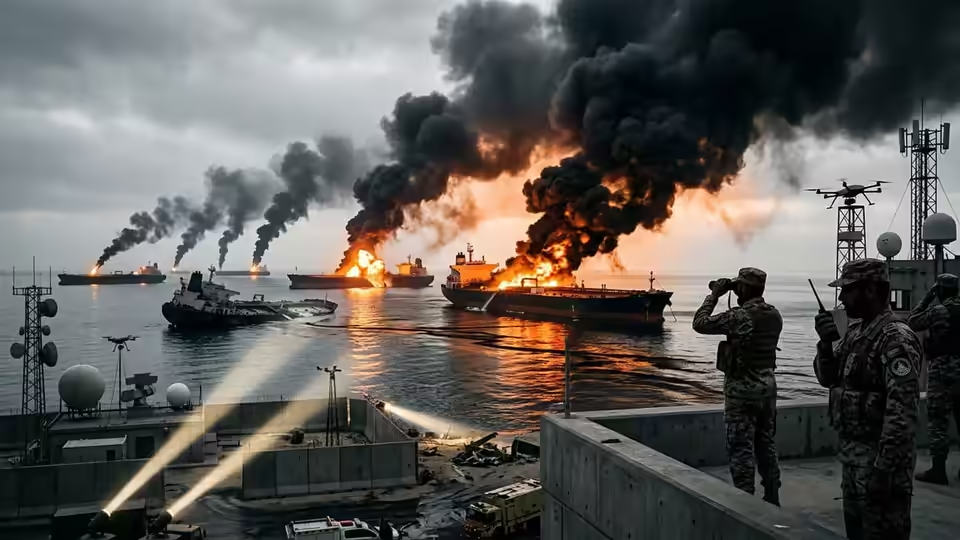
The big escalation was supposed to happen Tuesday, May 19, 2026. But Trump pulled the plug after a series of frantic calls between Washington and various Middle Eastern capitals. Reports from the Washington Post and Axios say leaders in Qatar, the UAE, and Saudi Arabia asked for a timeout to review a fresh offer from Tehran. The deal reportedly involves Iran shipping its highly enriched uranium to Russia and a phased plan to open the Strait of Hormuz back up. State Department officials are already acting skeptical, though. They're calling the concessions 'insufficient' for any real long-term agreement. The kicker is that the Strait of Hormuz is a tiny stretch of water between the Persian Gulf and the Gulf of Oman where 20% of the world's oil flows every single day.
The markets didn't wait around for the details. Right after Trump’s post, Brent crude prices, which had spiked over $92 a barrel on war fears, tumbled 4.5% in just two hours. This kind of whiplash is great for institutional speculators and big Gulf energy players who’ve been betting against regional chaos for months. And then there are the defense contractors. Lockheed Martin and Northrop Grumman have seen their stock prices jump 12% on average since this six-week bombing campaign started. Data from OpenSecrets shows these firms are still the top donors to the congressional committees that oversee their contracts. It’s a cycle where just threatening a 'large-scale assault' drives up company value, whether the missiles actually fly or not.
But here's the thing the mainstream reports are missing: what is the legal basis for 'scheduling' an attack like this? Under the War Powers Resolution of 1973, the President has to tell Congress within 48 hours of starting military action. Yet, the administration hasn't explained if this 'full-scale assault' was authorized under those old 2001 or 2002 war powers. It’s a huge gap. It suggests the White House is treating military strikes as a bargaining chip for personal diplomacy rather than a serious act of state. Legal experts point out this is the fourth time in 18 months the administration has used the threat of immediate war to squeeze out minor concessions. That's a pattern that could eventually ruin U.S. credibility.
“Brent crude prices dropped by 4.5% within two hours of the announcement, showing how 'art of the deal' rhetoric acts as a market-moving lever for energy speculators.”
Pakistan’s role as the middleman is another big piece of the puzzle. Islamabad confirmed they passed along Tehran’s latest offer, but Pakistani officials told Reuters that both DC and Tehran 'keep changing their goalposts.' It’s hard to build trust when everyone is still thinking about the 2018 U.S. exit from the JCPOA, the deal that originally put a lid on Iran’s nuclear program. By walking away from that deal, the U.S. basically sparked the very enrichment crisis they’re now trying to fix. Tehran wants their oil sanctions lifted so they can get back to their pre-2018 economy. That move would give Iran about $30 billion in cash almost immediately.
In public, the talk is still tough. Even while he was announcing the delay, Trump told military leaders to stay ready for a 'full, large scale assault' at a 'moment’s notice.' It’s the same strategy we saw during the flare-ups in 2024 and 2025. You talk about total destruction so you can frame the President as the only person standing between the world and a global war. In the real world, this 'peace proposal' involves complicated technical details about centrifuges and uranium stocks that you can't solve in a social media post. The Tasnim news agency says the U.S. has already agreed to some sanctions relief, but the White House is staying quiet. They likely want to avoid a fight with the hawks in Congress.
For most people, this high-stakes game shows up at the gas pump. AAA energy analysts say the mere threat of that Tuesday strike added $0.14 to a gallon of gas across the U.S. in one week. If negotiations fail and the 'scheduled' attack actually happens, some experts think we could see $6.00 a gallon by mid-summer. The human cost is just as bad. Current sanctions have already pushed the price of basic medicine in Iran up by 30%, according to the World Health Organization. This hurts millions of regular people who don't have a seat at the table in Doha or Islamabad.
The next date to circle on the calendar is May 21st. That's the deadline for the Islamic Revolutionary Guard Corps (IRGC) to start requiring 'permits' for internet cables that run through the Strait. This would move the conflict into global digital infrastructure. Unless there’s a real ceasefire verified by international monitors, this 'pause' might just be a tactical reset for both sides. The real test is whether Iran actually starts moving uranium to Russia. That would require a level of transparency they haven't shown in years.
Summary
Donald Trump called off a massive military strike on Iran just hours before it was set to begin on May 18, 2026. The sudden reversal came after leaders from Qatar, the UAE, and Saudi Arabia stepped in with a new peace deal brokered by Pakistan. While the administration is calling it a win for diplomacy, the move follows wild swings in the oil market and mounting questions over whether the president has the legal authority to schedule a war like a business meeting. After six weeks of airstrikes, the global energy sector is still on high alert.
⚡ Key Facts
- Donald Trump postponed a planned military attack on Iran scheduled for Tuesday, May 19, 2026.
- The delay was requested by the leaders of Qatar, the United Arab Emirates, and Saudi Arabia to allow for negotiations.
- Tehran has submitted a new proposal to end the war, mediated by Pakistan.
- A drone strike caused a fire at a nuclear power plant in the UAE over the preceding weekend.
Trump Scraps Iran Strike After Midnight Deal with Gulf Monarchies
Connections in this story
- Donald Trump (portrayed as a decisive leader and negotiator)
- Iran (gets the narrative of a proposal and sanctions relief into the public sphere)
- Defense contractors (normalization of 'large scale assault' rhetoric)
- The 2018 US withdrawal from the JCPOA nuclear deal under Trump.
- The specific legal authorization required for a 'scheduled' large-scale assault.
- The broader humanitarian implications of the existing sanctions on the Iranian population.
The article frames the situation as a high-stakes binary between Trump's personal negotiation skills and total military destruction, while maintaining a level of journalistic skepticism regarding the accuracy of claims from all sides.
See how the story connects.
Select any actor or numbered connection, then inspect the evidence before drawing a conclusion.
Scott Trust Limited → Guardian Media Group
Owns
Follow the public record
Source Trail
Independent reporting and analysis
Get the next investigation in your inbox
One email a week. Receipts only. Free.
Free. Unsubscribe anytime. We never share your email.