Trump Pauses Iran Strikes as Global Oil Prices Crash 10%
President Trump halted a massive strike on Iran’s power grid just hours before his ultimatum expired. While markets cheer the price drop, the Strait of Hormuz remains a chokehold on 20% of the world's energy.
President Trump's five-day pause on Iranian strikes has given oil markets a temporary break, but with the Strait of Hormuz still blocked, the global economy is far from safe.
President Donald Trump’s call to hold off on bombing Iranian energy sites on March 23, 2026, has stopped a full-blown military collision—at least for now. He posted the news on Truth Social just hours before his 48-hour ultimatum ran out, carving out a five-day window for some mystery negotiations. The administration is spinning this as the result of 'productive conversations,' but they haven't said who they're talking to or what the terms are. It’s hard to tell if this is a real diplomatic breakthrough or just a tactical pause because Iran threatened to mine the Persian Gulf, a move that would break regional shipping for good.
The markets didn't wait for the details. Within an hour of the President’s post, Brent crude prices crashed by 10% and natural gas futures dropped 6%. According to ICE Futures Europe, these are some of the wildest swings we’ve seen in a decade. It’s a goldmine for high-frequency speculators who bet on a de-escalation, but it hasn't done much for regular people waiting for lower prices at the gas pump. Analysts are calling it the 'Trump dip,' but the underlying problem—the blockade of the Strait of Hormuz and the damage to processing plants—isn't fixed yet.
South Pars is the monster under the bed in this crisis. It’s the world’s biggest gas field, shared by Iran and Qatar, and it’s the reason everything is falling apart. Things spiraled last week when Israel hit the Iranian side of the field, and Iran hit back at a Qatari LNG site. This isn't the usual proxy war; they’re going straight for the economic throat. And while everyone's covering the strikes, most reports are ignoring the specific legal reasons the IDF gave for hitting South Pars in the first place, leaving a big hole in the story of how this started.
“The five-day pause triggered a 10% drop in oil prices, yet the Strait of Hormuz remains a functional dead zone for global trade.”
The real winners here are the energy traders and sovereign funds who can move fast when a Truth Social notification pops up. While people in the US and UK are watching gas prices climb because of 'uncertainty,' big institutional investors are timing these updates perfectly. Meanwhile, Tehran is using the pause to shore up things at home. State media outlet IRNA is already calling the delay a 'total victoryLoaded Language' over the U.S. By telling their people that Washington backed downLoaded Language, the Iranian government is strengthening its own narrative of resistance, regardless of whether those secret talks are actually going anywhere.
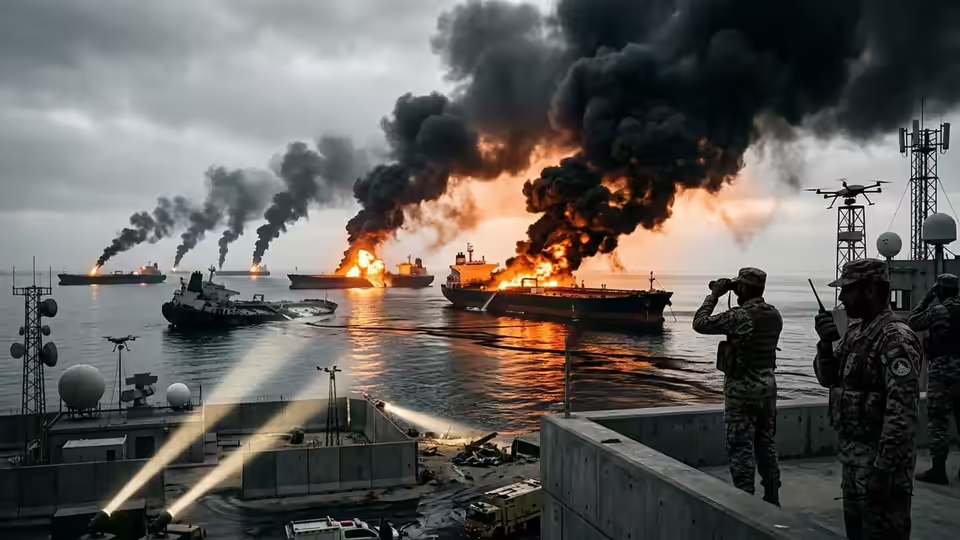
The Strait of Hormuz is the world's energy jugular—a narrow gap where 21 million barrels of oil, or 20% of what the world uses daily, has to pass through. Even with this five-day pause, the Strait is basically a 'no-go' zone. Lloyd’s of London still has the area listed as high-risk, so insurance premiums are way too high for most tankers to move. So, the blockade is still happening in everything but name, and that’s what’s driving up costs globally. The White House hasn't clarified if Trump’s 'complete and total resolution' includes a real guarantee that ships can pass safely.
Behind the market charts, the human cost of this month-long fight is getting ugly. Local health officials in Tehran and Beirut say more than 2,500 people have died—1,500 in Iran and another 1,000 in Lebanon. It’s tough to verify these numbers because the internet is spotty and foreign journalists can't get in. But one thing is certain: people in Tehran are bracing for the worst. For them, this five-day break isn't a promise of peace. It’s just a short window to stock up on food and water before the next ultimatum hits.
Now the world is waiting for the March 28 deadline. If those 'very good conversations' don't lead to a deal to open the Strait and stop the strikes, the region is back to the threat of what Trump calls 'obliteration.' For the rest of us, this isn't just about geopolitics; it’s the reason central banks are talking about more interest rate hikes to fight energy inflation. Everyone is watching the U.S. carrier groups in the Arabian Sea and looking for any signs of emergency energy subsidies—that’s how we’ll know how long the White House expects this 'pause' to last.
Summary
President Trump just hit the brakes on planned military strikes against Iran's power grid, announcing a five-day pause after what he called 'productive' talks with Tehran. The news came just hours before his 48-hour ultimatum was set to expire, sending oil prices tumbling by 10%. But while the markets are breathing a sigh of relief, the bigger picture is still grim: the Strait of Hormuz is still effectively blocked, keeping a fifth of the world's energy supply in limbo and fueling global inflation.
⚡ Key Facts
Trump Pauses Iran Strikes as Global Oil Prices Crash 10%
Network of Influence
- Donald Trump (portrayed as a negotiator and price-stabilizer for markets)
- The Iranian Government (narrative of 'victory' and 'firmness' reported to a global audience)
- Energy speculators (market volatility driven by specific political headlines)
- The specific legal or geopolitical justification for the initial Israeli strike on the South Pars gas field is not detailed.
- The nature of the 'very good and productive conversations' is omitted, leaving the reader unable to verify the legitimacy of the progress.
- Historical context regarding previous ultimatums by the Trump administration that did not result in military action.
The story centers on a temporary de-escalation framed as a 'backing down' by the US (per Iran) versus a strategic diplomatic pause (per Trump), while using market reactions to validate the importance of the political rhetoric.
See how the story connects.
Select any actor or numbered connection, then inspect the evidence before drawing a conclusion.
Comcast Owns Sky News
Follow the public record
Source Trail
Independent reporting and analysis
Get the next investigation in your inbox
One email a week. Receipts only. Free.
Free. Unsubscribe anytime. We never share your email.