Netanyahu Shatters Trump’s 'Red Line' as Beirut Strikes Displace One Million
As Israel moves independently of Washington, Lebanon becomes the new central front in a wider war with Iran. We track how the June 1 strikes signal a collapse of US influence in the region.
Israel has ramped up its campaign in Lebanon by striking Beirut and seizing the strategic Beaufort Castle. The move defies U.S. red lines while Iran uses its grip on global oil markets to protect Hezbollah from being dismantled.
On June 1, 2026, Prime Minister Benjamin Netanyahu sent the Israeli Air Force into Beirut. It was a bold move that took a direct swipe at the Trump administration's standing red line against hitting state infrastructure. The White House had been trying to keep the fighting contained to the south and the Bekaa Valley, but the expansion into the capital shows a shift in Israeli strategy. Now, they're aiming for the "total dismantling" of Hezbollah's entire political and military setup. It's a bloody transition: reports verified by the Washington Post show the death toll in Lebanon has topped 3,300 since March. Even worse, over a million people, roughly 20% of the population, have been forced to flee their homes.
The momentum on the ground changed on May 31, 2026, when Israeli troops seized Beaufort Castle. This is the deepest ground push in over 25 years, and it's a massive psychological hit. Beaufort Castle is a 12th-century Crusader fort that's been a prime observation post for Hezbollah and the PLO for decades, looming over the Galilee. By grabbing this high ground, the IDF is signaling it wants a permanent "security buffer." But history hasn't been kind here. Israel tried a similar tactic between 1982 and 2000, and the long-term results were widely considered a failure.
Underneath the smoke, the financial machinery keeps the gears turning. Israel is currently tapping into a multi-billion dollar emergency military aid package from the U.S. Congress, even as the White House tries to limit how those bombs are used. On the other side, Tehran isn't slowing down. Despite the "Iran war" conditions, they're still moving about $700 million a year to Hezbollah through shadowLoaded Language banking networks in Iraq and Syria, according to the Foundation for Defense of Democracies. That cash is why Hezbollah can still hit northern Israel, where four civilians and 24 soldiers have been killed since March.
“The seizure of Beaufort Castle on May 31 marks the deepest Israeli ground incursion into Lebanon in over 25 years.”
Then there's UN Resolution 1701. Back in 2006, this was the legal fix that was supposed to disarm Hezbollah and keep the Lebanese Army in charge south of the Litani River. Today, both sides treat it as a dead letter. Israel argues the UN's failure to clear the zone justifies this new invasion. Hezbollah, meanwhile, uses the presence of Israeli boots to fuel its "resistance" narrative and keep its base loyal. It's a cycle that's profitable for defense contractors but has left Lebanon's treasury bankrupt. The country's power grid has been dark for 60% of the last three months.
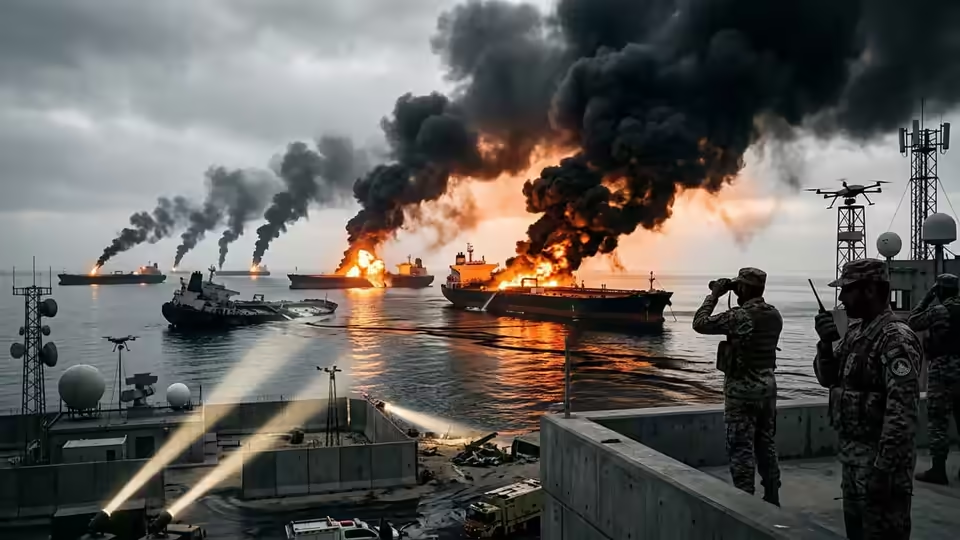
The kicker that most reports miss is the leverage Tehran now holds over global energy. By saying they'll only talk about a nuclear deal or sanctions relief if Israel stops fighting in Lebanon, Iran has effectively tied the price of oil to Hezbollah's survival. The Strait of Hormuz is the world's biggest oil chokepoint, with 21 million barrels passing through daily. If Iran follows through on its naval threats, global prices will skyrocket. This economic reality is exactly why the Trump administration can't just give Netanyahu a total green light for an open-ended occupation.
Don't expect much from the June 2 talks in Washington as long as the IDF is still in the Bekaa Valley. The Israeli government wants to separate its Lebanon operations from the Iran nuclear dialogue, but they're already tied together by money and strategy. For a family in northern Israel or southern Lebanon, a "win" isn't about who holds an old castle. It's about whether they can return to a home that isn't in an active combat zone.
Moving forward, keep an eye on the June 15 donor conference in Paris. If international aid gets pulled because of the Beirut strikes, the Lebanese Armed Forces might face a total collapse. That's a problem, because they're the only real alternative to Hezbollah. We're also tracking new weapons contracts being fast-tracked through the U.S. State Department. Those will tell us if the "pressure" on Netanyahu is real or just talk for the benefit of the negotiating table in Tehran.
Summary
The fighting in Lebanon has morphed from a border skirmish into a central front of the wider Iran war since March 2, 2026. Israel's June 1 strikes on Beirut's infrastructure didn't just hit targets: they shattered a Trump administration red line and signaled that Jerusalem is moving independently of Washington. Meanwhile, Tehran is using its leverage over the Strait of Hormuz to keep Hezbollah alive, turning the militia into its biggest bargaining chip in nuclear talks with the West.
⚡ Key Facts
- Full-scale war returned to Lebanon on March 2, 2026, resulting in over 1 million Lebanese displaced and more than 3,300 killed by June 1.
- Israeli Prime Minister Benjamin Netanyahu ordered attacks on Beirut on June 1, 2026.
- Tehran is conditioning a deal with the Trump administration on a complete halt of Israeli hostilities in Lebanon.
- Israeli troops seized the Beaufort Castle in southern Lebanon on May 31, 2026.
- A ceasefire in November 2024 previously paused fighting before the current conflict began.
Netanyahu Shatters Trump’s 'Red Line' as Beirut Strikes Displace One Million
Network of Influence
- The Iranian government (portrayed as having 'leverage' and a protective role).
- Hezbollah (framed as gaining 'justification' and 'narrative of resistance' from Israeli actions).
- Political opponents of Benjamin Netanyahu (actions framed as 'failed lessons' and ignoring U.S. pressure).
- Specifics of Hezbollah's initial provocations or missile fire into Israel preceding the 2026 date mentioned.
- The legal status of UN Security Council Resolution 1701 and whether it was violated prior to the conflict.
- Internal Lebanese movements or parties that explicitly oppose Hezbollah's presence.
- The nature of the 'Iran war' mentioned in the future-dated scenario and how it began.
The article frames Israeli military intervention as an exercise in futility that inevitably repeats past failures, causes high humanitarian costs, and strengthens the very entities it seeks to destroy.
See how the story connects.
Select any actor or numbered connection, then inspect the evidence before drawing a conclusion.
The Conversation Trust Owns and operates The Conversation
Follow the public record
Source Trail
Independent reporting and analysis
Get the next investigation in your inbox
One email a week. Receipts only. Free.
Free. Unsubscribe anytime. We never share your email.