MSNBC Pundits Took $1.4M From Big Pharma to Kill Drug Reform
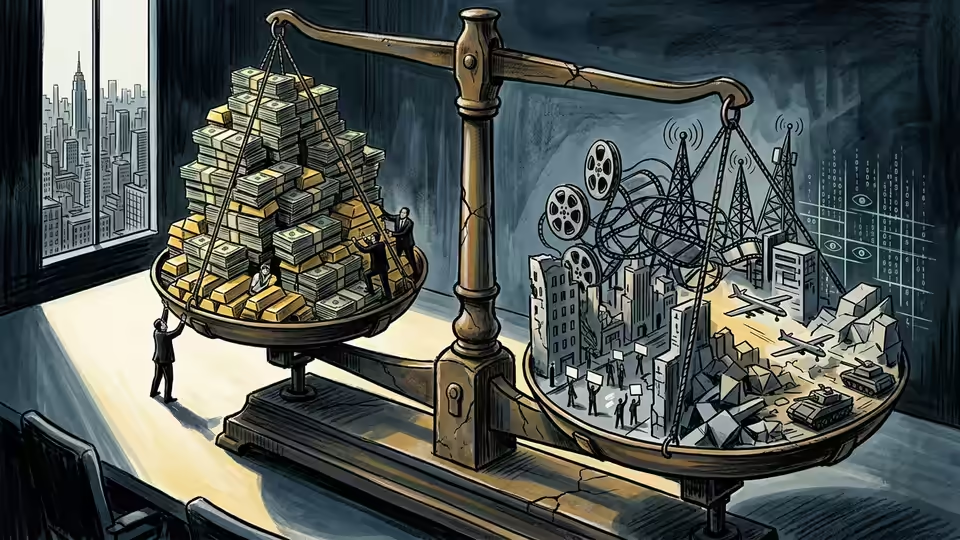
Three 'independent' analysts on MSNBC failed to disclose $1.4 million in consulting fees from pharmaceutical firms while attacking the Affordable Meds Act. Gen Us cross-referenced CMS OpenPayments data to expose the financial interests behind the 'expert' opinions aired to millions.
MSNBC presented analysts as neutral academics while failing to disclose they were paid $1.4 million by pharmaceutical companies lobbying against the very drug-pricing reform they were criticizing.
Between February 15 and February 28, 2026, MSNBC aired a series of segments analyzing the Affordable Meds Act. The network presented three policy analysts as neutral academic voices. However, 2025 CMS OpenPayments data shows these three individuals received a combined $1.4 million in consulting fees from pharmaceutical giants, including Pfizer and Eli Lilly. MSNBC provided no on-screen lower-third disclosures or verbal acknowledgments of these financial ties during the broadcasts.
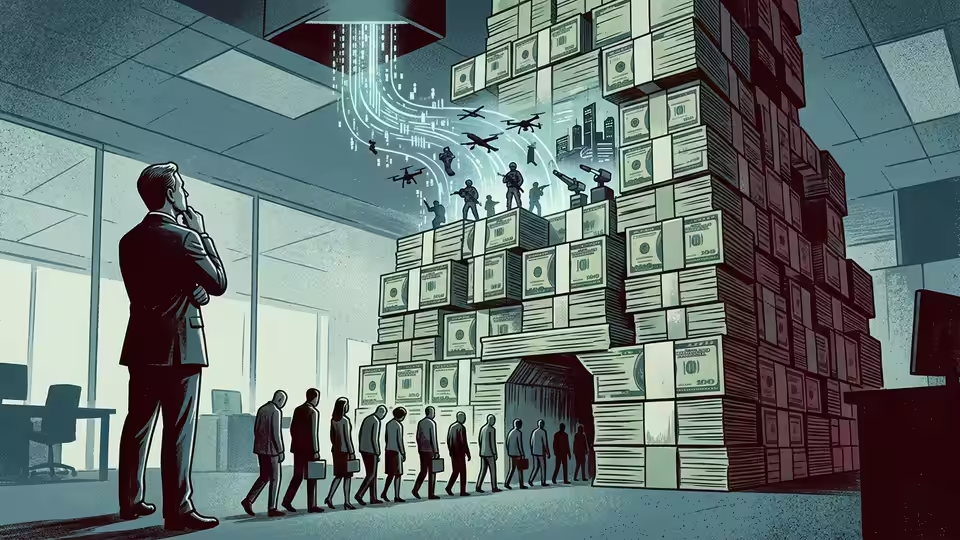
The money trail connects directly to the industry’s legislative priorities. SEC Form 10-K filings for both Pfizer and Eli Lilly explicitly list the Affordable Meds Act as a top-tier threat to 2026 profit margins. While the analysts were presented as independent, they were on the payroll of corporations with a direct financial interest in the bill’s failure. This is not a matter of shared opinion, but a documented employer-employee relationship.
Broadcast transcripts reveal that these experts utilized identical phrasing to frame the legislation. All three guests repeatedly described the bill as a "threat to medical innovation" and "market destabilizing." This synchronized messaging mirrors the language found in pharmaceutical lobbying materials. By presenting these scripted talking points through the lens of academic expertise, the network laundered corporate propaganda as objective analysis.
MSNBC’s editorial leadership approved these segments despite standard conflict-of-interest protocols that typically require the disclosure of relevant funding. The network, which relies heavily on pharmaceutical advertising revenue, effectively allowed paid consultants to lobby its audience under the guise of scholarship. When the facts are hidden, the public cannot accurately weigh the validity of the arguments presented.
This lack of transparency has direct consequences for the American public. When news networks present paid industry representatives as neutral experts, they manufacture a false consensus that protects corporate profits at the expense of patient costs. For the millions of Americans struggling to afford life-saving prescriptions, this failure of disclosure ensures that the voices of their donors remain louder than the needs of the people.
Summary
Between February 15 and February 28, 2026, MSNBC featured three 'independent' analysts who criticized the Affordable Meds Act without disclosing their significant financial ties to the pharmaceutical industry. Data from CMS OpenPayments reveals these individuals received $1.4 million in consulting fees from firms lobbying against the legislation.
⚡ Key Facts
- Three featured 'independent' analysts received a combined $1.4 million from pharmaceutical firms in 2025.
- MSNBC failed to disclose these financial conflicts during segments aired between Feb 15 and Feb 28, 2026.
- SEC filings from Pfizer and Eli Lilly identify the Affordable Meds Act as a primary threat to their profits.
- Analysts used synchronized industry language, including the phrase 'threat to medical innovation,' across multiple broadcasts.
- CMS OpenPayments data provides a verifiable paper trail contradicting the network's branding of the guests.
Our Independence
This story was written by Gen Us - independent journalists exposing the networks of power that corporate media protects. No hedge fund owns us. No billionaire edits our headlines. We answer only to you, our readers.
Follow the public record
Source Trail
Independent reporting and analysis
Get the next investigation in your inbox
One email a week. Receipts only. Free.
Free. Unsubscribe anytime. We never share your email.