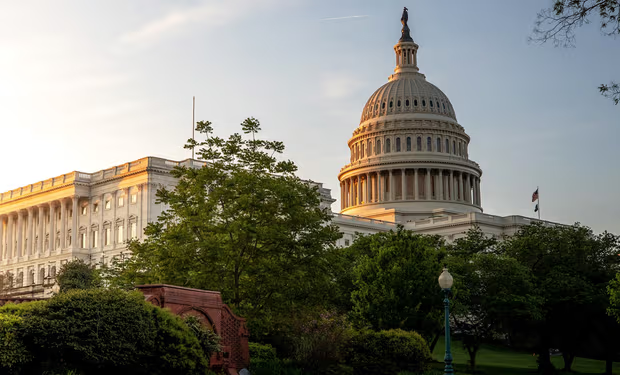
U.S. Capitol, 2023. U.S. House of Representatives / Wikimedia Commons.
Kalshi has a rule for what to pay if a leader dies. The Senate wants an earlier test.
The Senate passed a bill that asks what an exchange could reasonably expect when it opened a market. Kalshi’s own leadership contract shows why the timing matters.
A market can ask when a leader will leave office and still turn on whether someone dies. The Senate bill would require federally registered exchanges to confront that possibility before taking bets.
Kalshi has written down how to settle a bet on a leader leaving office if the leader dies. The exchange can use the last price before the death. If Kalshi determines that the circumstances leading to the death materially affected trading, it can instead use the last traded price before those circumstances became known or reasonably anticipated by market participants. A bill the Senate passed on November 19 asks a question that no choice of payout can answer afterward. When the exchange opened the market, was there good reason to expect that someone’s death would decide the bet?
The distinction matters because leaving office is an ordinary political event. Under Kalshi’s leadership contract filed with the Commodity Futures Trading Commission, a resignation counts. So can a leader’s announcement that they will leave within the next year. If the leader dies before the contract expires and no prior price looks fair to the exchange, its Outcome Review Committee determines a settlement price. The filing gives the exchange a way to avoid paying as though a death were an ordinary resignation. The trading that preceded it has already happened.
The Senate’s DEATH BETS Act puts the decision at the other end of the transaction. It would bar a registered exchange from listing or clearing covered contracts that explicitly reference assassination, terrorism, war or U.S. military operations. For an individual’s death, the wording is different. The test is whether, when listed, the market could reasonably be expected to turn principally on a death. A resignation market would not automatically qualify. Calling one a resignation market would not automatically protect it, either.
Senators Adam Schiff, a California Democrat, and John Curtis, a Utah Republican, sponsored the bill. The Senate floor record shows the amended measure passed by voice vote. Representative Mike Levin introduced its House companion. The Senate vote alone changes no exchange rule.
The sponsors pointed to offshore wagers, including one on whether Russian forces would capture the Ukrainian town of Myrnohad. The text they got through the Senate reaches federally registered entities. That leaves two distinct accountability questions for Congress. What should an American exchange be allowed to sell, and what happens to the offshore markets lawmakers used to make their case?
Summary
The Senate passed a bill that asks what an exchange could reasonably expect when it opened a market. Kalshi’s own leadership contract shows why the timing matters.
Key facts
The amended bill passed the Senate by voice vote on November 19.
The bill would test at listing whether a covered contract was reasonably expected to resolve principally on an individual’s death.
If a leader dies before expiration, Kalshi may settle at the last traded price before the death. If Kalshi determines the circumstances leading to the death materially affected trading, it may instead use the last traded price before those circumstances became known or reasonably anticipated. If Kalshi determines no eligible last traded price represents a fair settlement, its Outcome Review Committee must determine the fair settlement price.
Follow the public record
Source Trail
Primary records and direct statements
Get the next investigation in your inbox
One email a week. Receipts only. Free.
Free. Unsubscribe anytime. We never share your email.