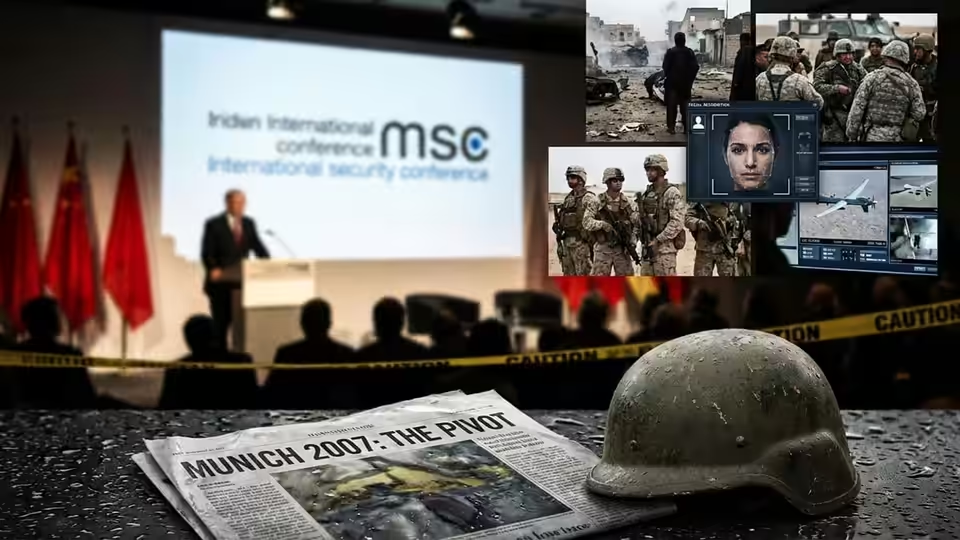
Iran’s New Strategy: How 2,000km Houthi Missiles Redrew the Global Map
Tehran’s new leadership is bypassing traditional battlefields to strike 2,000km away. With 12% of global trade in the crosshairs, Sanaa is no longer a proxy—it’s a central player in a direct Iran-Israel war.
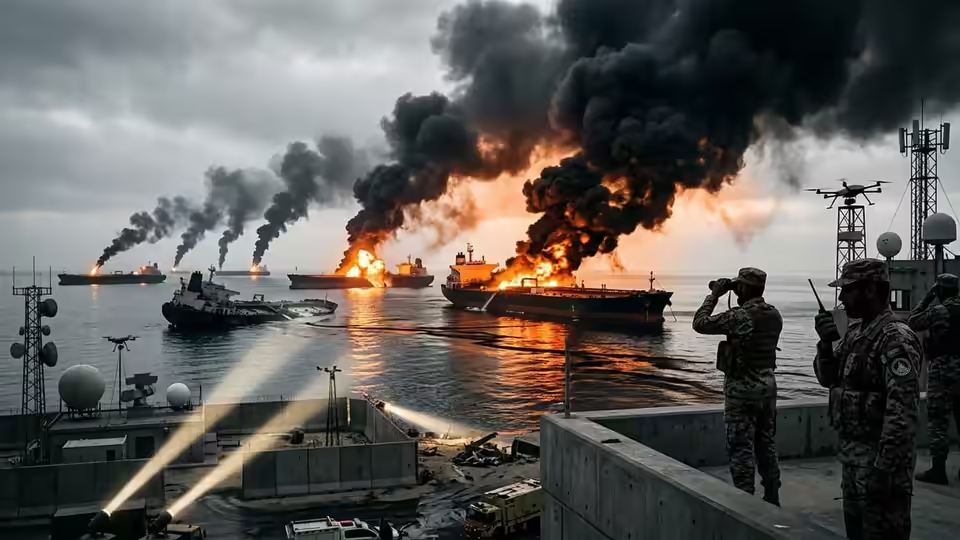
The Houthis have officially entered the Iran-Israel war, launching long-range missiles at Israel under Iran’s new 'New Fronts' doctrine. This move directly threatens the Bab al-Mandab Strait, putting global trade routes and oil prices at serious risk.
The missile launch on March 28, 2026, wasn't some random gesture of solidarity. It was the calculated move of a strategic asset. By lobbing ballistic missiles over 2,000 kilometers at Israel, the Houthis confirmed they're no longer just a local insurgency—they're a primary regional proxy. This escalation follows the March 12 inaugural speech of Mojtaba Khamenei, who took over as Iran’s Supreme Leader earlier this year. His 'New Fronts' doctrine is pretty clear: stretch Israeli and American defenses thin by using the Houthis as a long-range threat from the sea, effectively bypassing the usual battlefields in the Levant.
You'll often hear the Houthis described as a grassroots movement using 'crude' weapons, but the technical reality is far more expensive. UN experts have noted that the 'Burkan' and 'Zulfiqar' missiles used in these strikes are sophisticated Iranian designs, often smuggled into Yemen in pieces and reassembled. It’s a staggering cost for a nation where 80% of the population needs humanitarian aid just to survive. This military integration is a lifeline for Houthi leadership. It gives them the advanced tech and intel they need to keep their grip on northern Yemen, where roughly two-thirds of the population currently lives under their rule.
The [Zaydi Shia]—the religious and historical core of the Houthi movement—now find themselves at the center of a global choke point. They control the land bordering the [Bab al-Mandab Strait], the narrow passage connecting the Red Sea to the Gulf of Aden. Following the March 28 strikes, Houthi spokesman Yahya Saree signaled that shipping in this strait is now a target if the war widens. That’s a move that would send global inflation through the roof. According to the U.S. Energy Information Administration, about 8.8 million barrels of oil pass through this corridor every single day.
“The March 28 missile strike marks the first time Houthi forces have targeted Israel directly since the regional conflict expanded in February 2026.”
Here’s the thing: the people of Yemen aren't the ones profiting from this instability. The real winners are the regional players who cash in on rising energy prices and the arms trade. When Houthi strikes threaten shipping lanes, maritime insurance premiums usually spike by 100% to 200%. Those costs eventually hit you at the gas pump and the grocery store. And despite the 'anti-imperialist' branding the leadership loves to use, their total reliance on Iranian advisors and hardware creates a dependency that looks a lot like the 'servitude' they claim to be fighting against.
What’s missing from the popular narrative is the internal cost of this military pivot. Human Rights Watch and other monitors have documented the Houthis’ continued use of child soldiers and the systematic silencing of journalists in Sanaa. By keeping the public focused on the 'Zionist scheme' and external enemies, the Houthi administration—known officially as Ansar Allah—deflects from its own failure to provide basic services or be transparent about oil revenues. The movement has essentially weaponized Yemeni poverty, using Iranian-funded subsidies to keep an army standing while civilian infrastructure continues to rot under a decade of mismanagement and blockades.
We're keeping a close eye on the 2026 Red Sea shipping data. If the Houthis actually follow through on threats to close the Bab al-Mandab, expect a massive shift in global logistics toward land-based transit through Central Asia—a key part of the 'Belt and Road' initiative. This isn't just about religion or ideology; it's a reshaping of global trade routes. While we can’t verify the exact number of Iranian advisors currently in Saada, the precision of the March 28 strikes suggests a level of satellite and radar integration the Houthis didn't have even six months ago.
For regular people, this 'new front' is about more than just headlines. It means a localized civil war in the poorest country in the Middle East has become a pillar of global strategy. As the Houthis trade local stability for a seat at the big table, the risk of a wider maritime blockade remains the most significant threat to the global economy in 2026. The receipts show that while the slogans are about 'steadfastness,' the real currency of this war is sophisticated Iranian tech and strategic control of the world’s most vulnerable shipping lanes.
Summary
On March 28, 2026, the Houthi movement didn't just fire a missile; it officially stepped into the ring of the Iran-Israel war. By launching ballistic missiles 2,000 kilometers into Israeli territory, the group is signaling a massive shift in strategy. It tracks back to a March 12 directive from Iran's new Supreme Leader, Mojtaba Khamenei, who is prioritizing 'new fronts' to pressure the West. While the rhetoric is all about 'steadfastness,' the reality on the ground involves sophisticated Iranian tech transfers and a brutal domestic human rights cost. With 12% of global trade hanging in the balance at the Bab al-Mandab Strait, it's clear Sanaa is now a central player in Tehran’s regional playbook.
⚡ Key Facts
- Mojtaba Khamenei, as Iran’s new supreme leader, announced 'new fronts' in the war against the US and Israel on March 12, 2026.
- The Houthis launched ballistic missile attacks into Israel on March 26, 2026.
- The Houthi movement emerged in the 1990s from Yemen’s Shia Zaydi population in Saada.
- Saudi Arabia launched a bombing campaign in 2015 to roll back the Houthi takeover of Sanaa.
Iran’s New Strategy: How 2,000km Houthi Missiles Redrew the Global Map
Network of Influence
- The Houthi movement (legitimization of their military actions)
- Iranian regional narrative (framing Tehran as a supporter of 'steadfastness')
- Anti-interventionist political movements seeking to end Western support for Saudi Arabia
- The article names Mojtaba Khamenei as Supreme Leader; Ali Khamenei is currently the Supreme Leader of Iran, making this report either speculative or factually inaccurate regarding the leadership transition.
- Internal human rights abuses by the Houthi administration, including the use of child soldiers and repression of journalists, are omitted.
- The technical sophistication of Iranian weapon transfers is minimized by calling them 'cruder versions' of Iranian missiles.
The article frames the Houthi movement as a legitimate domestic resistance born of anti-corruption and anti-imperialism, centering their grievances against Saudi/Western aggression while marginalizing their role as a destabilizing regional proxy.
See how the story connects.
Select any actor or numbered connection, then inspect the evidence before drawing a conclusion.
Jacobin Foundation Parent company Jacobin
Follow the public record
Source Trail
Independent reporting and analysis
Get the next investigation in your inbox
One email a week. Receipts only. Free.
Free. Unsubscribe anytime. We never share your email.