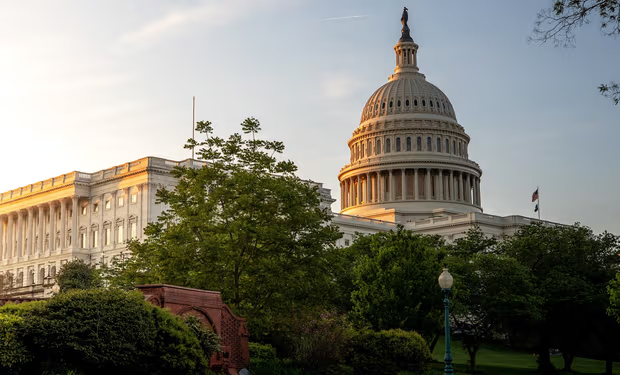
U.S. Capitol, 2023. U.S. House of Representatives / Wikimedia Commons.
Trump orders federal contractors to tell the White House when Congress asks questions
A November 20 order gives the White House notice of congressional inquiries about contractors’ federal work, even before anyone claims executive privilege. Contract cancellation is among the penalties agencies must consider.
Federal contractors must report covered congressional requests. A separate federal law protects employees who report certain evidence of wrongdoing to Congress. The distinction matters when the government itself is under scrutiny.
A federal contractor that gets a congressional question about its work for the executive branch now has another audience for that question: the White House. President Donald Trump’s November 20 order requires the contractor to notify both the White House and the agency that hired it. The duty kicks in even if nobody has claimed that the answer is privileged.
That timing matters. If a House investigator asks a contractor about a disputed federal expenditure, the agency responsible for the spending gets notice of the inquiry. If the White House or the agency then determines that a communication is protected by executive privilege and instructs the contractor to withhold it, the order says the contractor must comply. It reaches subcontractors, too, and directs agencies to make prime contractors responsible for their compliance.
The administration argues that officials need a chance to protect confidential discussions and that uncoordinated responses can disrupt the work taxpayers bought. It gives agencies a financial means to enforce that position. They must consider appropriate action under applicable law, up to cancelling a contract or barring a company from future federal work. The order does not itself cancel a contract.
Two days before Trump signed it, Representative Robert Garcia, the top Democrat on the House Oversight Committee, announced 12 notices asking people to preserve records. One went to the head of the Trust for the National Mall about financing for the White House ballroom. A preservation letter asks the recipient to keep records. It tells the public nothing yet about which documents Congress will receive or whether anyone has withheld one.
There is also a difference between a company answering an inquiry and an employee reporting wrongdoing. Under 41 U.S.C. § 4712, a covered employee who reasonably believes they have evidence of gross waste of federal funds can disclose it to a member of Congress or a committee representative with protection against retaliation. That protection belongs to the worker. It does not settle whether a particular company communication is privileged.
The next document to watch is the guidance the Office of Management and Budget must write for agencies. A contractor needs to know how to report a committee’s request. A worker who spots a padded bill needs to know how to reach that same committee safely. Both could be looking at the same invoice.
Summary
A November 20 order gives the White House notice of congressional inquiries about contractors’ federal work, even before anyone claims executive privilege. Contract cancellation is among the penalties agencies must consider.
Key facts
Executive Order 14438 requires federal contractors to notify the White House and contracting agencies about pending or future congressional requests concerning their work or communications with the executive branch.
Agencies must consider enforcement options that can include contract cancellation, suspension or debarment. The order does not prescribe an automatic penalty.
Federal law protects covered contractor employees from reprisals for certain disclosures to a member of Congress or a congressional committee representative.
Follow the public record
Source Trail
Primary records and direct statements
Independent reporting and analysis
Get the next investigation in your inbox
One email a week. Receipts only. Free.
Free. Unsubscribe anytime. We never share your email.