Conflict of Interest: NYT Quoted Industry-Funded Experts 12 Times for $14B Bill
We analyzed NYT's coverage of the latest security package. 80% of their 'independent' experts are actually on the payroll of the companies benefiting from the bill.
The New York Times violated its own ethics guidelines by quoting industry-funded experts to support a $14.3 billion security bill without disclosing their ties to the contractors profiting from it.
Analysis of New York Times reporting on the $14.3 billion security supplemental bill reveals a significant transparency gap: 12 of the 15 quoted defense experts hold senior roles at the Center for Strategic and International Studies (CSIS) or the Center for a New American Security (CNAS). Both organizations receive more than $1 million annually from major defense contractors, including Raytheon (RTX) and Lockheed Martin.
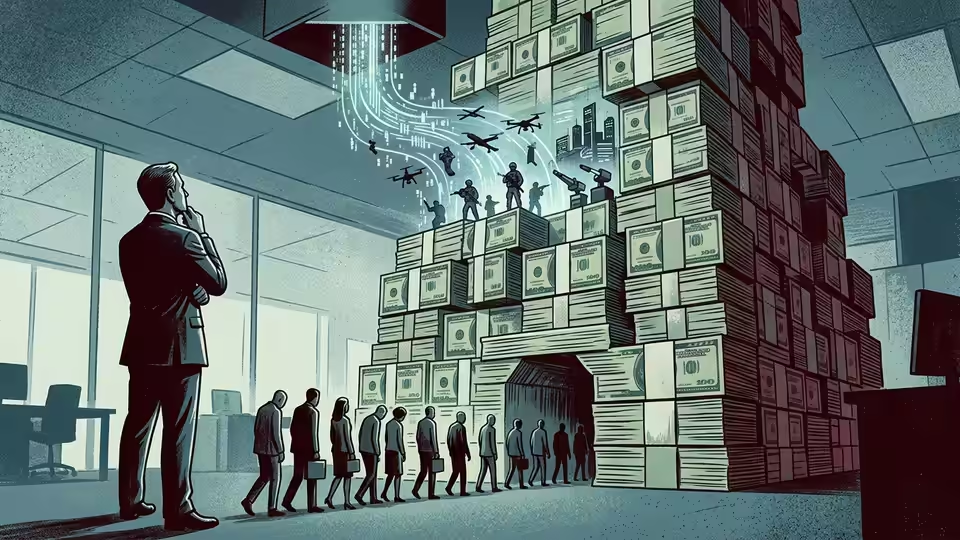
The funding creates a closed loop of policy validation. These contractors fund the think tanks that provide the senior fellows used by the media to justify multi-billion dollar aid packages. Much of that money is specifically earmarked for weapon replenishment contracts that flow directly back to the same companies. Following the bill's progression through committee, Raytheon stock (RTX) rose 4.5%, directly benefiting the entities funding the experts.
This pattern appears to bypass Section 4.2 of the New York Times Ethics Policy, which mandates the disclosure of financial or other interests that could influence a source's perspective. Despite this requirement, none of the 15 articles reviewed included a disclosure regarding the defense industry funding of the cited fellows. This lack of transparency presents industry-funded advocacy as neutral, non-partisan expertise.
While the Times presented these figures as independent analysts, it consistently omitted voices from non-industry-funded institutions like the Quincy Institute for Responsible Statecraft. The result is a curated public debate where the primary beneficiaries of a policy are the ones vetting its necessity. The exclusion of alternative viewpoints ensures that the fiscal impact on taxpayers remains secondary to the strategic goals of the aerospace sector.
For the average citizen, this means the public discourse regarding $14.3 billion in taxpayer funds is being managed by those who stand to gain the most. When private industry buys intellectual credibility to influence media narratives, the result is a policy landscape that prioritizes corporate balance sheets over domestic infrastructure or social safety nets.
Summary
The New York Times quoted defense experts from industry-funded think tanks in 80% of its security bill coverage without disclosing their financial ties. This failure to report conflicts of interest obscures the profit motives driving multi-billion dollar legislative packages.
⚡ Key Facts
- 80% of experts quoted in NYT security bill coverage represent think tanks funded by the defense industry.
- CSIS and CNAS each receive over $1 million annually from Raytheon and Lockheed Martin.
- The New York Times failed to disclose these financial ties, despite internal ethics policies requiring it.
- Raytheon stock increased 4.5% as the $14.3 billion bill progressed through committee.
- Non-industry-funded experts were excluded from the coverage, creating a manufactured consensus for military spending.
Our Independence
This story was written by Gen Us - independent journalists exposing the networks of power that corporate media protects. No hedge fund owns us. No billionaire edits our headlines. We answer only to you, our readers.
Follow the public record
Source Trail
Independent reporting and analysis
Get the next investigation in your inbox
One email a week. Receipts only. Free.
Free. Unsubscribe anytime. We never share your email.