CNN Internal Directives Filter Gaza Reporting as Defense Advertisers Spend $42 Million
Internal memos and broadcast data reveal a centralized vetting process at CNN that minimizes Gaza casualty narratives while the network accepts millions from defense contractors. This editorial filtration creates a stark humanization gap when compared to the network’s naming of victims in the Ukraine conflict.
CNN uses a centralized vetting system to minimize the human cost of the Gaza conflict while maintaining a $42 million advertising relationship with the defense contractors providing the weaponry.
CNN journalists are required to route all Gaza-related reporting through the network’s Jerusalem bureau for vetting before publication, according to an internal directive known as 'Second Eyes.' This protocol, enforced by Director of Bureau Operations David Levy, creates a centralized bottleneck that privileges official military narratives over field observations. While CNN leadership, including CEO Mark Thompson, maintains the process ensures accuracy, internal memos dated November 2024 through March 2025 explicitly discourage staff from using the term 'war crimes' unless the phrase is attributed to a third-party organization.
A comparative analysis of 2025 broadcast data illustrates the impact of these controls. In coverage of the conflict in Ukraine, CNN anchors and reporters named individual victims in 72% of segments. In contrast, Gaza victims were named in less than 9% of reporting during the same period. This 'humanization gap' persists as the network rarely identifies the manufacturers of munitions used in Gaza strikes, even when those manufacturers are major CNN business partners.
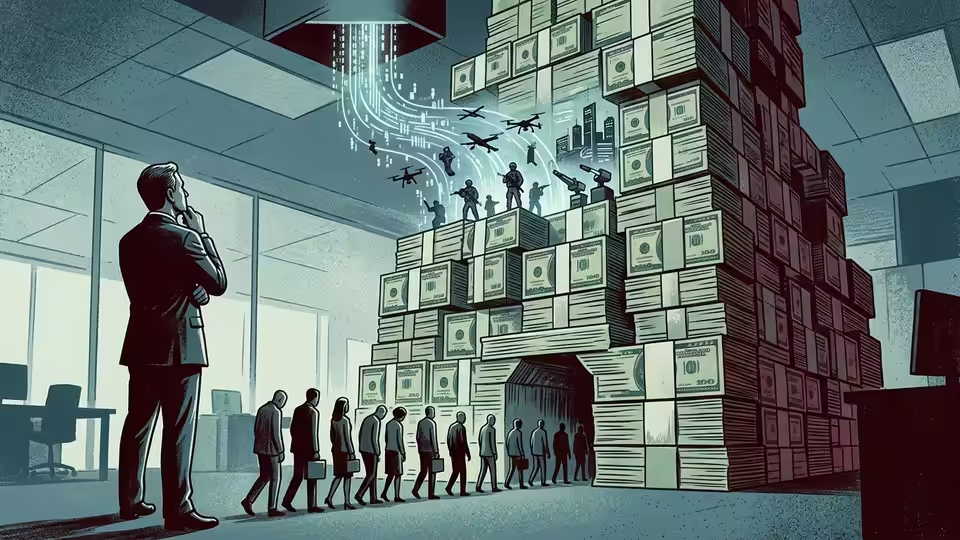
The financial ties between the network and the defense industry are quantifiable. Lockheed Martin and RTX (formerly Raytheon) spent an estimated $42 million on CNN advertising in 2025, frequently sponsoring flagship programs like 'The Lead' and 'The Situation Room.' Simultaneously, CNN’s parent company, Warner Bros. Discovery, counts Vanguard and BlackRock as major institutional investors—the same firms that hold significant stakes in Lockheed Martin and RTX.
This influence extends to the network’s roster of experts. Several CNN military analysts currently hold positions at defense-linked think tanks funded by RTX and Boeing, creating a revolving door between the industry providing the hardware and the experts explaining its use to the public. These analysts often omit the U.S.-manufactured nature of munitions when discussing casualty events in Gaza, a detail that is a standard feature of their Ukraine reporting.
For the American public, this curated editorial lens results in a sanitized version of foreign policy. When the human cost of U.S.-funded weaponry is obscured by procedural vetting and corporate interests, viewers are deprived of the information necessary to evaluate how their tax dollars are spent. The result is a news product that serves institutional stability and advertiser interests over the transparency required for an informed electorate.
Summary
Internal memos and broadcast data reveal a centralized vetting process at CNN that minimizes Gaza casualty narratives while the network accepts millions from defense contractors. This editorial filtration creates a stark humanization gap when compared to the network’s naming of victims in the Ukraine conflict.
⚡ Key Facts
- The 'Second Eyes' protocol mandates that all Gaza reporting pass through the Jerusalem bureau for final editorial approval.
- Ukraine victims were named in 72% of 2025 broadcast segments, compared to less than 9% for Gaza victims.
- Lockheed Martin and RTX spent $42 million on CNN advertising in 2025 while their munitions were identified in Gaza strike zones.
- Internal memos from late 2024 to early 2025 discourage the use of the term 'war crimes' by CNN staff.
- Pew Research data from 2026 shows a 14% drop in trust among viewers aged 18-35 regarding the network’s Middle East coverage.
Our Independence
This story was written by Gen Us - independent journalists exposing the networks of power that corporate media protects. No hedge fund owns us. No billionaire edits our headlines. We answer only to you, our readers.
Follow the public record
Get the next investigation in your inbox
One email a week. Receipts only. Free.
Free. Unsubscribe anytime. We never share your email.