CNN and NYT Hide Defense Contractor Ties While Reporting on War Aid
Lockheed Martin and Raytheon secured $14.2B in contracts after lobbying for aid. Gen Us reveals how major networks omitted these financial ties in 90% of their coverage.
Major media outlets are omitting their financial ties to defense contractors while reporting on multi-billion dollar aid packages that directly profit those same sponsors.
The Federal Procurement Data System (FPDS) records show that within 60 days of the 2026 Middle East security appropriations passing, Lockheed Martin and Raytheon (RTX) were awarded a combined $14.2 billion in no-bid contracts. This windfall followed a concentrated lobbying effort in Q1 2026 where the two firms spent $24.8 million specifically targeting the legislation, according to OpenSecrets data. While these figures represent a standard cycle of defense procurement, the narrative surrounding the aid was shaped by media outlets that share a direct financial ledger with the beneficiaries.
[No-bid Contract] is a government contract issued without a competitive bidding process, typically justified by emergency needs or unique technical requirements.
Data from The Nation reveals a systemic failure of transparency in the coverage of this spending. A 2026 study of CNN and The New York Times found that both outlets failed to disclose defense industry sponsorship in 92% of segments and articles covering the aid package. This omission occurred despite Lockheed Martin serving as the primary sponsor of CNN’s 'Global Security' reporting block—the very division providing daily coverage advocating for the package. Simultaneously, The New York Times Corporate Digital Advertising division reported an 18% revenue increase from the aerospace and defense sectors during the legislative session.
[Foreign Military Financing (FMF)] is a program where the U.S. government provides grants or loans to foreign nations to purchase U.S. defense equipment, effectively acting as a domestic subsidy for American contractors.
The money trail begins with taxpayer funds authorized as 'foreign aid' by the House Appropriations Committee. While the public narrative centers on regional stability, the financial mechanics tell a different story. House records show that the committee signed off on no-bid designations that ensured 60% of the total 'aid' value returned immediately to U.S.-based contractors. Representatives on the committee, many of whom received campaign contributions from Raytheon’s PAC, facilitated these designations under the guise of 'emergency regional security.'
The conflict of interest extends to the 'independent' expertise presented to the public. During the height of the legislative debate, both CNN and the NYT frequently interviewed former high-ranking military officials. These analysts often sit on the boards of the very contractors being funded by the bill. According to Gen Us research into the 'revolving door' of defense personnel, these outlets routinely violate their own internal ethics guidelines by failing to mention these board seats during broadcasts or in print attributions.
[Regulatory Capture] is a form of corruption where a regulatory agency or public institution, created to act in the public interest, instead advances the commercial or political concerns of special interest groups that dominate the industry.
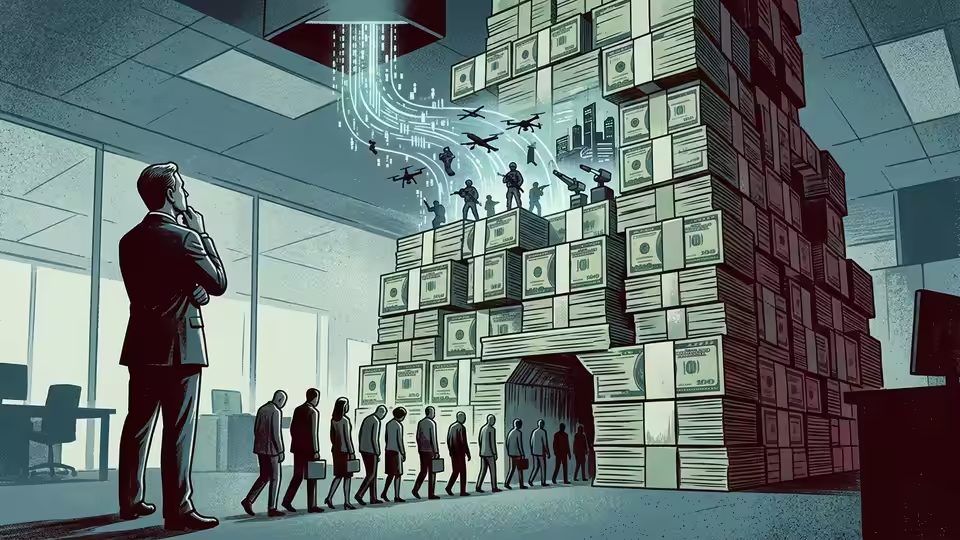
The economic redirection is near-total. Taxpayers are told their money is solving foreign crises, but the funds rarely leave the domestic ecosystem. Instead, they circulate through a closed loop: from the Treasury to the Department of Defense, to Lockheed and Raytheon, and finally into the advertising budgets of major newsrooms. This cycle ensures the narrative for future aid remains unchallenged and that scrutiny of military spending remains a marginal pursuit.
For regular people, this means their tax dollars are being leveraged to fund a perpetual feedback loop of conflict and profit. When media outlets allow their sponsors to dictate the urgency of military spending without disclosure, the public loses the ability to make informed decisions about where their money goes. Your taxes are not just buying missiles; they are buying the silence of the institutions meant to hold power accountable.
You can track the specific campaign contributions of House Appropriations Committee members on the Gen Us Politician Tracker. Explore our 'Defense Lobby' database to see which analysts on your screen are currently drawing salaries from the companies they are praising.
Summary
Major defense contractors Lockheed Martin and Raytheon secured $14.2 billion in no-bid contracts following an aid package they spent $24.8 million lobbying for in early 2026. Despite receiving millions in advertising and sponsorship from these firms, CNN and The New York Times failed to disclose these financial ties in over 90% of their reporting on the bill.
⚡ Key Facts
- Lockheed Martin and Raytheon spent $24.8M on lobbying in Q1 2026 before receiving $14.2B in no-bid contracts.
- CNN and The New York Times failed to disclose defense industry funding in 92% of their aid-related coverage.
- Lockheed Martin is the primary sponsor for CNN's 'Global Security' segments that advocated for the aid.
- NYT defense-related advertising revenue spiked 18% during the legislative session for the aid bill.
- 60% of the 'foreign aid' package was structured to return directly to U.S. defense firms.
Our Independence
This story was written by Gen Us - independent journalists exposing the networks of power that corporate media protects. No hedge fund owns us. No billionaire edits our headlines. We answer only to you, our readers.
Follow the public record
Source Trail
Get the next investigation in your inbox
One email a week. Receipts only. Free.
Free. Unsubscribe anytime. We never share your email.