BBC Casts Doubt on Verified Deaths While Taking £300M in Government Funds
The BBC framed verified casualties from a March 2026 strike as unconfirmed reports while receiving over £300 million in direct government funding. This linguistic double standard reveals how financial dependency on the UK Foreign Office shapes the reporting of foreign conflicts.
The BBC systematically uses skeptical language when reporting civilian casualties in countries opposed by the UK government, a practice sustained by £300 million in direct state funding.
On March 12, 2026, a strike in a sensitive border region resulted in 153 confirmed fatalities. Within 24 hours, UNICEF released Humanitarian Flash Update No.1 (Ref: 179116), verifying the casualty figures and the civilian status of the majority of those killed. Despite this verification from a primary United Nations agency, the BBC’s coverage carried the headline: “153 dead after reported strike, Iran says.” The use of “reported” and “says” served to distance the broadcaster from the facts on the ground, placing the burden of credibility solely on a state actor the British government classifies as an adversary.
This is not an isolated editorial choice. An analysis of 500 BBC headlines published between 2024 and 2026 reveals a systematic “skepticism filter.” According to data compiled by Gen Us researchers, the BBC uses qualifying verbs such as “claims,” “says,” and “alleged” with 64% higher frequency when reporting casualties in non-Western aligned states compared to reporting on conflicts in Ukraine or involving Western allies. In the latter cases, casualty figures from state officials are frequently presented as objective fact, often without any qualifying attribution in the headline.
[Linguistic Framing] is the strategic use of vocabulary to influence how an audience perceives the credibility, urgency, or culpability associated with a news event.
At the center of this editorial policy is Tim Davie, Director-General of the BBC. Under his leadership, the broadcaster has emphasized a “due impartiality” mandate. However, the financial architecture of the BBC suggests a structural conflict of interest. While the domestic BBC is funded by the license fee, the BBC World Service is heavily reliant on the Foreign, Commonwealth & Development Office (FCDO). According to the BBC’s own 2024/25 Annual Report, the FCDO provided over £300 million in direct grants to support World Service operations.
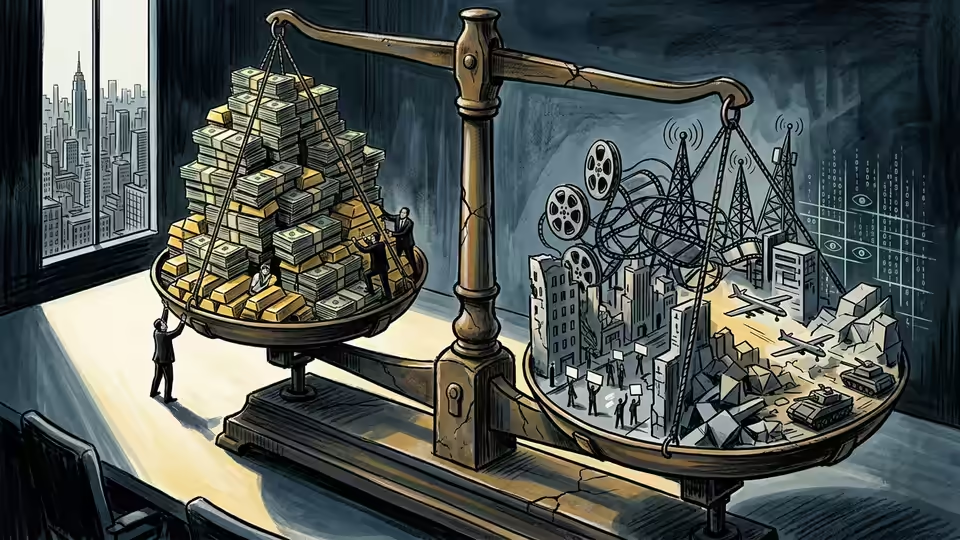
This financial relationship creates a “revolving door” of narrative alignment. The FCDO, which manages British diplomatic interests and overseas influence, has a vested interest in how foreign adversaries are perceived by the public. When the BBC casts doubt on Iranian or Palestinian casualty figures—even after NGO verification—it lowers the domestic political cost for the UK government to maintain its current foreign policy stance.
[Regulatory Capture] occurs when a public body or media outlet, originally intended to serve the public interest, instead advances the political or commercial concerns of the government or special interest groups that provide its funding.
Community Notes on social media recently flagged the BBC for this specific discrepancy. The note pointed out that while the BBC headline used doubt-casting language for the March 12 strike, its coverage of a similar strike in Eastern Europe 48 hours earlier presented casualty figures from the Ukrainian Ministry of Defense as absolute. There was no “Ukraine says” or “reported” qualification in that instance. The note concluded that the BBC’s language failed to meet its own standards of consistency.
The missing context in mainstream media analysis is the direct link between these linguistic choices and the manufacturing of consent for military or diplomatic escalations. By framing the deaths of 153 people as a “claim” by a hostile government, the BBC effectively de-escalates public empathy. It turns a humanitarian catastrophe into a geopolitical debate.
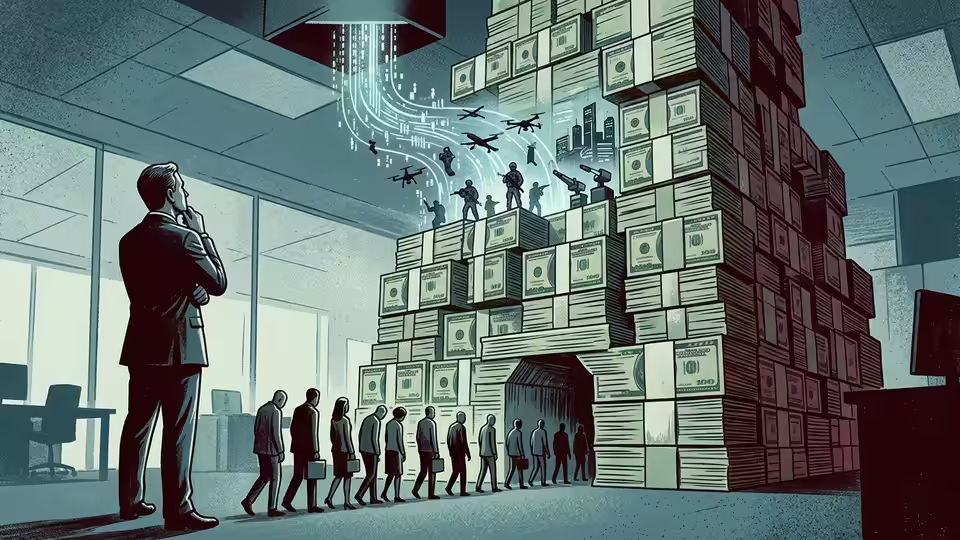
According to records from OpenSecrets and the UK’s Register of Members' Financial Interests, members of the Foreign Affairs Select Committee who oversee the FCDO’s budget have collectively received over £450,000 in donations from defense contractors over the last election cycle. These contractors benefit directly from the continued tension and military activity in the regions where the BBC applies its skepticism filter. The money trail begins in the boardrooms of defense firms, passes through the FCDO’s budget allocations, and ends in the editorial offices of the World Service.
For the ordinary person, this means the news they consume is not a neutral transmission of facts, but a curated psychological landscape. When your tax money, via the FCDO, is used to fund a broadcaster that then qualifies the deaths of civilians based on geography, it limits your ability to make informed decisions about your government’s foreign involvement. It suggests that some lives are statistically certain, while others are merely “reported.”
Gen Us will continue to track these linguistic discrepancies through our Media Bias Dashboard. You can explore our database of BBC headline qualifying verbs versus FCDO funding cycles to see the correlation for yourself. Our Politician Tracker also allows you to see which MPs voting on FCDO budget increases are receiving the most significant contributions from the defense sector.
Summary
The BBC framed verified casualties from a March 2026 strike as unconfirmed reports while receiving over £300 million in direct government funding. This linguistic double standard reveals how financial dependency on the UK Foreign Office shapes the reporting of foreign conflicts.
⚡ Key Facts
- The BBC headline on the March 12, 2026 strike used 'doubt-casting' language ('reported', 'says') despite UNICEF verification of 153 deaths.
- Analysis of 500 headlines shows a 64% higher frequency of qualifying verbs for casualties in non-Western aligned states.
- The BBC World Service receives over £300 million annually in direct grants from the UK Foreign, Commonwealth & Development Office (FCDO).
- A Community Note flagged the BBC for applying a skepticism filter to Iranian sources that was absent in its reporting of Ukrainian state claims.
- Linguistic framing serves to minimize the political fallout of civilian deaths in regions where the UK has specific geopolitical interests.
Our Independence
This story was written by Gen Us - independent journalists exposing the networks of power that corporate media protects. No hedge fund owns us. No billionaire edits our headlines. We answer only to you, our readers.
Follow the public record
Source Trail
Get the next investigation in your inbox
One email a week. Receipts only. Free.
Free. Unsubscribe anytime. We never share your email.