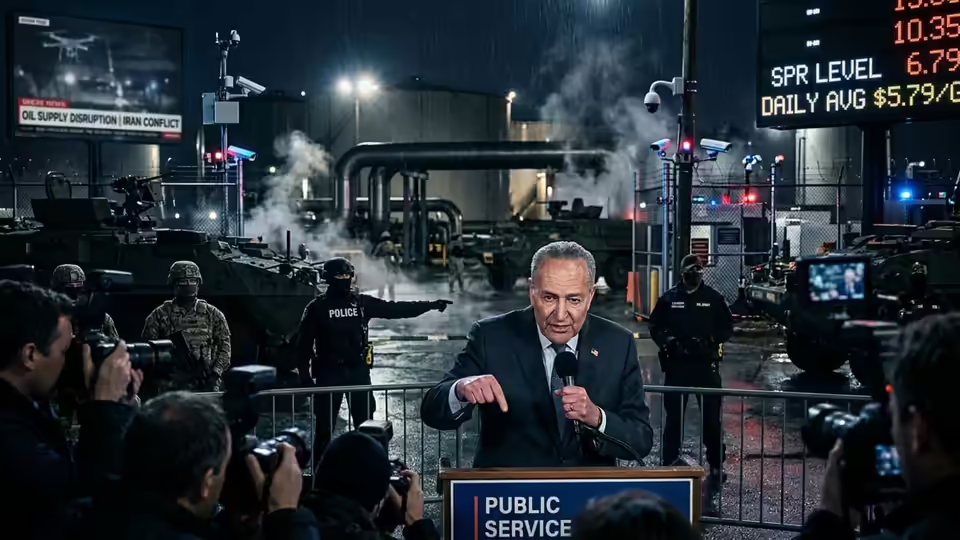
Trump’s $1.776B ‘Anti-Weaponization’ Fund: A New Taxpayer-Funded Slush Fund?
President Trump dropped a $10B lawsuit in exchange for a $1.776B DOJ fund to pay 'victims of political targeting.' Critics call it a billion-dollar reward for allies.
President Trump settled his private $10 billion lawsuit by having the DOJ create a $1.776 billion taxpayer-funded program to pay people who claim they were politically targeted.
On May 18, 2026, the DOJ did something we've never seen before. It settled the President's personal fight with the IRS using $1.776 billion of your money. By ditching his $10 billion claim over leaked tax records, Trump won't have to prove his financial losses in open court. Instead, he gets a government-run pot of cash to pay out to anyone he thinks was targeted by political bias. It's a massive shift: the financial hit doesn't fall on the IRS anymore, it falls on the public.
LawfareLoaded Language is basically using the legal system like a weapon to hurt an opponent or stop them from using their rights.
Acting Attorney General Todd Blanche is running the show. Since he used to be Trump's own defense lawyer, that's raising eyebrows. He'll manage the fund with a five-person board. But here's the kicker: the President can fire those board members whenever he wants. That means the $1.776 billion is being handled by people who answer directly to him. The DOJ says the fund will offer apologies and cash through December 1, 2028. That date isn't a coincidence: it covers the rest of the current term.
“The fund will provide monetary relief and formal apologies through Dec. 1, 2028, effectively spanning the remainder of the presidential term.”
We don't have a list of who's getting paid yet. The rules say anyone "targeted for prosecution for political purposes" can apply. Critics are worried that's code for people convicted in the January 6 Capitol attack. By May 20, 2026, Capitol Police officers were already suing to stop it. They're arguing that Congress never actually okayed a $1.776 billion fund for weaponizationLoaded Language claims. It's a new kind of settlement governance where personal legal problems get fixed with big administrative programs.
The Appropriations Clause is a rule in the Constitution. It says no money can come out of the Treasury unless Congress passes a law to spend it.
Nobody knows where that $1.776 billion number came from. It's about 17% of what Trump originally wanted, but the DOJ hasn't shown the math. They haven't explained how many people they expect to pay out. And since the case is settled, Trump avoids the discovery phase. That's when his own tax records and business deals would've been picked apart by lawyers and likely made public. House Democrats are already pushing back with the "No Slush Funds for Insurrectionists Act" because of this lack of transparency.
For the average person paying taxes, this looks like a lot of money going into a system with almost no independent oversight. Usually, a judge has to sign off on settlement payouts. Not here. This board answers to the White House. We'll see if the fund survives the Capitol Police lawsuit. But the administration isn't waiting: they're planning to start cutting checks by June 2026.
Summary
President Trump is walking away from his $10 billion personal lawsuit against the IRS. But there's a catch: the DOJ is setting up a $1.776 billion "Anti-Weaponization Fund" instead. It's taxpayer money meant to pay people who claim they've been victims of political targeting. Critics are already calling it a slush fund for political allies, and it's facing legal fire from Capitol Police and House Democrats who say it's unconstitutional.
⚡ Key Facts
- The U.S. Department of Justice established a $1.776 billion 'Anti-Weaponization Fund' in May 2026.
- The fund was established as part of a settlement where President Trump dropped a $10 billion lawsuit against the IRS.
- Acting Attorney General Todd Blanche stated the fund provides redress for victims of 'lawfare and weaponization'.
Trump’s $1.776B ‘Anti-Weaponization’ Fund: A New Taxpayer-Funded Slush Fund?
Connections in this story
- Political opponents of the Trump administration who seek to frame the 'Anti-Weaponization Fund' as a corrupt use of taxpayer money.
- The Conversation’s academic/progressive donor base who prioritize institutional norms and checks on executive power.
- The specific legal merits of Trump's original $10 billion lawsuit against the IRS regarding the legality of his tax return leaks.
- Whether previous administrations have established similar redress funds for different causes.
- The perspective of legal scholars who might argue the settlement is a standard exercise of executive branch authority in litigation.
The article frames a hypothetical future administrative action as a moral and constitutional crisis by applying centuries-old philosophical warnings against self-interest to present-day partisan conflicts.
See how the story connects.
Select any actor or numbered connection, then inspect the evidence before drawing a conclusion.
The Conversation Trust → The Conversation
Parent company
Follow the public record
Source Trail
Independent reporting and analysis
Get the next investigation in your inbox
One email a week. Receipts only. Free.
Free. Unsubscribe anytime. We never share your email.