The CBC’s Secret Stance: Why Leadership is Protecting Warrantless FBI Spying
While progressive allies demand privacy, CBC leadership is reportedly lobbying to preserve the FBI’s warrantless surveillance powers. We track the donors and political pressure keeping the caucus silent as the FISA deadline looms.
The CBC is the last line of defense for FISA reform, but leadership is reportedly pushing to keep warrantless spying alive despite a long history of the FBI targeting Black activists.
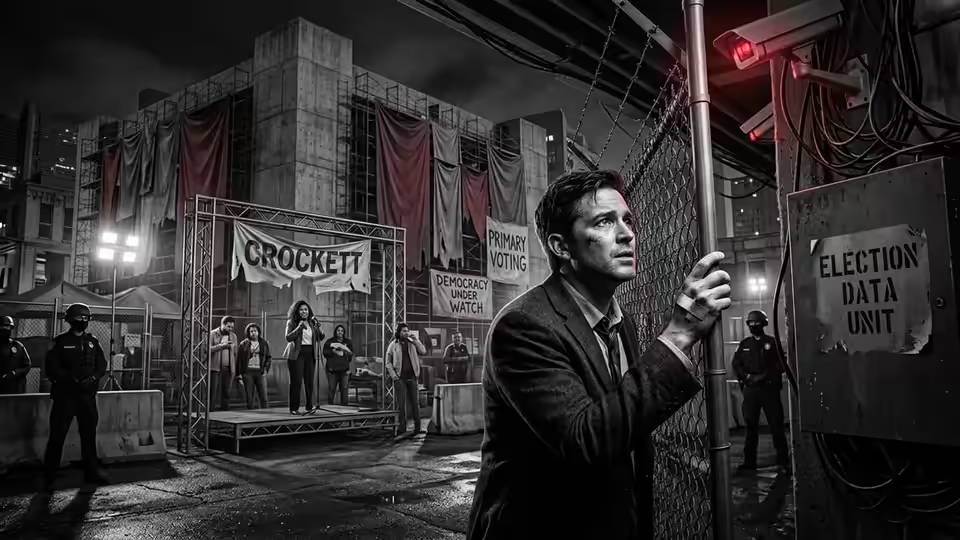
The fight for your privacy is happening in private. It's all going down behind closed doors at the Congressional Black Caucus. With the April 20 deadline for Section 702 of the Foreign Intelligence Surveillance Act fast approaching, the CBC's 59 voting members are the ones holding all the cards. The Biden administration wants a clean reauthorization, but a huge chunk of the House is digging in. They're demanding a warrant requirement for searches involving Americans. It's a move that would finally shift some power back to the individual.
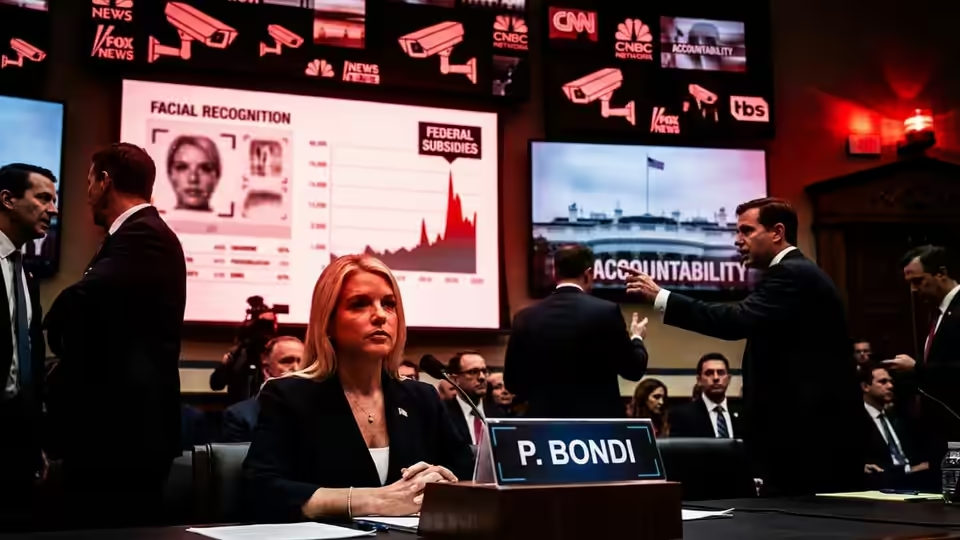
The stakes here aren't just theoretical. According to the Foreign Intelligence Surveillance Court, the feds misapplied Section 702 authorities nearly 300,000 times between 2016 and 2020. These backdoor searches often targeted domestic activists, including 133 people arrested during the 2020 protests. The FBI claimed they were looking for 'counterterrorism derogatory information,' but they didn't have any actual evidence of terrorist links. It's this history of overreach that has groups like the ACLU and the EFF putting pressure on the CBC. After all, it's their constituents who are usually the ones getting targeted.
Here's the technical breakdown: Section 702 is a part of the Foreign Intelligence Surveillance Act that lets the government grab communications from non-citizens outside the U.S. without a warrant. But the problem is incidental collection. That's just a fancy way of saying they end up with a lot of data on Americans too. FISA itself was passed back in 1978 to set the rules for how the government can spy onLoaded Language people to find foreign intelligence information.
“Federal law enforcement misapplied Section 702 nearly 300,000 times between 2016 and 2020, including searches of American citizens.”
If you want to know why there's so much friction, just follow the money. Rep. Gregory Meeks is a key figure here. He's the Ranking Member of the House Foreign Affairs Committee and has been identified as someone resisting the warrant requirement. OpenSecrets data shows Meeks is a major recipient of cash from defense and intelligence contractors. In the 2024 cycle alone, he's raised over $1.6 million. A lot of that came from law firms and tech interests that represent the defense industry. Meeks says the reports of his lobbying are inaccurate, but his alignment with the intelligence community is hard to ignore.
This push for more surveillance isn't just happening in the U.S. either. This month, Canadian lawmakers are debating Bill C-22, the Lawful Access Act. It's a plan to give their intelligence agency and the police more ways to get into electronic data. This is part of a bigger global trend. The Five Eyes alliance: which includes the U.S., Canada, the UK, Australia, and New Zealand: seems to be working on a unified front to make sure intelligence agencies always have access to private, encrypted messages.
What we don't know yet is the exact nature of the deal being offered to the CBC by Hakeem Jeffries and Mike Johnson. Jeffries has said Democrats won't do the GOP's bidding, but legislative horse-trading is a real thing. It usually involves trading votes on national security for other goals like voting rights or local investment. But the kicker is this: so far, not a single member of the CBC has publicly broken ranks to explain why they aren't protecting their own people from warrantless searches.
When April 20 hits, we'll see where Congress actually stands. If the CBC stays silent and lets a clean bill pass, it'll be the third time in a decade that a major surveillance expansion happened because Democrats didn't present a united front. For regular citizens, it means the digital backdoor stays open. The feds will keep bypassing the Fourth Amendment and using foreign intelligence data to build criminal cases against people right here at home.
Summary
Right now, the Congressional Black Caucus is the deciding factor in the fight over FISA Section 702. While other minority groups and progressive Democrats are demanding an end to warrantless spying, the CBC's leadership hasn't stepped up. Reports suggest Rep. Gregory Meeks is actually lobbying to kill the reforms, though he denies it. It's a high-stakes standoff, especially given the FBI's history of using these tools against activists. We're looking at the political and financial ties keeping the CBC quiet as the April 20 deadline hits.
⚡ Key Facts
- Members of the Congressional Black Caucus (CBC) are undecided or tight-lipped about backing a 'clean' FISA reauthorization bill.
- FISA Section 702 was misapplied nearly 300,000 times between 2016 and 2020.
- The Congressional Hispanic Caucus and Congressional Progressive Caucus have pledged to oppose reauthorization without reform.
- The current FISA law is set to expire on April 20.
The CBC’s Secret Stance: Why Leadership is Protecting Warrantless FBI Spying
Network of Influence
- Progressive and socialist political movements seeking to pressure moderate Democrats.
- The Jacobin Foundation (direct call to action for subscriptions in the article).
- Civil liberties advocacy groups (ACLU, EFF) looking to build momentum against FISA reauthorization.
- The specific national security arguments provided by the Biden administration and intelligence agencies in favor of Section 702.
- The fact that Section 702 is a tool used by the executive branch regardless of the president's party, not exclusively a 'Trump' policy.
- The potential legislative trade-offs or other bills the CBC might be prioritizing in negotiations with leadership.
The article frames the Congressional Black Caucus as potentially betraying their core constituency by aligning with Donald Trump on surveillance issues, while highlighting other minority caucuses as more principled.
See how the story connects.
Select any actor or numbered connection, then inspect the evidence before drawing a conclusion.
Jacobin Foundation Parent company Jacobin
Follow the public record
Source Trail
Independent reporting and analysis
Get the next investigation in your inbox
One email a week. Receipts only. Free.
Free. Unsubscribe anytime. We never share your email.