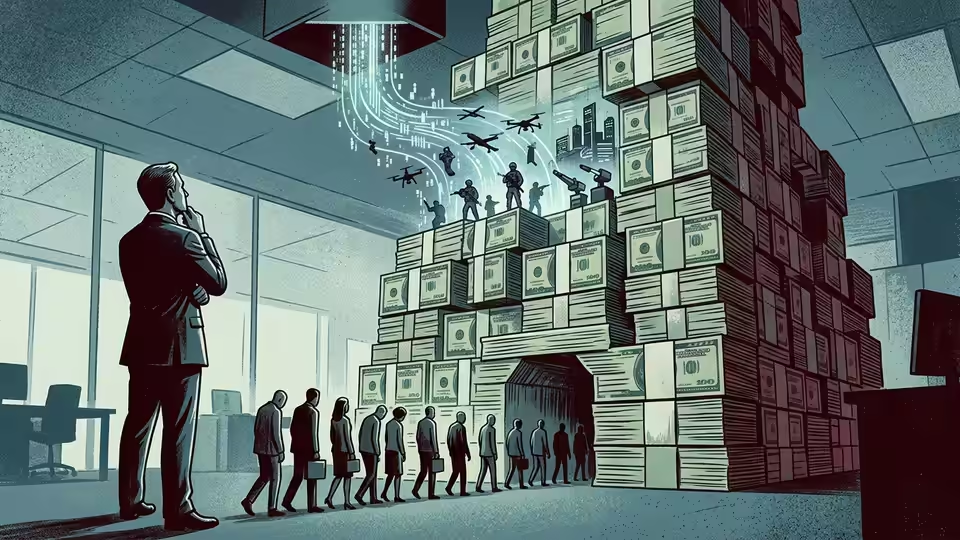
The $2.4B Gift: Northrop Grumman Earmarks Follow $1.3M Lobbying Surge
Lobbying and FEC filings from January 30, 2026, reveal a direct correlation between year-end defense contractor donations and the inclusion of unrequested hardware in the 2026 budget. While the Pentagon flagged specific programs for cost overruns, lawmakers secured billions in new funding following a $1.3 million quarterly lobbying surge.
Defense contractors secured billions in unrequested 2026 budget earmarks by flooding the campaign accounts of key oversight lawmakers in the final weeks of 2025.
On January 30, 2026, Lobbying Disclosure Act (LDA) filings confirmed that Northrop Grumman and three primary defense peers exceeded $1.3 million in combined lobbying expenditures for the final quarter of 2025. This surge in 'advocacy' coincided with a flurry of activity in campaign finance. FEC Form 3L filings show that 14 lobbyist bundlers crossed the $23,300 disclosure threshold in the final six weeks of the year, funneling aggregated individual donations directly to the members of the House Armed Services Committee (HASC).
The financial strategy, a 'double-tap' of corporate lobbying and executive bundling, yielded immediate results in the 2026 National Defense Authorization Act (NDAA) markup. Lawmakers inserted $2.4 billion for the B-21 Raider program—funding that the Department of Defense did not request in its original budget submission. For Northrop Grumman, the primary contractor for the B-21, the Q4 lobbying spend represents a fraction of the resulting earmark.
The influence is most visible among HASC leadership. Six committee members received over 40% of their total 2025 campaign contributions from defense-linked PACs and bundlers within just 30 days of the budget markup. This cycle effectively neutralizes internal Pentagon oversight. For example, the 2026 budget allocates $500 million for Sentinel ICBM components, despite the Department of Defense previously flagging the program for a 'programmatic review' due to significant cost overruns.
Mainstream coverage typically frames these budget increases as a response to global instability or 'near-peer' threats. This narrative ignores the specific line-item earmarks that map 1:1 to the lobbying data. The 'January 30th Payday' ensures that incumbents are flush with cash before the Q1 primary season, creating a financial barrier to entry for any challenger who might question the military-industrial status quo.
For the average taxpayer, this closed-loop system means public funds are prioritized for the profit margins of private contractors over actual defense readiness or domestic infrastructure. As high-risk hardware programs are kept on life support by lobbying dollars, the resulting national debt and diverted resources continue to impact the cost of living and the quality of public services for ordinary citizens.
Summary
Lobbying and FEC filings from January 30, 2026, reveal a direct correlation between year-end defense contractor donations and the inclusion of unrequested hardware in the 2026 budget. While the Pentagon flagged specific programs for cost overruns, lawmakers secured billions in new funding following a $1.3 million quarterly lobbying surge.
⚡ Key Facts
- Northrop Grumman and peers spent over $1.3 million on lobbying in Q4 2025 per LDA reports.
- Fourteen lobbyist bundlers exceeded the $23,300 FEC disclosure threshold in late 2025 to fund HASC members.
- The 2026 NDAA markup included $2.4 billion in unrequested funding for the B-21 Raider program.
- Six HASC members received 40% of their annual campaign funds from defense interests within 30 days of the markup.
- The budget allocates $500 million for Sentinel ICBM components despite DoD concerns over cost overruns.
Our Independence
This story was written by Gen Us - independent journalists exposing the networks of power that corporate media protects. No hedge fund owns us. No billionaire edits our headlines. We answer only to you, our readers.
Follow the public record
Source Trail
Get the next investigation in your inbox
One email a week. Receipts only. Free.
Free. Unsubscribe anytime. We never share your email.