Senate Vote Left Iran Hostilities in Executive Hands
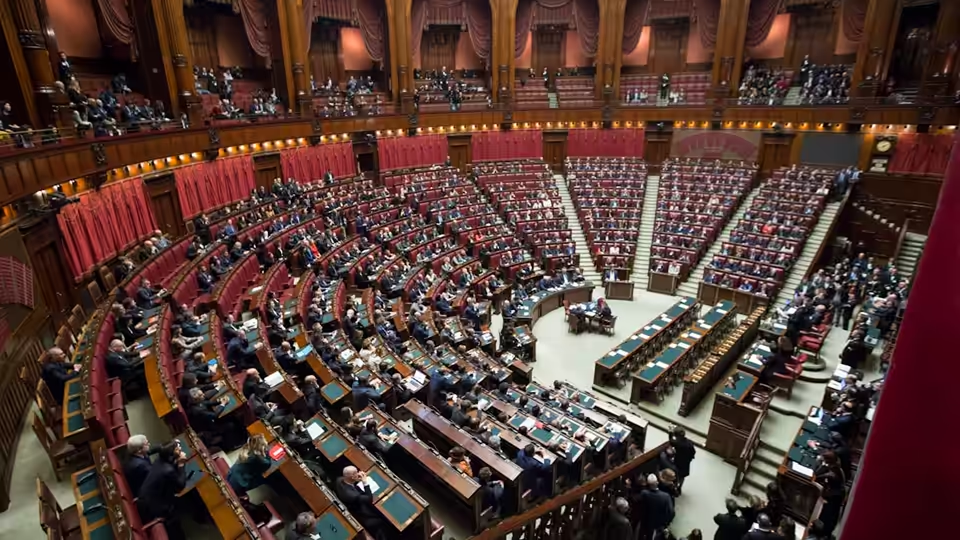
On September 24, the Senate rejected 49–50 a resolution directing President Donald Trump to remove U.S. forces from hostilities with Iran. The vote defeated this withdrawal measure without creating an affirmative authorization of war in the roll-call record, leaving the executive branch’s existing posture unchanged against this challenge.
The Senate rejected a measure that would have directed withdrawal from Iran hostilities, leaving the executive posture unchanged against this congressional challenge without creating a recorded authorization of war.
Fifty senators blocked the withdrawal measure
The Senate rejected H.Con.Res. 89 by 49–50 on September 24, 2026. The resolution directed the president, pursuant to section 5(c) of the War Powers Resolution, to remove United States Armed Forces from hostilities with Iran.
The roll call records 50 Nay votes. It also records Angela Alsobrooks as not voting, but this story does not treat nonparticipation as support for either side.
The vote stopped withdrawal, not authorized war
The Senate rejected a measure whose stated effect was to direct withdrawal. That makes the vote different from an affirmative authorization of war, although the roll-call record does not establish whether another statute or resolution separately authorized the Iran operations.
Defeating H.Con.Res. 89 prevented this measure from directing withdrawal under its stated terms. The strongest supported conclusion is that Congress declined to stop the hostilities through this particular mechanism, leaving the executive branch’s existing operational posture intact against this challenge.
The conflict continued after the vote
Middle East Eye reported on September 26 that Trump rejected an Iranian proposal, transmitted through Qatari mediators, to reopen the Strait of Hormuz and end hostilities within seven days. The same outlet reported that Iran’s Strait of Hormuz Administration warned ships using unauthorized routes would face serious restrictions. Together, those reports indicate that the conflict and the dispute over Hormuz remained active after the vote, but they do not prove that the Senate vote caused either event or establish the full legal basis for continuing operations.
The record names the votes, not the sponsor
The official Senate record identifies the resolution, date, tally and individual votes. It says “No Statement of Purpose on File” and does not identify the resolution’s sponsor. The supplied evidence also does not establish a donor, contractor, lobbying or other financial motive behind any senator’s vote.
For service members, civilians and taxpayers, the practical consequence is that this congressional effort did not stop the executive branch’s existing war posture. The record supports that institutional consequence, not documented casualty totals, spending figures or a finding that this vote caused particular operations.
Summary
On September 24, the Senate rejected 49–50 a resolution directing President Donald Trump to remove U.S. forces from hostilities with Iran. The vote defeated this withdrawal measure without creating an affirmative authorization of war in the roll-call record, leaving the executive branch’s existing posture unchanged against this challenge.
⚡ Key Facts
- The Senate rejected H.Con.Res. 89 by 49–50 on September 24, 2026.
- The resolution directed the president to remove U.S. Armed Forces from hostilities with Iran under section 5(c) of the War Powers Resolution.
- Fifty senators voted Nay, defeating the withdrawal measure.
- The vote was not an affirmative authorization of war in the roll-call record, and the record does not establish whether another authorization exists.
- Middle East Eye reported after the vote that Trump rejected an Iranian proposal to reopen the Strait of Hormuz and end hostilities within seven days.
- The Senate record does not identify the resolution’s sponsor or establish a financial motive for any senator’s vote.
Connections in this story
See how the story connects.
Select any actor or numbered connection, then inspect the evidence before drawing a conclusion.
U.S. Senate → H.Con.Res. 89
Rejected 49–50
The Senate rejected H.Con.Res. 89 by 49–50 on September 24, 2026.
Source: United States Senate roll-call record
Follow the public record
Source Trail
Get the next investigation in your inbox
One email a week. Receipts only. Free.
Free. Unsubscribe anytime. We never share your email.