Salesforce Subsidiary Wins No-Bid $5.6 Billion Army Contract Amid Lobbying Surge
The U.S. Army bypassed competitive bidding to award a $5.6 billion deal to a Salesforce subsidiary after three former procurement officials joined the company. A formal protest by a veteran-owned small business was withdrawn in just nine days, leaving the multibillion-dollar deal without oversight.
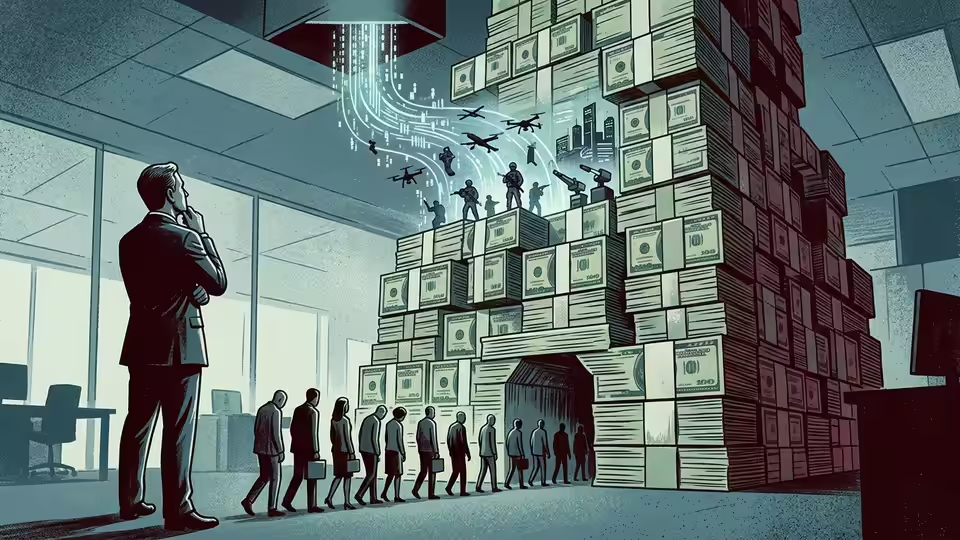
Salesforce secured a $5.6 billion no-bid Army contract following a massive lobbying push and the hiring of three former procurement officials who helped design the requirement.
On January 26, 2026, the U.S. Army awarded a $5.6 billion sole-source contract for its 'Missionforce' initiative to Computable Insights, a subsidiary of Salesforce. By designating the award as a sole-source procurement, the Army bypassed the Competition in Contracting Act, ensuring no other companies could bid for the decade-long project. The justification rested on a narrow technical definition of interoperability that only Salesforce’s proprietary architecture currently meets.
Financial records reveal a significant correlation between the award and Salesforce’s political activity. In the fourth quarter of 2025, Salesforce increased its defense-related lobbying expenditures by 40%, totaling $3.2 million. Filings under the Lobbying Disclosure Act show this spending specifically targeted officials at Army PEO Enterprise, the same office responsible for the Missionforce technical requirements and the eventual no-bid justification.
The contract award follows a pattern of high-level personnel movement between the Pentagon and the cloud provider. Between 2023 and 2025, three former high-ranking officials from Army PEO Enterprise transitioned into executive roles within Salesforce's Public Sector division. These individuals moved from overseeing the Army’s IT budgets to lead a team that secured a $5.6 billion commitment from their former employer.
Institutional oversight failed to slow the deal. On February 2, 2026, a veteran-owned small business filed a formal bid protest with the Government Accountability Office (Docket B-424241.1), challenging the sole-source nature of the award. Nine days later, the protest was abruptly withdrawn. No public settlement terms were disclosed, and the Army has not explained why modular, open-source alternatives were rejected in favor of a single-vendor monopoly.
For the American public, this contract represents a $5.6 billion transfer of tax revenue into a proprietary 'black box.' By engineering requirements that only one vendor can meet, the Army has created a vendor lock-in that eliminates future price competition. This lack of transparency and competitive pressure increases the risk of technological failure while ensuring that taxpayer funds remain tethered to Salesforce’s shareholders for the next ten years.
Summary
The U.S. Army bypassed competitive bidding to award a $5.6 billion deal to a Salesforce subsidiary after three former procurement officials joined the company. A formal protest by a veteran-owned small business was withdrawn in just nine days, leaving the multibillion-dollar deal without oversight.
⚡ Key Facts
- The U.S. Army awarded a $5.6 billion no-bid contract to Salesforce subsidiary Computable Insights on January 26, 2026.
- Salesforce increased its lobbying spend by 40% to $3.2 million in the quarter immediately preceding the award.
- Three former high-ranking Army PEO Enterprise officials joined Salesforce leadership between 2023 and 2025.
- A formal GAO protest against the contract was withdrawn after only nine days with no public explanation.
- The 'Missionforce' contract uses proprietary standards that effectively bar future competition for the next decade.
Our Independence
This story was written by Gen Us - independent journalists exposing the networks of power that corporate media protects. No hedge fund owns us. No billionaire edits our headlines. We answer only to you, our readers.
Follow the public record
Source Trail
Get the next investigation in your inbox
One email a week. Receipts only. Free.
Free. Unsubscribe anytime. We never share your email.