Lockheed's $1.9B 'No-Bid' Jackpot Follows $4.2M Lobbying Surge
The US Air Force claimed there were 'no alternatives' before handing Lockheed Martin $1.9 billion. We tracked the lobbying dollars that paved the way.
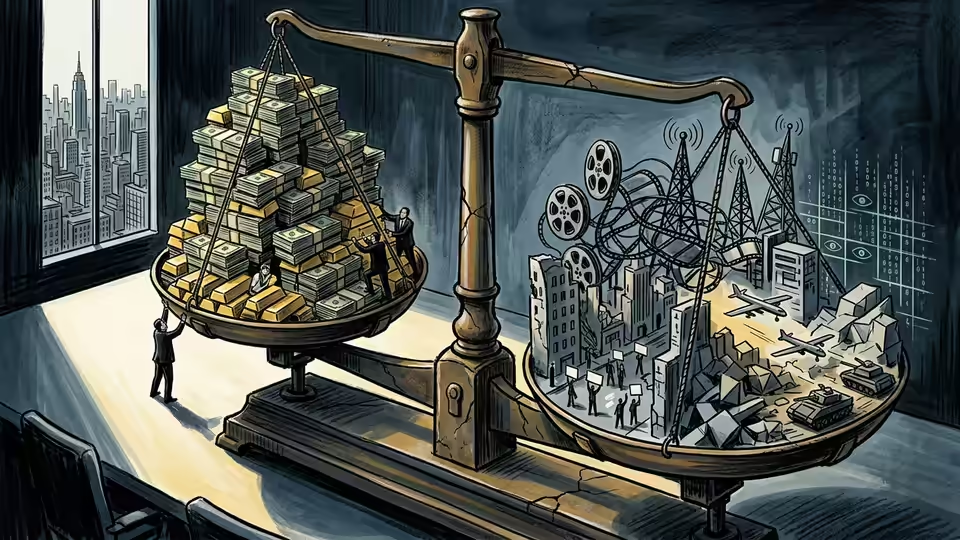
Lockheed Martin leveraged a $4.2M lobbying surge and proprietary data rights to secure a $1.9B no-bid maintenance contract, effectively forcing taxpayers to pay a monopoly premium for the C-130J program.
On April 14, 2026, the U.S. Air Force Life Cycle Management Center (AFLCMC) finalized a $1,900,000,000 award to Lockheed Martin Corporation. The contract, designated as C-130J Maintenance and Aircrew Training System (MATS) IV, was not put out for competitive tender. Instead, procurement officials invoked 10 U.S.C. 2304(c)(1), a legal loophole that allows the government to skip the bidding process when it claims there is 'Only One Responsible Source' capable of performing the work. This single signature ensures that for the next several years, nearly $2 billion in taxpayer funds will flow directly to the world's largest defense contractor without a single rival firm being allowed to offer a lower price.
[10 U.S.C. 2304(c)(1)] is a federal statute that permits government agencies to bypass competitive bidding requirements when it is determined that only one specific contractor can satisfy the agency's needs.
The timing of the award coincides with a significant ramp-up in Lockheed Martin’s influence operations. According to Q1 2026 LD-2 filings submitted to the Senate Office of Public Records, Lockheed Martin spent $4.2 million on lobbying between January and March 2026. This represents a 14% increase over the previous quarter. The filings show that Lockheed’s lobbyists specifically targeted the House and Senate Appropriations Committees and the Department of Defense regarding 'procurement and maintenance funding for airlift platforms.' While the Air Force claims the no-bid status is a matter of logistical necessity, the paper trail suggests a well-funded effort to ensure the decision-makers remained convinced of that necessity.
[LD-2 Disclosure] is a mandatory quarterly report required by the Lobbying Disclosure Act that details how much a corporation spent on lobbying and which government agencies or legislative bodies they targeted.
Central to this monopoly is the concept of 'Data Ransom.' In the Justification and Approval (J&A) document signed by the Senior Procurement Executive at AFLCMC, the Air Force admitted that any other vendor would cause 'unacceptable delays' and 'duplicated costs' exceeding $210 million. The reason? Lockheed Martin holds the proprietary rights to the C-130J flight simulator software and technical data. Because the Air Force failed to secure these data rights in earlier contracts, they are now legally and logistically tethered to a single provider. Lockheed Martin owns the blueprints, and they aren't sharing.
[Technical Data Package] is the set of blueprints, software code, and engineering specifications required to maintain, repair, or upgrade a military system.
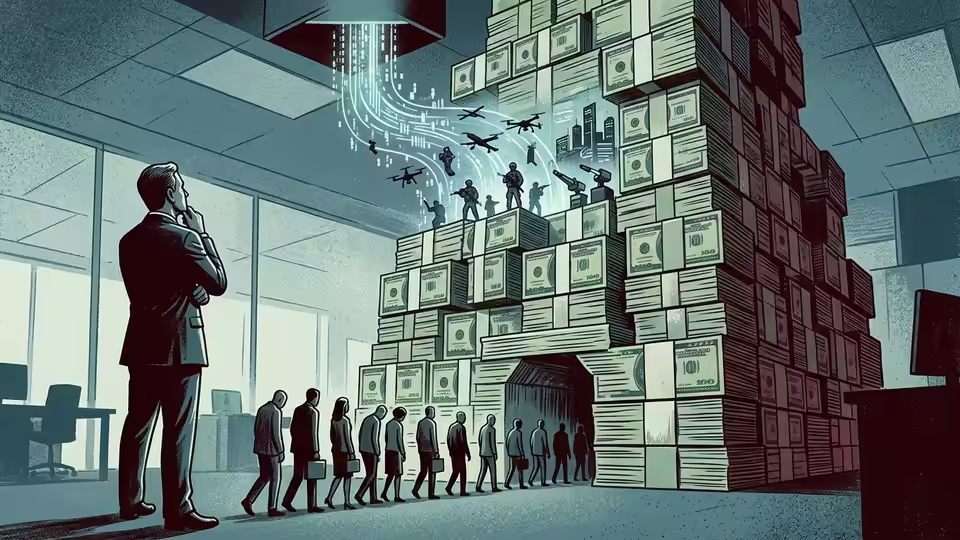
The financial influence extends beyond lobbying. According to FEC filings and OpenSecrets data, Lockheed Martin’s Political Action Committee (PAC) distributed $850,000 to members of the Senate Armed Services Committee (SASC) during the 2025-2026 cycle. These are the same lawmakers responsible for authorizing the very budgets the Air Force uses to pay Lockheed Martin. This circular flow of capital—where taxpayer money funds a contract, a portion of which is then diverted into the campaign coffers of the people who approve the contract—is the defining feature of the modern defense industry.
Internal Department of Defense audits have historically shown that sole-source contracts cost the public between 15% and 30% more than those that are competitively bid. On a $1.9 billion contract, this 'monopoly tax' could range from $285 million to $570 million. These are funds that could have been allocated to veterans' healthcare, infrastructure, or debt reduction, but are instead absorbed as corporate overhead and profit margins for a company that effectively faces no market pressure to innovate or cut costs for this specific program.
The 'revolving door' also appears to be in full swing. A Gen Us review of LinkedIn profiles and lobbying registries reveals that three former mid-level procurement officials from the AFLCMC, who were involved in previous MATS iterations, now hold roles within Lockheed Martin’s government affairs and business development teams. This transition of personnel from the agency that writes the requirements to the company that profits from them creates a feedback loop where the government's needs are often indistinguishable from the contractor's offerings.
For the average American, this $1.9 billion deal is a case study in why military budgets continue to balloon even as services for citizens are cut. When the government allows itself to be locked into a single provider by failing to own its own data, it abdicates its responsibility to be a good steward of public money. The result is a system where performance is secondary to the ability to navigate the halls of power and secure a monopoly through technicalities and campaign contributions.
Summary
The U.S. Air Force bypassed competitive bidding to award Lockheed Martin a massive $1.9 billion maintenance contract, citing a lack of alternative vendors. This deal follows a 14% spike in the company's quarterly lobbying expenditures and significant donations to the committee members overseeing its budget.
⚡ Key Facts
- Lockheed Martin received a $1.9 billion sole-source (no-bid) contract for C-130J maintenance on April 14, 2026.
- The company's lobbying expenditures rose 14% to $4.2 million in the quarter immediately preceding the award.
- Lockheed's ownership of proprietary technical data rights effectively blocked any competition, a situation the Air Force claims would cost $210 million to fix.
- Senate Armed Services Committee members overseeing the budget received $850,000 in PAC contributions from Lockheed Martin in the 2025-2026 cycle.
- Industry-standard analysis suggests sole-source contracts cost taxpayers 15-30% more than competitive bids.
Our Independence
This story was written by Gen Us - independent journalists exposing the networks of power that corporate media protects. No hedge fund owns us. No billionaire edits our headlines. We answer only to you, our readers.
Follow the public record
Source Trail
Get the next investigation in your inbox
One email a week. Receipts only. Free.
Free. Unsubscribe anytime. We never share your email.