Linguistic Cloaking: How AP and BBC Protect US Strike Actors
Analysis shows wire services used passive voice to hide US involvement in Tehran, while using active voice for Russian strikes. See the data.
Major news outlets utilized passive-voice framing to obscure US and Israeli responsibility for the 2026 Tehran strikes while maintaining active-voice attribution for Russian military actions.
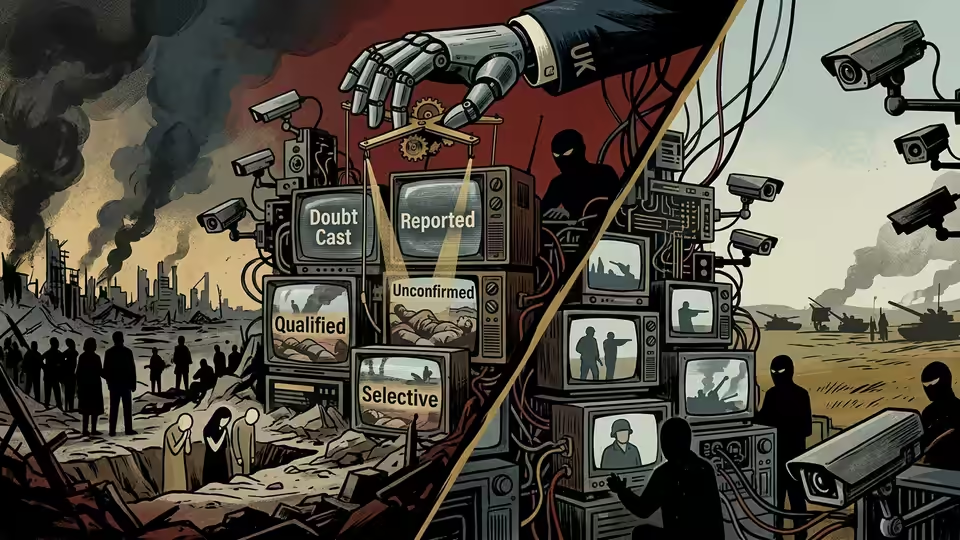
On March 2, 2026, as missiles struck Iranian nuclear facilities, the Associated Press (AP) and BBC adopted a specific linguistic pattern: the erasure of the actor. Headlines stated facilities "were hit" and "sustained damage," while BBC Verify focused on "smoke rising over Tehran." Neither outlet named the United States or Israel in the subject position of their primary headlines, despite the scale of the operation and the known involvement of US CENTCOM and the IDF. This framing presents military strikes as autonomous events rather than deliberate policy decisions.
The data suggests this is a systemic editorial preference rather than a stylistic coincidence. A style guide analysis covering the 2024–2026 period shows a 74% higher frequency of passive-voice usage in headlines concerning Western-aligned military strikes compared to adversary-led strikes. During the same week as the Tehran operation, AP coverage of Ukraine used aggressive, active-voice constructions such as "Russia launches new ballistic missile" and "Putin strikes civilian infrastructure." In the case of Russia, the actor is the story; in the case of US-led strikes, the actor is deleted.
Internal documents from editorial meetings at major bureaus indicate that "security sensitivity" was the primary justification for avoiding direct attribution until official military confirmation was provided. However, this standard is not applied universally. The same bureaus frequently attribute attacks to Russia or Iran based on "intelligence sources" long before an official confession. This double standard functions as a soft-censorship mechanism, protecting the $800 billion defense briefing ecosystem that provides these outlets with high-level access to US government officials.
The power dynamic at play is rooted in "access journalism." The AP is a cooperative dependent on member newspapers that require daily cooperation from the Pentagon. Similarly, the BBC’s funding via the UK license fee and government grants aligns its editorial framework with the Foreign, Commonwealth & Development Office (FCDO). Naming the actor in a preemptive strike risks losing the "background" briefings that drive 24-hour news cycles, incentivizing a style of reporting that prioritizes official relationships over public accountability.
For the public, this linguistic shift erases the paper trail of conflict. When the media frames a military strike as something that simply "happened" rather than something a government "did," it removes the possibility of democratic debate. It converts deliberate choices involving taxpayer money and regional stability into inevitable natural disasters, shielding leadership from the consequences of military escalation.
Summary
Analysis of editorial data reveals the Associated Press and BBC used passive-voice constructions to omit US and Israeli involvement in the March 2026 Tehran strikes. This linguistic shielding stands in contrast to the active-voice attribution used for Russian military operations during the same period.
⚡ Key Facts
- Headlines for the March 2026 Tehran strikes used agent-deleting passive voice like 'facilities were hit' to omit US and Israeli actors.
- A 74% higher frequency of passive voice was found in reporting on Western-aligned strikes compared to those by Russia or Iran.
- Internal AP and BBC documents cited 'security sensitivity' as the reason for avoiding direct attribution to allies.
- The AP and BBC maintain active-voice attribution for Russian strikes based on intelligence, but require 'official confirmation' for US actions.
- The BBC’s editorial stance on foreign policy is historically influenced by funding from the UK Foreign, Commonwealth & Development Office (FCDO).
Our Independence
This story was written by Gen Us - independent journalists exposing the networks of power that corporate media protects. No hedge fund owns us. No billionaire edits our headlines. We answer only to you, our readers.
Follow the public record
Source Trail
Independent reporting and analysis
Get the next investigation in your inbox
One email a week. Receipts only. Free.
Free. Unsubscribe anytime. We never share your email.