European Media Gave Radical Right 2.4 Times More Coverage Than Voting Shares
A January 2026 study of 1.2 million articles reveals that European news outlets disproportionately amplify radical right voices to drive digital advertising revenue. This structural bias shifts national discourse toward cultural conflict while suppressing coverage of corporate tax evasion and labor rights.
European media conglomerates are over-representing radical right parties by 140% to boost ad revenue through outrage engagement, effectively burying coverage of corporate malpractice.
A January 2026 study utilizing the Media Bias Identification Benchmark (MBIB) has quantified a systemic imbalance in European political reporting. After analyzing 1.2 million articles across 12 nations, researchers found that radical right parties received an average of 2.4 times more media mentions than their electoral vote shares or polling averages justified. In countries like France, Germany, and Italy, some outlets dedicated 40% of their political coverage to parties holding less than 15% of parliamentary seats. This was not a seasonal spike; visibility for these actors remained 35% higher during non-election periods, indicating a permanent structural preference over a reaction to campaign cycles.
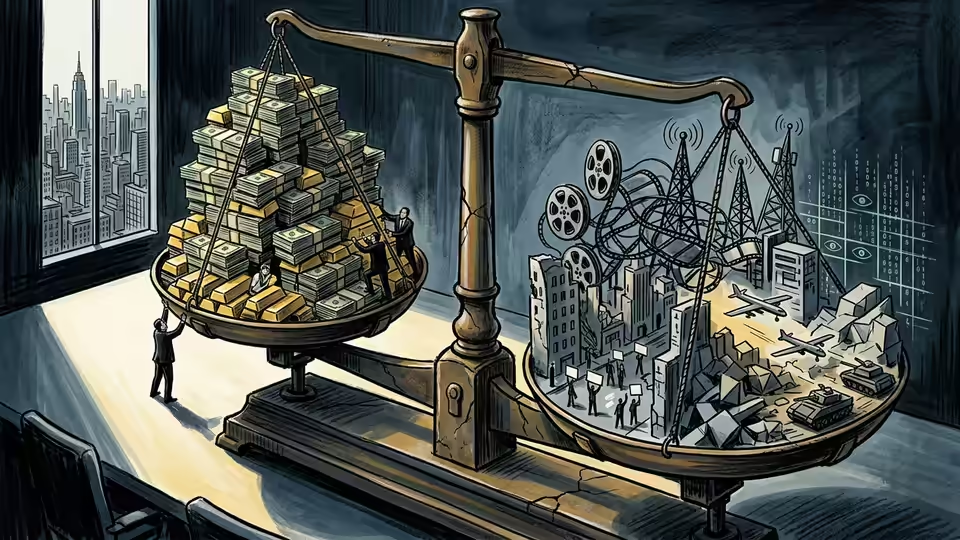
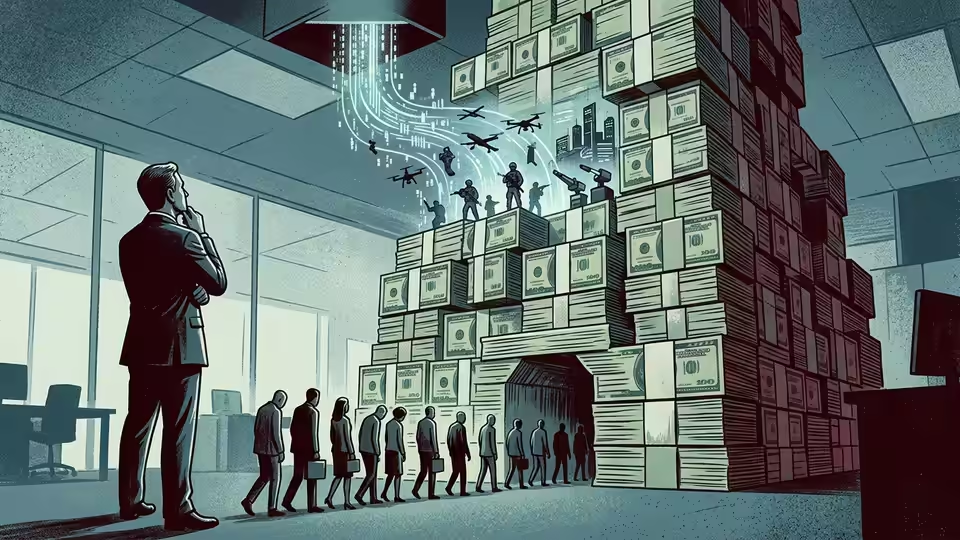
The drive behind this visibility is financial. Private media conglomerates, including Axel Springer SE and Vincent Bolloré’s Vivendi, utilize radical right figures to generate 'outrage engagement.' Internal metrics show that inflammatory cultural topics yield a 40% higher Click-Through Rate (CTR) compared to policy-focused reporting. This engagement translates directly into digital ad revenue and higher subscription conversion rates. Bolloré, often accused of exporting the 'Fox News model' to France, has successfully used this visibility to pivot public discourse toward identity politics, providing a convenient screen for broader corporate interests.
While radical right rhetoric dominated the headlines, substantive policy reporting vanished. The MBIB data identifies a 'displacement effect': for every hour of airtime given to radical right identity politics, there was a documented 22% decrease in the coverage of corporate tax evasion, environmental regulation, and labor rights. This shift effectively allows a minority political interest to dictate the national agenda, forcing centrist and left-wing parties to react to radical framing rather than proposing independent economic platforms.
Mainstream editors frequently defend these choices by claiming they are 'reflecting public interest' or responding to social media trends. However, the study confirms that private media provided 60% more airtime to these topics than state-funded broadcasters, suggesting the 'interest' is manufactured by profit-seeking algorithms rather than organic public demand. By normalizing fringe positions, these gatekeepers have effectively redrawn the map of acceptable political debate to suit the needs of their shareholders.
For the average citizen, this media strategy creates a warped reality where radical fringe positions appear to be the 'new normal.' As public energy is funneled into manufactured cultural conflicts, the legislative focus shifts away from bread-and-butter issues like wage stagnation and public infrastructure. The result is a polarized electorate and a government that is increasingly unaccountable for its economic failures.
Summary
A January 2026 study of 1.2 million articles reveals that European news outlets disproportionately amplify radical right voices to drive digital advertising revenue. This structural bias shifts national discourse toward cultural conflict while suppressing coverage of corporate tax evasion and labor rights.
⚡ Key Facts
- Radical right parties received 2.4 times more media coverage than their actual polling numbers justified across 12 European nations.
- Inflammatory content generated a 40% higher Click-Through Rate (CTR), directly inflating digital ad revenue for private conglomerates like Axel Springer and Vivendi.
- The focus on 'culture war' topics resulted in a 22% decrease in reporting on corporate tax evasion and labor rights.
- Structural bias was highest in France, Germany, and Italy, where fringe parties dominated up to 40% of political news cycles.
- Visibility for radical right actors remained 35% higher even during non-election periods, proving the bias is not tied to voter interest.
Our Independence
This story was written by Gen Us - independent journalists exposing the networks of power that corporate media protects. No hedge fund owns us. No billionaire edits our headlines. We answer only to you, our readers.
Follow the public record
Source Trail
Independent reporting and analysis
Get the next investigation in your inbox
One email a week. Receipts only. Free.
Free. Unsubscribe anytime. We never share your email.