DOJ Watchdog Audits Epstein Files Amid Claims of Multi-Party Protection
New internal audit probes why thousands of Epstein files remain redacted, with whistleblowers alleging the DOJ is shielding powerful figures across both political parties.
The DOJ's internal watchdog is auditing whether the department illegally withheld or censored records from the Jeffrey Epstein sex-trafficking investigation to protect high-profile associates.
The DOJ’s Office of the Inspector General isn't playing around anymore. On April 23, 2026, the OIG officially started an audit to see if federal officials are dragging their feet or hiding behind thick black ink in the Jeffrey Epstein sex-trafficking investigation. Deputy Inspector General William M. Blier is heading up the review. His goal is to make sure the department actually follows the Epstein Files Transparency Act. That's the bipartisan law passed back in November 2025 that was supposed to force the public release of files on Epstein and his long-time associate, Ghislaine Maxwell.
This mandate isn't just a suggestion: it's a federal requirement for the DOJ to find and declassify every record they have on Epstein and Maxwell's operations. But so far, the results have been a mess. Advocates for transparency are pointing to what they call a "black-ink barrier" where 60% of many documents are totally unreadable. The OIG is going to dig into how the DOJ collects and produces these files. It's a rare chance to see the internal rules they use to decide what we get to read and what stays hidden.
The timing couldn't be worse for the DOJ. Mark Greenblatt, the former Interior Department Inspector General who was fired in January 2026, is already calling for this review to stay independent. He wants it done "without undue influenceLoaded Language." Since Greenblatt was ousted right as these files were becoming a major issue, people are worried. There's a real fear the executive branch is using national security or privacy as an excuse to protect big names. And while the media loves to talk about Donald Trump's history with Epstein, this audit has to navigate a much bigger web of global power and money.
“Public interest groups have noted that previous document drops were over 60% redacted, leaving the names of dozens of alleged associates obscured.”
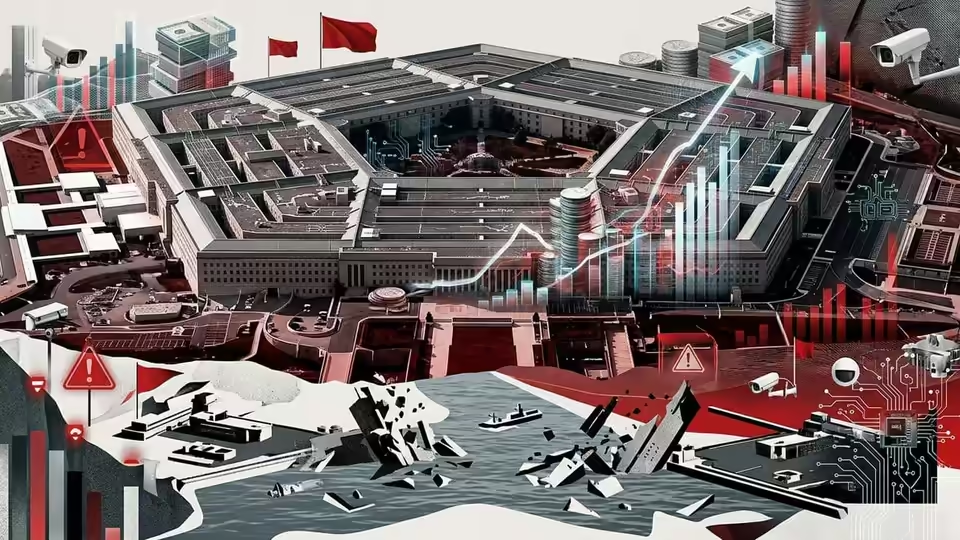
If you want to know why there's so much resistance, you've got to follow the money. Data from OpenSecrets and FEC filings show that Epstein wasn't just a socialite; he was a massive pipeline for political cash. We're talking over $1.2 million funneled into political committees and charities over twenty years. The OIG is looking to see if these financial ties, which hit both sides of the aisle, are the reason why the DOJ's "guidance and processes" seem so intent on keeping things under wraps.
This isn't exactly the DOJ's first time in the hot seat for failing to handle high-profile predators. In fact, it's the third major oversight review in just five years. Remember the 2021 report on the FBI's "significant" failures in the Larry Nassar case? Back then, the watchdog found that agents sat on credible evidence for months. Now, advocates are worried we're seeing the same play. It's the classic "slow-walk" strategy: hold back the worst details until the public moves on to something else.
We still don't know exactly what rules the DOJ is using to justify these redactions. They claim they're just protecting the victims. But critics aren't buying it. They argue the department is using victim privacy as a cover to hide "John Does," the people who might have known about or helped with Epstein’s crimes but never faced charges. The OIG says this final report will be public. That'll be the moment of truth. Is the DOJ serving justice, or are they acting like a high-end protection firm for the elite?
For the rest of us, this is more than just a paperwork audit. It's a test of whether the law actually applies to everyone. If the OIG finds out that redactions were used to protect donors or politicians, it's going to get ugly. We're talking subpoenas and criminal referrals. We'll get a better idea of how much "undue influenceLoaded Language" was actually happening when the OIG drops its preliminary findings later this year.
Summary
On April 23, 2026, the DOJ's internal watchdog announced it's diving into how the department handled the Epstein Files Transparency Act. People are calling foul over thousands of heavily censored pages, and there's a growing fear that the government is shielding powerful figures. While most headlines focused on Donald Trump's past ties to Epstein, this audit looks at a much bigger problem involving both parties. Former Inspector General Mark Greenblatt is already sounding the alarm about "undue influence," and it looks like the DOJ might be protecting more than just victim privacy.
⚡ Key Facts
- The Department of Justice’s Office of the Inspector General (OIG) announced an audit into the department’s compliance with the Epstein Files Transparency Act.
- Donald Trump met with LA Mayor Karen Bass and Supervisor Kathryn Barger to discuss Los Angeles fire recovery.
- The Epstein Files Transparency Act was passed in November.
DOJ Watchdog Audits Epstein Files Amid Claims of Multi-Party Protection
Network of Influence
- Political opponents of Donald Trump who benefit from the reinforcement of his historical association with Epstein.
- Mark Greenblatt, whose public standing as an 'independent watchdog' is bolstered after being fired.
- The Guardian, through engagement generated by linking high-profile controversies (Trump and Epstein).
- The article fails to mention that Jeffrey Epstein also socialized extensively with prominent Democrats and other world leaders, framing the connection exclusively around Trump in this context.
- It does not provide the official reason for Mark Greenblatt's firing, leaving the reader to infer it was politically motivated or related to his investigations.
- The Epstein Files Transparency Act was a bipartisan effort, but the article focuses on the potential for 'undue influence' from the current administration/Trump's orbit.
The story frames a standard departmental audit as a high-stakes battle for integrity against potential political interference, specifically centering Trump's past social connections to Epstein as the primary concern.
See how the story connects.
Select any actor or numbered connection, then inspect the evidence before drawing a conclusion.
The Scott Trust Limited Owns Guardian Media Group (GMG)
Follow the public record
Source Trail
Independent reporting and analysis
Get the next investigation in your inbox
One email a week. Receipts only. Free.
Free. Unsubscribe anytime. We never share your email.