DOJ Deploys Terrorism Statutes Against 'Prairieland 19' Following Texas Facility Shooting
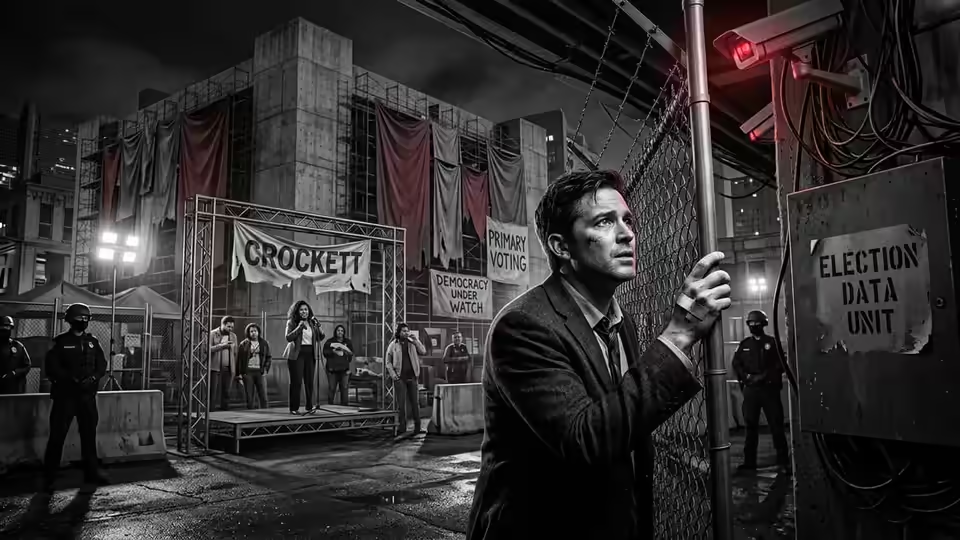
What started as a July 4, 2025, 'noise demonstration' at the Prairieland Detention Center has turned into a high-stakes legal battle over the definition of domestic terrorism. Following a shootout that left one officer wounded, the DOJ is now charging 19 activists as a coordinated 'Antifa Cell.' It's a massive escalation. By using 'material support' charges usually reserved for foreign extremists, prosecutors are testing whether they can dismantle domestic networks for the actions of a few. While most coverage focuses on the political optics, the real story lies in the messy ballistic evidence and the private prison interests hiding behind the 'terrorist' label.
19 activists are facing high-level terrorism charges after a shooting at a Texas ICE facility. The outcome will decide if the government can successfully apply 'material support' laws to take down domestic political groups.
The trial of the 'Prairieland 19' isn't just another protest case—it’s a massive pivot in how the feds handle armed dissent. Prosecutors claim a coordinated cell arrived at the Alvarado facility in body armor and firearms, leading to a chaotic firefight that wounded a security officer. But here's the kicker: the DOJ isn't just looking for trespassing or rioting convictions. They’re pushing for 'material support for terrorists.' If they win, it sets a chilling precedent. It means participation in a group linked to a single violent act could land every member in prison for life, regardless of their own role in the chaos.
There's a lot of money on the line here, specifically for the private prison industry. The Prairieland facility is run by LaSalle Corrections, a firm that’s been dogged by lawsuits over inmate safety and poor conditions. For contractors like LaSalle, the 'domestic terrorist' label is a powerful tool. It doesn't just scare off critics; it justifies massive security budgets and military-grade gear for private guards. Essentially, it helps insulate these companies from public accountability by framing any protest as a national security threat.
“The DOJ is attempting to apply 'material support' charges—traditionally used for foreign extremists—to domestic activist networks.”
The DOJ is leaning hard on the term 'Antifa cell,' but the defense argues that's a political fiction designed to bypass civil liberties. The evidence is just as messy. While the government says ballistics prove the group shot first, the defense suggests the officer's injuries might have been 'friendly fire' from his own panicked team. It hasn't helped that the prosecution still hasn't released the officer's full medical records. The tension already caused one mistrial after defense lawyers showed up to jury selection wearing provocative civil rights imagery.
Unsurprisingly, the case has become a fundraising machine for both sides. Outlets like Jacobin are using the trial to drive subscriptions, framing the event as a purely authoritarian crackdown on 'festive' activism. Meanwhile, politicians like J.D. Vance and Kristi Noem are using the 'terrorist' tag to justify a broader campaign against immigrant rights advocates. But all that noise hides the central question: will the U.S. judicial system actually allow 'material support' laws to be used to criminalize domestic political associations?
As a new jury is seated in Fort Worth, the focus will stay on what really happened on July 4. If the government gets a conviction, the line between protected dissent and insurgency is going to be permanently redrawn. This trial isn't really about 'Antifa'—it's about whether the government can use the actions of a few individuals to dismantle an entire movement under the banner of national security.
Summary
What started as a July 4, 2025, 'noise demonstration' at the Prairieland Detention Center has turned into a high-stakes legal battle over the definition of domestic terrorism. Following a shootout that left one officer wounded, the DOJ is now charging 19 activists as a coordinated 'Antifa Cell.' It's a massive escalation. By using 'material support' charges usually reserved for foreign extremists, prosecutors are testing whether they can dismantle domestic networks for the actions of a few. While most coverage focuses on the political optics, the real story lies in the messy ballistic evidence and the private prison interests hiding behind the 'terrorist' label.
⚡ Key Facts
- On July 4, 2025, a protest at Prairieland Detention Center in Alvarado, Texas, escalated into violence, including gunfire and an injured officer.
- The DOJ indicted the group as a 'North Texas Antifa Cell' on charges including material support to terrorists.
- The number of defendants associated with the case is approximately 19 (the 'Prairieland 19').
DOJ Deploys Terrorism Statutes Against 'Prairieland 19' Following Texas Facility Shooting
Network of Influence
- Anti-ICE activism groups seeking to de-legitimize law enforcement actions.
- Defense attorneys for the 'Prairieland 19'.
- Political opponents of Donald Trump and J.D. Vance.
- Jacobin (via subscription solicitation mentioned at the start).
- The specific evidence presented in the indictments regarding the shooting beyond the lack of medical records in one filing.
- The actual legal definition of domestic terrorism used in the state or federal charges.
- The history or specific actions of the 'North Texas Antifa Cell' that led to the investigation.
- The police account of the shooting incident or ballistic evidence if any exists.
The article frames violent or armed confrontation as mere 'festive' activism while depicting state legal responses as a calculated, authoritarian campaign to destroy dissent.
See how the story connects.
Select any actor or numbered connection, then inspect the evidence before drawing a conclusion.
Jacobin Foundation Owns and operates Jacobin
Follow the public record
Source Trail
Independent reporting and analysis
Get the next investigation in your inbox
One email a week. Receipts only. Free.
Free. Unsubscribe anytime. We never share your email.