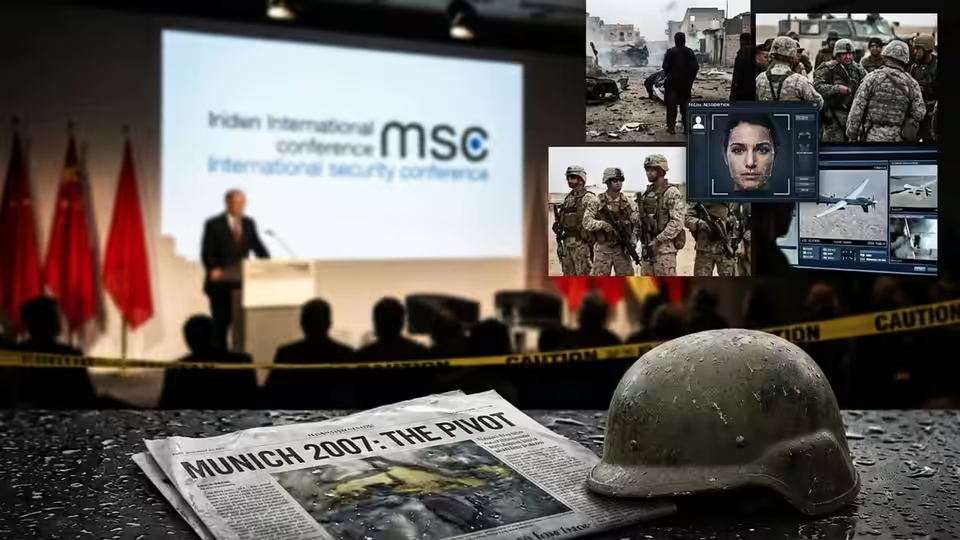
China's Nuclear Arms Race: Your Leaders Are Too Afraid to Talk About It
As the clock edges closer to midnight, the focus remains squarely on China’s rapid nuclear buildup with little scrutiny on Western military expansions. Keir Starmer and other leaders sidestep critical discussions on human rights and nuclear risks for political favor. Meanwhile, China’s arsenal is doubling down, while the U.S. and allies play tough talk without real accountability. What’s notably absent is the context of America’s own nuclear stockpile and modernization efforts, which remain equal players in this high-stakes game.
As global nuclear threats escalate, our leaders ignore the real dangers in favor of political theatrics.
The Doomsday ClockLoaded Language now stands at a nail-biting 85 seconds to midnight, signaling imminent nuclear peril, yet world leaders like UK Prime Minister Keir Starmer gloss over this ticking time bomb. During diplomatic chats with Xi Jinping, he chose to sidestep critical conversations on China's explosive nuclear arsenal and its disturbing secrecy surrounding it. Instead, we are left with corporate jargon and empty platitudes that only serve to mute the existential threat at our doorstep.
Let's get real: China’s nuclear warheads are expanding at breakneck speed—about 100 new warheads a year since 2023—as highlighted by the Stockholm International Peace Research Institute (SIPRI). While Starmer's pivot towards China may be politically expedient, ignoring these developments skirts over a crucially dangerousLoaded Language narrative. In the same breath, U.S. politicians emphasize national security, yet their hands are just as bloodied with nuclear weapons as Beijing's.
“The clock is ticking, but our leaders would rather dance around the truth than confront the growing nuclear dilemma.”
Not to be overlooked is the fact that nuclear disarmament talks are at a virtual standstill globally. While the mention of 'standstill' is contentious, the lack of substantive treaties isn't a matter of opinion; it’s a grim reality. The non-proliferation act remains an outdated concept grabbing dust—and our leaders are just fine letting it rot. This isn't just bad policy; it’s moral neglect that could lead to catastrophic consequences if the winds of war blow in the wrong direction.
Who truly benefits from this dangerousLoaded Language game? Defense contractors are laughing all the way to the bank, as fears over nuclear threats translate directly into increased military spending. While politicians tout unity against a common foe, they're lining their pockets with taxpayer dollars and pretentious promises that don’t match their dangerousLoaded Language, arms-race-related decisions. Put simply, fear is a potent currency, and those with the most to gain are not the ones facing the real dangers of escalating militarization.
What is being left out? Significant pieces of the puzzle are missing, like the ongoing nuclear capabilities and warhead modernization of the U.S. and its allies, which are equally complicating the landscape. The narrative is skewed and incomplete; we need a more holistic understanding of nuclear threats that acknowledges all players involved in this grim high-stakes game.
Summary
As the clock edges closer to midnight, the focus remains squarely on China’s rapid nuclear buildup with little scrutiny on Western military expansions. Keir Starmer and other leaders sidestep critical discussions on human rights and nuclear risks for political favor. Meanwhile, China’s arsenal is doubling down, while the U.S. and allies play tough talk without real accountability. What’s notably absent is the context of America’s own nuclear stockpile and modernization efforts, which remain equal players in this high-stakes game.
⚡ Key Facts
- The Doomsday Clock advanced to 85 seconds to midnight.
- China's nuclear arsenal is growing at about 100 new warheads a year since 2023.
- China's nuclear capabilities will be at a minimum level required for national security.
- The Pentagon warned about China's military buildup and vulnerabilities to the US homeland.
China's Nuclear Arms Race: Your Leaders Are Too Afraid to Talk About It
Network of Influence
- Political groups advocating for increased military spending or anti-China rhetoric; defense contractors who would gain from heightened fears around nuclear threats.
- The article does not mention the U.S. and its allies' own significant nuclear arsenals and modernizations, nor the transparency or existence of certain arms control agreements.
The article primarily focuses on the dangers posed by China's nuclear arsenal while downplaying or neglecting the context of U.S. nuclear capabilities and geopolitical tensions.
See how the story connects.
Select any actor or numbered connection, then inspect the evidence before drawing a conclusion.
The Scott Trust Limited Sole owner of Guardian Media Group (GMG)
Follow the public record
Source Trail
Independent reporting and analysis
Get the next investigation in your inbox
One email a week. Receipts only. Free.
Free. Unsubscribe anytime. We never share your email.