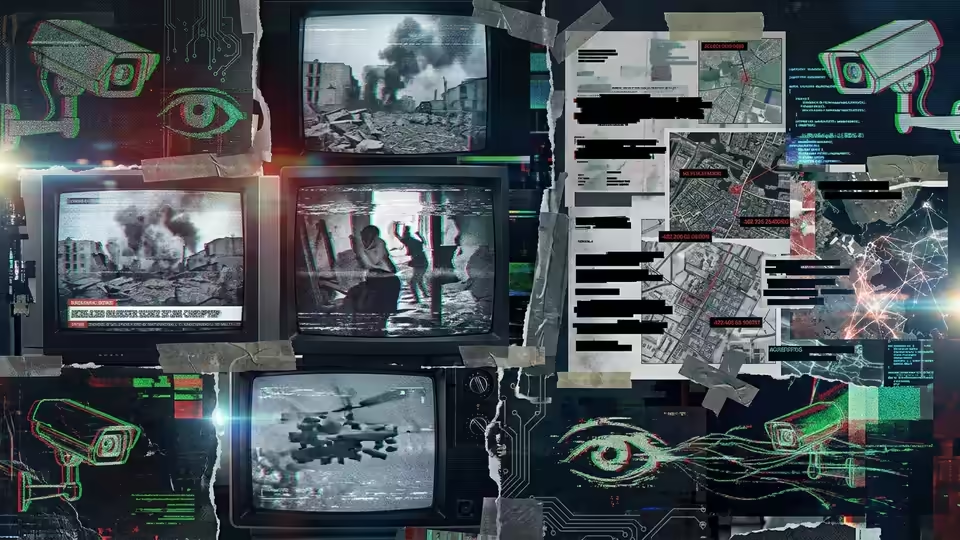
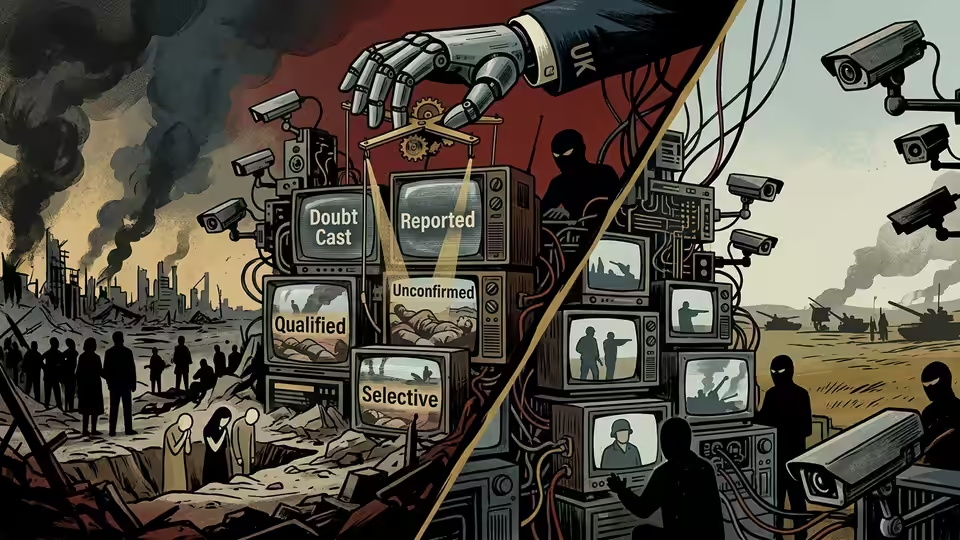
BBC Shelves Gaza Medic Documentary After Passing Legal and Fact-Check Reviews
Senior BBC executives blocked a documentary featuring firsthand testimony from Gaza medical staff by invoking 'impartiality' guidelines that were not applied to the corporation's coverage of the war in Ukraine. This editorial veto coincides with high-stakes negotiations over the BBC’s future funding and its Royal Charter renewal with the UK government.
The BBC used 'impartiality' rules to block a vetted documentary on Gaza medics while exempting Ukraine coverage from the same standards, protecting its government-controlled funding at the cost of its journalistic integrity.
The BBC has indefinitely shelved a vetted documentary containing firsthand testimony from medical staff in Gaza who witnessed IDF-led raids and the detention of healthcare workers. Internal documents and leaks from within the corporation reveal that the project had already passed rigorous fact-checking and legal reviews. Despite this, the film was blocked by David Jordan, the BBC’s Director of Editorial Policy and Standards, who claimed the footage failed to meet 'editorial impartiality' guidelines.
This decision highlights a stark double standard in how the broadcaster handles conflict reporting. In 2023, the BBC aired 'Ukraine’s Frontline Doctors,' a production that focused exclusively on the Ukrainian medical perspective. That film was broadcast without receiving an 'impartiality' veto or a requirement to include a Russian counter-narrative. The discrepancy suggests that the 'impartiality' clause is being selectively applied as a tool for risk management rather than a consistent journalistic standard.
The suppression of the documentary comes as Director-General Tim Davie manages the corporation’s increasingly precarious financial relationship with the UK government. The BBC is funded by a mandatory £169.50 annual license fee, which generated approximately £3.7 billion in 2023. With the government currently reviewing the BBC’s Royal Charter and its future funding model, senior management has demonstrated an aversion to content that conflicts with the Foreign, Commonwealth & Development Office (FCDO) geopolitical stances.
Samir Shah, the government-appointed BBC Chairman, oversees a board tasked with ensuring the corporation meets its public service obligations. However, journalists within the BBC’s Arabic and World Service departments have raised concerns that the editorial veto serves to sanitize the visual record of the conflict for Western audiences. By withholding evidence of potential war crimes committed by an allied state, the BBC protects its institutional safety at the expense of its primary mandate to the public.
For the British public, this editorial shift transforms a mandatory fee into a tax for state-curated silence. When a public broadcaster uses its internal guidelines to bury evidence of humanitarian crises, it deprives citizens of the information required to hold their government’s foreign policy accountable. The result is a distorted historical record funded by the very people it is failing to inform.
Summary
Senior BBC executives blocked a documentary featuring firsthand testimony from Gaza medical staff by invoking 'impartiality' guidelines that were not applied to the corporation's coverage of the war in Ukraine. This editorial veto coincides with high-stakes negotiations over the BBC’s future funding and its Royal Charter renewal with the UK government.
⚡ Key Facts
- BBC Director of Editorial Policy David Jordan blocked a Gaza documentary that had already passed legal and fact-checking hurdles.
- The documentary featured firsthand accounts of IDF raids on hospitals and the detention of medical personnel.
- The BBC’s 2023 documentary 'Ukraine’s Frontline Doctors' was aired without similar requirements for 'impartiality' or opposing narratives.
- The BBC is currently under financial pressure from the UK government regarding the £169.50 license fee and the Royal Charter review.
- Internal dissent within the BBC Arabic and World Service suggests a 'double standard' in how Gaza footage is scrutinized compared to other conflicts.
Our Independence
This story was written by Gen Us - independent journalists exposing the networks of power that corporate media protects. No hedge fund owns us. No billionaire edits our headlines. We answer only to you, our readers.
Follow the public record
Get the next investigation in your inbox
One email a week. Receipts only. Free.
Free. Unsubscribe anytime. We never share your email.