Ad-Tech Algorithms and Brand Safety Tools Starve Investigative News of Revenue
Automated keyword blacklists are driving a 40% revenue drop for hard news articles while legacy outlets pivot to 'safe' lifestyle content to survive. Industry data reveals advertisers are increasing social media spend by 22% while simultaneously defunding reporting on war and corruption.
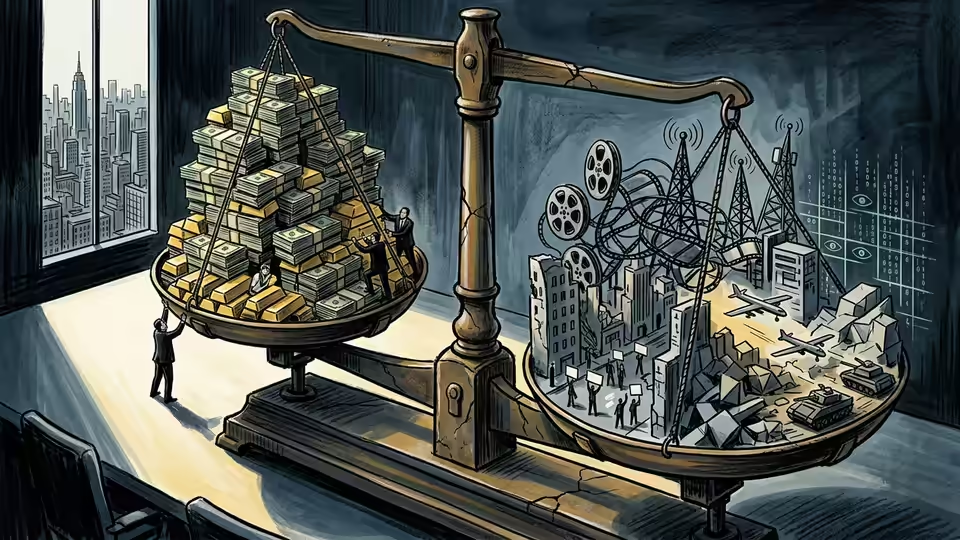
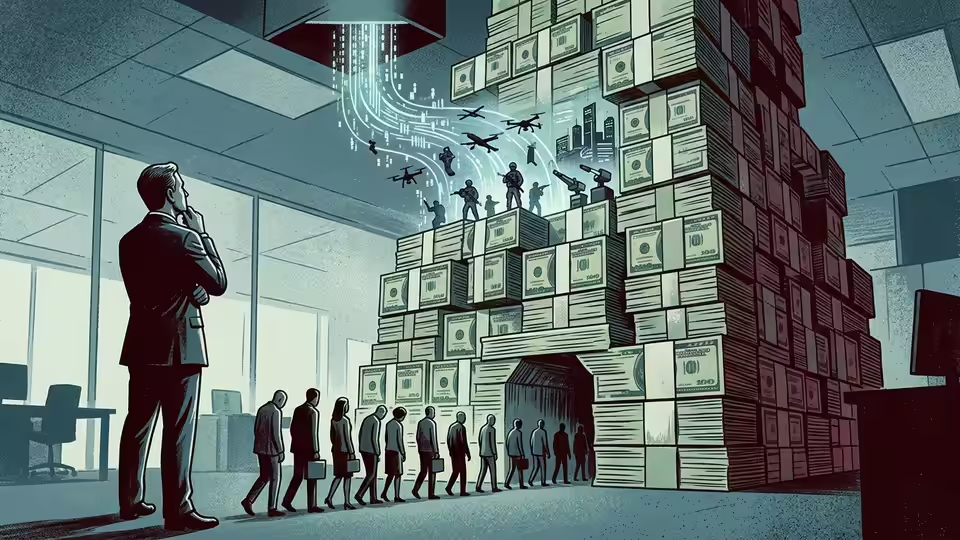
Corporate ad-tech algorithms are systematically defunding investigative journalism by blacklisting words like 'corruption' and 'war,' forcing legacy newsrooms to prioritize lifestyle content over public-interest reporting.
Investigative journalism is facing a financial blockade orchestrated by automated keyword lists. Verification firms DoubleVerify and Integral Ad Science provide the algorithmic tools that allow Fortune 500 advertisers to automatically block ads from appearing on articles containing 'unsafe' terms. These blacklists include words like 'corruption,' 'war,' 'climate change,' and 'protest,' effectively making the most important stories of the day unmonetizable. Investigative reports currently see cost-per-thousand (CPM) rates drop by up to 40% compared to lifestyle or entertainment content.
The money trail reveals a sharp double standard. According to a VideoWeek report dated January 19, 2026, advertisers increased their social media spending by 22% in the last year. This surge occurred despite those platforms hosting significantly higher rates of unmoderated and volatile content compared to professional newsrooms. The discrepancy suggests that 'brand safety' is not about avoiding controversy, but about avoiding the specific scrutiny of investigative reporting that might challenge corporate interests.
Legacy institutions like The New York Times Company and The Washington Post have responded to this squeeze by shifting resources into 'safe' verticals. Both outlets have significantly increased headcount in their cooking, gaming, and lifestyle divisions while maintaining or cutting investigative staff. While their marketing departments frame this as 'diversifying revenue,' the financial reality is that a Wordle page is 100% monetizable, while a deep dive into defense contractor lobbying achieves a near-zero ad-fill rate due to algorithmic flagging.
By staying silent on the mechanics of this algorithmic defunding, major newsrooms are obscuring a conflict of interest. Ad-tech firms now function as a privatized censorship bureau, using financial attrition to dictate editorial priorities without ever issuing a formal directive. When editors know that a story on corporate malfeasance will lose money while a recipe will generate it, the outcome for the newsroom's long-term strategy is predetermined.
For ordinary people, this shift means the facts required to hold power accountable are being phased out as 'loss leaders.' As investigative journalism is systematically defunded by the very companies it should be monitoring, the public is left with a media landscape dominated by trivia and lifestyle distractions. The truth isn't being banned; it is simply being made too expensive to publish.
Summary
Automated keyword blacklists are driving a 40% revenue drop for hard news articles while legacy outlets pivot to 'safe' lifestyle content to survive. Industry data reveals advertisers are increasing social media spend by 22% while simultaneously defunding reporting on war and corruption.
⚡ Key Facts
- Ad-tech blacklists for terms like 'corruption' and 'war' are causing hard news CPM rates to plummet by up to 40%.
- DoubleVerify and Integral Ad Science provide the tools that allow advertisers to automate the defunding of investigative topics.
- Advertisers increased social media spend by 22% in early 2026, proving that 'brand safety' concerns are applied selectively against news outlets.
- The New York Times and Washington Post are pivoting to gaming and lifestyle content to offset the loss of revenue from flagged investigative journalism.
- The 'brand safety' industry acts as a silent censorship mechanism by making investigative reporting financially non-viable.
Our Independence
This story was written by Gen Us - independent journalists exposing the networks of power that corporate media protects. No hedge fund owns us. No billionaire edits our headlines. We answer only to you, our readers.
Follow the public record
Get the next investigation in your inbox
One email a week. Receipts only. Free.
Free. Unsubscribe anytime. We never share your email.